Rhyolite Tuff & Limestone
Soils
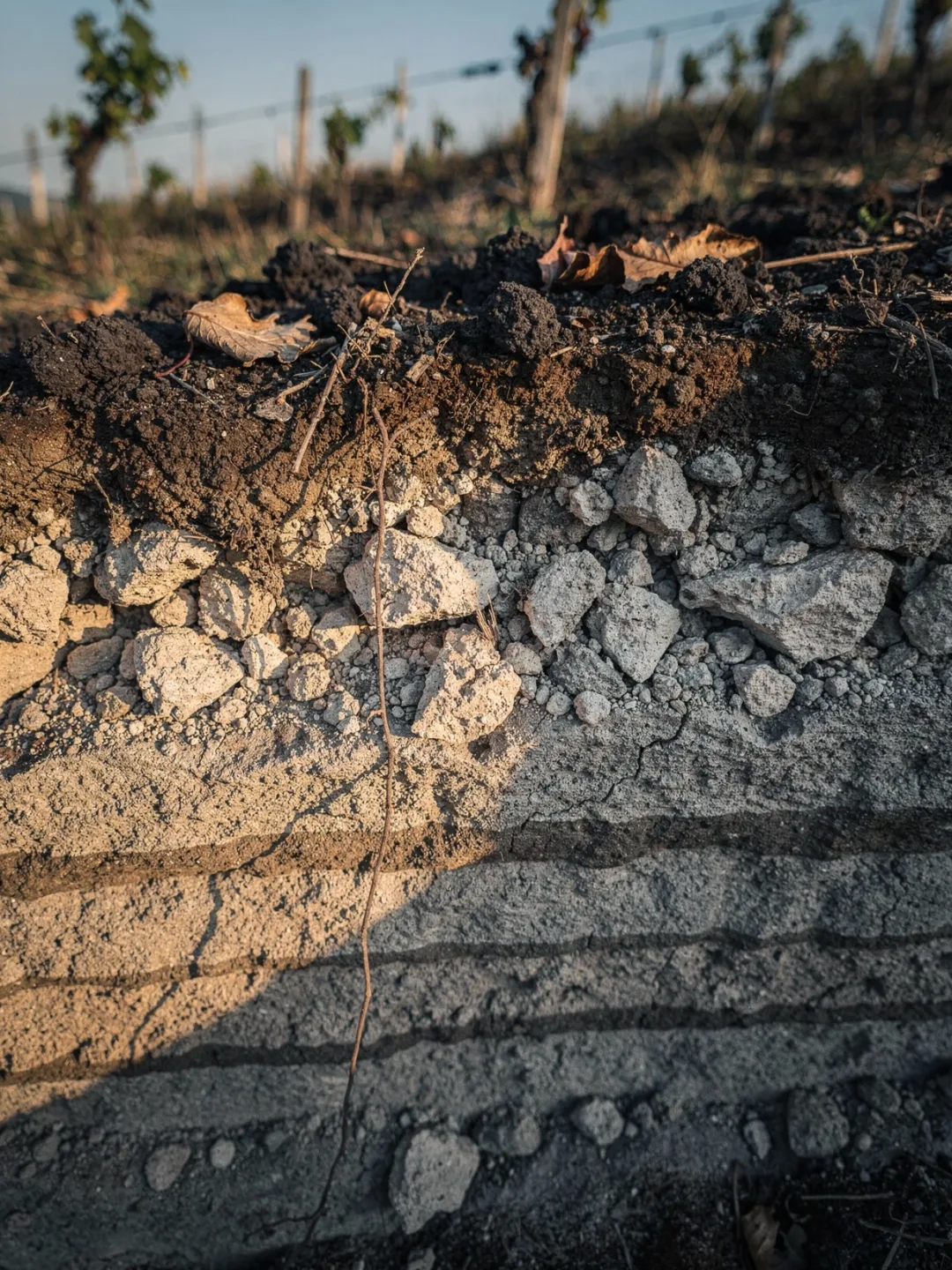
Dig a hole in a vineyard near Eger. After barely a hand's width, you'll hit pale, porous rock: tuff formed from volcanic ash that rained down from regional volcanoes nineteen million and again sixteen million years ago. In some places, this rhyolite tuff piles up as high as four hundred meters. It's soft — soft enough to work with a shovel — and that's exactly what generations of people in Eger have done.
Beneath the city itself run miles of passages. They began as escape tunnels during the Ottoman occupation and were later turned into wine cellars. South of the city, more than two hundred such cellars line up in the Szépasszonyvölgy, the Valley of the Beautiful Woman. The tuff maintains a steady, cool temperature year-round, with no need for anyone to actively cool it. That's exactly its second use: it stores the wine that it first helped grow.
For the vine's roots, this same tuff is a stroke of luck. The loosely layered pores let water drain quickly while still allowing enough air to reach the roots, preventing rot. As a result, the vines are forced to root deep rather than feeding near the surface. Deeper roots reach water reserves that benefit the berries during the dry month of September, resulting in smaller, more concentrated berries. A higher skin-to-juice ratio means more color and tannin in the finished Bikavér.
One elevation breaks this pattern entirely: the Nagy-Eged-hegy. Beneath its summit lies not tuff but gray Triassic limestone, more than a hundred million years older than the volcanic soil surrounding it — a rocky island left over from the time before the volcanic eruptions. Limestone holds water differently than tuff: it retains it longer and releases it more slowly. That's why wines from this single hill earned their own, stricter classification: Grand Superior, the region's highest tier.
A thin, dark layer of decomposed leaves, barely a hand's width thick.
The root: This is where the fine feeder roots sit, absorbing the first rains — and the first to dry out.