Shape for Kékfrankos
Glassware
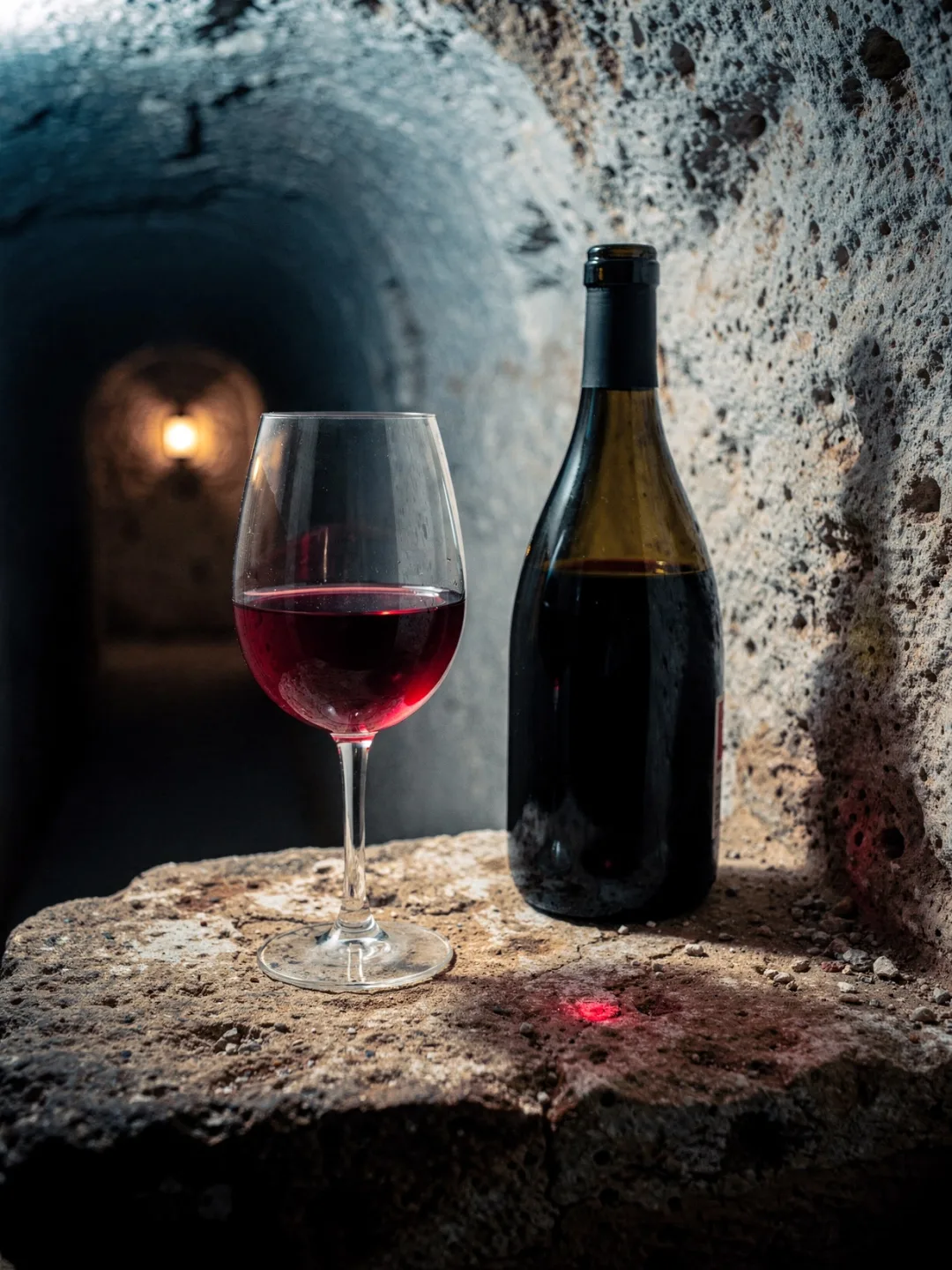
Even a glass has to suit the grape variety. With Kékfrankos, it's mainly the black pepper on the nose that determines which shape actually works. A glass that's too narrow traps this spice and lets only alcohol rise to the top. A glass that's too wide, on the other hand, spreads the aromas so generously that the acidity rushes forward and the pepper fades into the background. For Egri Bikavér, a medium-sized glass suits best: a broad bowl with an opening that narrows again, gathering what rises before it dissipates.
As for serving temperature, fifteen to seventeen degrees Celsius is right. That's cooler than what most households consider room temperature. Any warmer, and the alcohol steps forward while the fine spice that sets Bikavér apart from a simple blend fades away. Twenty minutes in the fridge is enough to correct a wine stored too warm.
A young Bikavér Classicus doesn't need decanting. It's built for fresh fruit and ready the moment it's opened. A Grand Superior aged sixteen months in oak is a different story entirely: it often carries sediment, and its bouquet only fully opens after half an hour of air contact. Pour it straight from the bottle, and you only get half the wine the winemaker actually made.
For the white Egri Csillag, almost the opposite applies. Its blend of Carpathian Basin varieties and aromatic crossings like Irsai Olivér thrives on floral and stone-fruit aromas, which stay concentrated in a narrower, taller glass. It's served cooler, at eight to ten degrees, so the fruit stays clear and doesn't tip into the overly perfumed. Two wines from the same region, two completely different glasses.