Blending by the Rulebook
Production
Regulations shape Bikavér nearly as much as the winemaker does. At least four grape varieties must go into the finished wine, each making up more than five percent of the blend. Of these, Kékfrankos must account for between thirty and sixty-five percent. Blend less, or fall short on Kékfrankos, and you're not allowed to put the name Bikavér on the bottle, no matter how good the wine tastes.
Before blending comes the maceration period, and it differs by tier: a Classicus spends at least eight days on the skins, a Superior or Grand Superior at least fourteen. That gives color and tannin enough time to migrate from the berry skins into the wine, while each variety ferments separately. Only after fermentation — sometimes only after months in barrel — does the cellar master test different blending ratios and settle on the final cuvée.
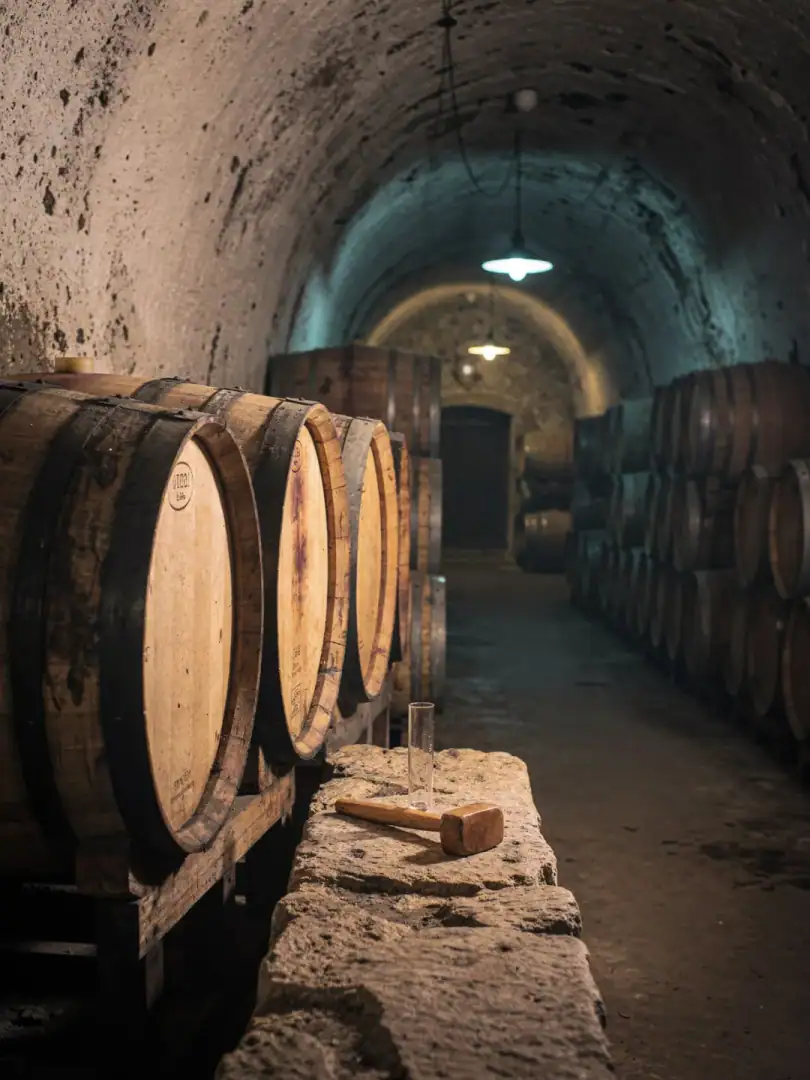
Barrel aging is staggered: six months for Classicus, twelve plus six in bottle for Superior, sixteen for Grand Superior. Alongside this, permitted yields drop: from one hundred down to sixty and finally to thirty-five hectoliters per hectare. Fewer grapes, but more concentrated juice — exactly what the long barrel time calls for.
The oak often comes from the same mountain range in northern Hungary that supplies the Zemplén oak used for Tokaji barrels. Hungarian oak is milder. It releases less tannin than French oak but contributes more spice, which suits the already peppery Kékfrankos. Those seeking stronger toasted notes turn to small French barriques. Those wanting to preserve the variety's spice stick with the large Hungarian barrel.
One more word on Turán, the Hungarian crossing with deep red color: at most ten percent. Any more, and its signature would dominate the entire wine. That's exactly the point of the rulebook — a Bikavér from Szomolya should still taste like Bikavér, just like one from Novaj.