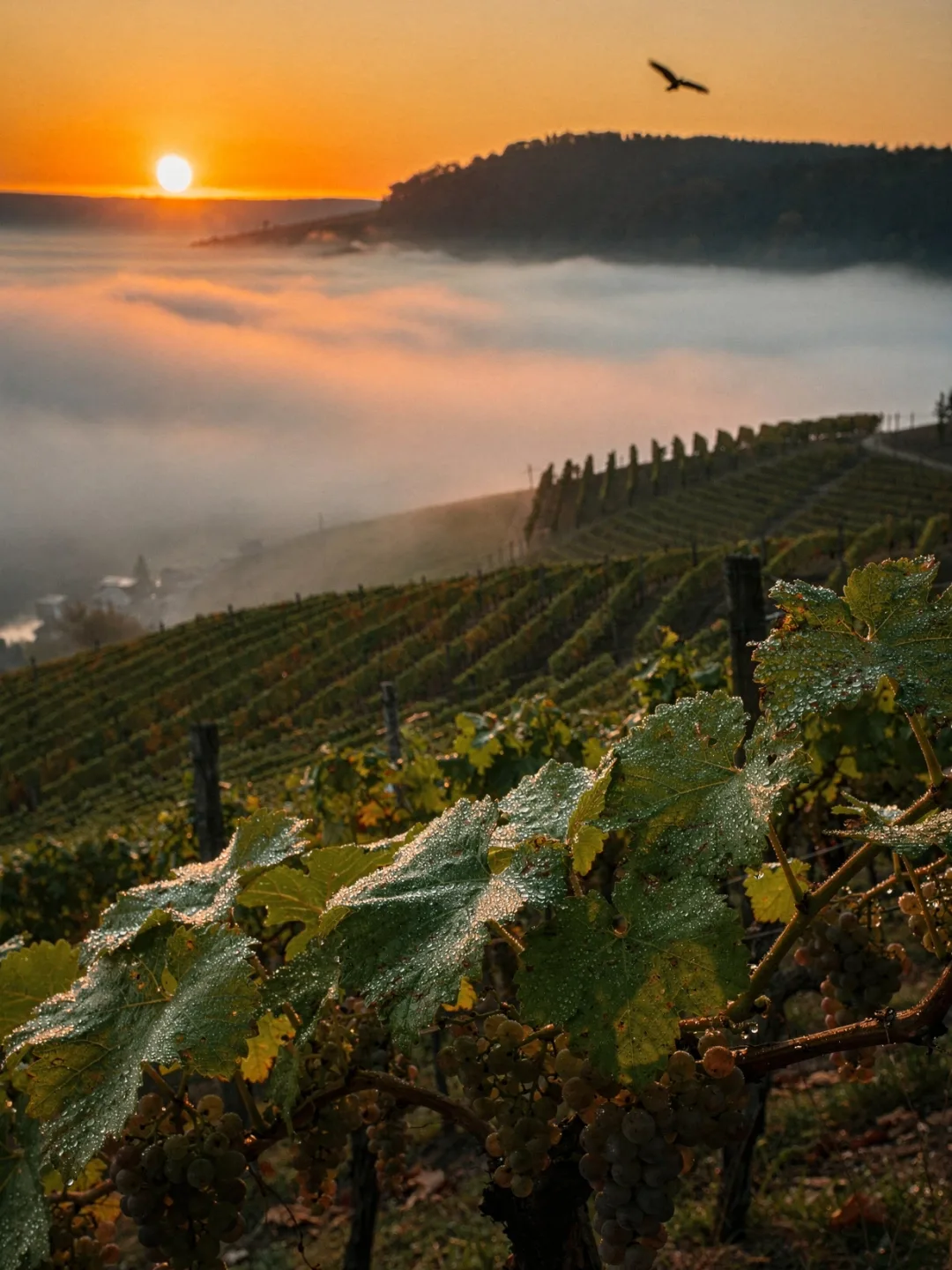
Fog off the River
Climate
Tokaj sits on a weather divide. Continental summers bring heat, continental winters bring frost, and in between, a single autumn month often decides the entire harvest.
The Zemplén Mountains to the north block the cold wind. That's why the south-facing slopes around Mád and Tarcal get considerably more sun than the flat surrounding land, over two thousand hours a year on average, more than anywhere else in Hungary. This warmth is enough to let Furmint ripen well into October. For a variety this far north, that's unusual.
But what matters most is what rises from the soil in September and October. The Bodrog and Tisza flow directly past the growing region. When the warm daytime air cools at night, a fog settles over the low-lying vineyards and often lingers well into the morning. This fog moistens the berry skins without soaking the vineyard. That's exactly what the fungus Botrytis cinerea needs to act as noble rot rather than ordinary rot.
By afternoon, the fog lifts. Dry, sunny hours let the fungus-weakened berries dry out again, evaporating water from them and concentrating what remains: sugar, acidity, aromatic compounds. This cycle of humid mornings and dry afternoons can repeat itself for weeks, until a berry becomes nothing more than a tiny, sticky raisin.
With around seven hundred millimeters of rain a year, Tokaj isn't an especially wet region, but distribution matters more than quantity. Too dry an autumn means no fog, and without fog there's no true Aszú vintage, only an ordinary one. That's why quality varies more from year to year here than elsewhere, and a truly great Aszú vintage remains the exception even today, not the rule.