Hungary's Hottest Corner
Climate
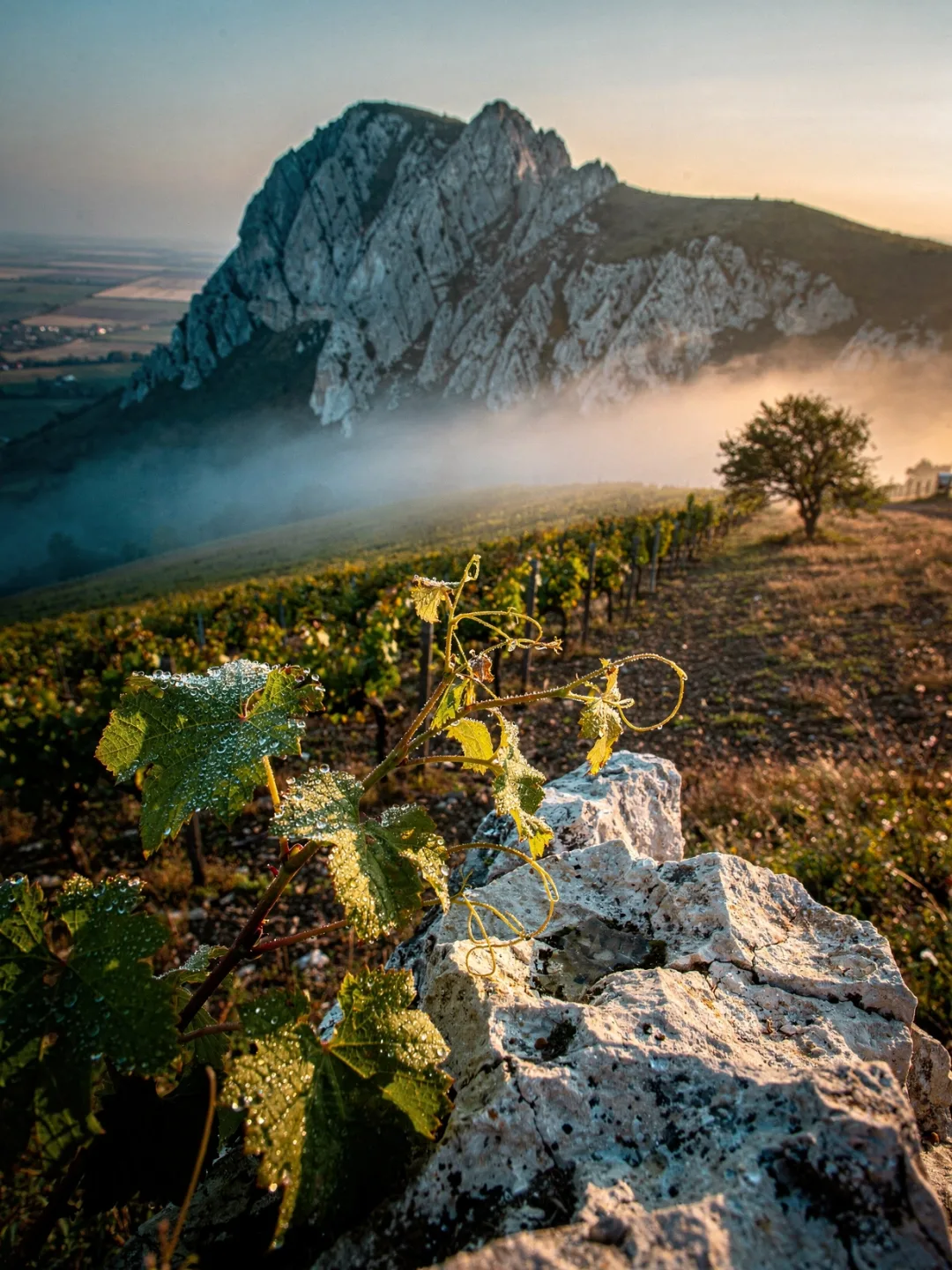
Locals call the area around Villány Ördögkatlan, the Devil's Cauldron, and by August you understand exactly why. The Villány hills and their highest point, Szársomlyó, sit crosswise to the wind and block cold air from the north. At the same time, a hint of Mediterranean climate pushes in from the south. The result is the warmest wine region west of the Danube.
More than two thousand one hundred hours of sunshine a year reach the vines here, more than anywhere else in Hungary. Over the growing season, this heat adds up to two thousand to two thousand two hundred degree-days, a sum that makes late-ripening Bordeaux varieties like Cabernet Sauvignon possible at all. Elsewhere in the country, these same varieties often stay green and herbaceous, missing a few hundred degree-days.
The warmest spot of all is the Kopár vineyard. It sits so low that frost used to hit it before other sites. That very low position now makes it the hottest parcel in the country, and winemakers there routinely harvest ahead of every other Villány vineyard. Further up the slope, at three hundred meters, the night cools noticeably, and the grapes retain more acidity.
Just how mild this microclimate really is shows up in an unassuming flower. On the south-facing slope of Szársomlyó grows the Hungarian meadow saffron, Colchicum hungaricum, a crocus-like plant found nowhere else in the country, which sometimes blooms as early as January, in the middle of the Hungarian winter.
Water is rarely the bottleneck. Between six hundred fifty and nine hundred millimeters of rain fall each year, unevenly distributed and often as short, heavy summer downpours. Hail, on the other hand, is the real danger. A single storm in July can wreck an entire harvest, which is why several estates now stretch hail nets over their best parcels.