Kékoportó & Franc
Grape Varieties
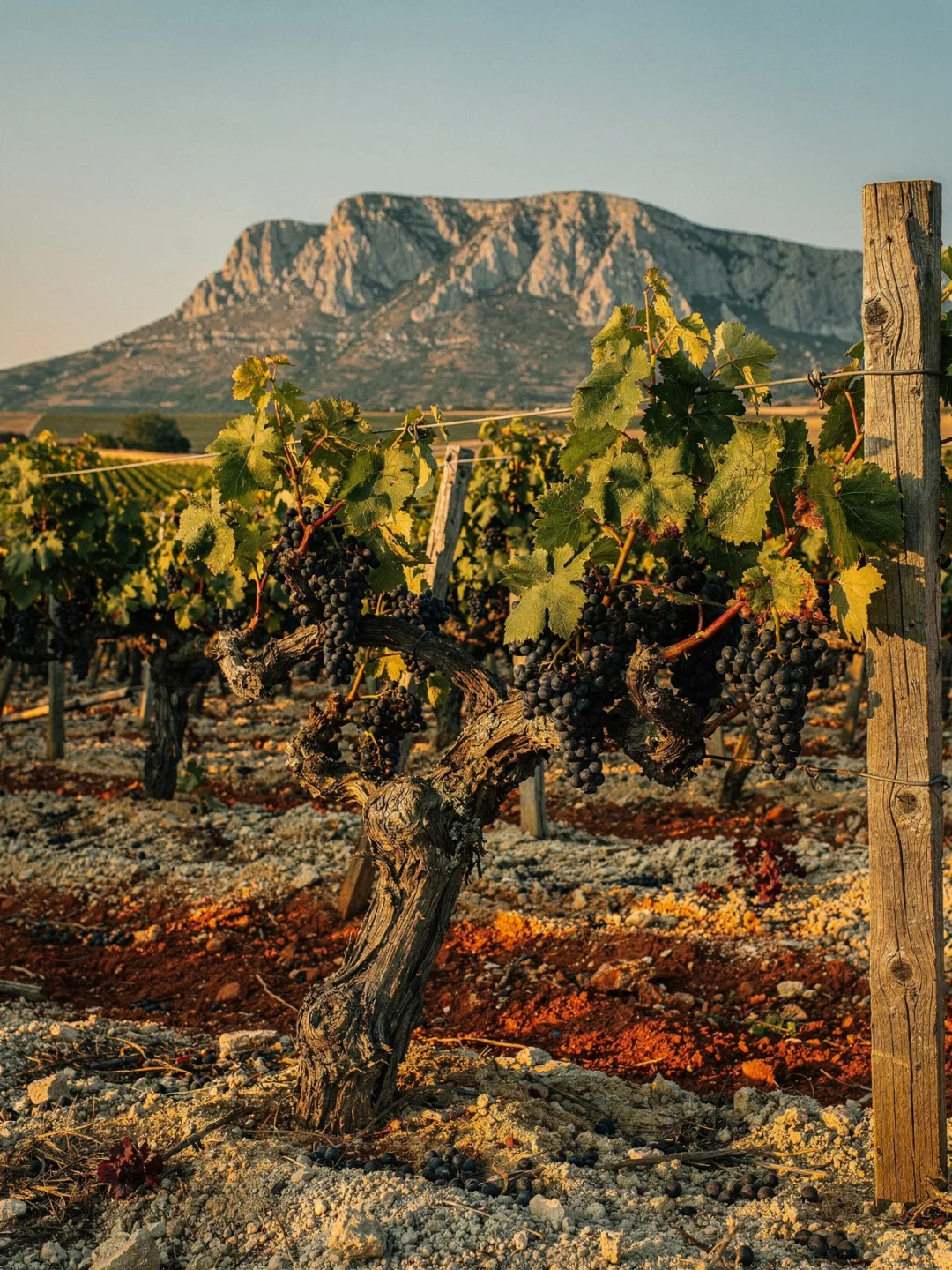
The first vines to succeed here on a large scale didn't come from France. In the eighteenth century, the German Stifolder brought along Kékoportó, known in German as Blauer Portugieser, a hardy blue variety with thin skin and low tannin. It ripens early and forgives rain right before harvest. To this day it covers around three hundred and thirty hectares, more than any other red variety in Villány, and the young generation of winemakers now blends it with Kékfrankos into an easy-drinking cuvée called RedY.
Everything changed in the 1990s. Several estates began experimenting with Bordeaux varieties. Cabernet Sauvignon, Merlot, and Cabernet Franc grew side by side, but only one of them truly felt at home in the heat and on the chalky soil. Here, Cabernet Franc shows a dense ruby color, medium tannin, and fruit reminiscent of sour cherry and blackcurrant. Add to that a spicy note that, at full ripeness, recalls dried herbs rather than unripe vegetables. The variety climbed so quickly in winemakers' favor that it now accounts for more than fifteen percent of the region's total vineyard area.
Cabernet Sauvignon and Merlot nonetheless stayed in the game, just in a different role. They lend body and soft tannins to blends. Cabernet Franc alone carries the name that made Villány famous: Villányi Franc. A Premium Villányi Franc may contain up to fifteen percent of other varieties. A Szuperprémium, on the other hand, cannot contain a single drop of anything else. It must be one hundred percent Cabernet Franc, age for at least two years, and cannot go on sale before the third year after harvest at the earliest.
A fourth variety tells of an older, harder time. Kadarka arrived with Serbian families who fled to Villány from Ottoman troops in 1715, bringing the variety with them from the south. It once produced a pale, spicy red wine and stood on most of the region's parcels for centuries. Today it has almost vanished, pushed aside by the sturdier Bordeaux varieties, yet Hungarian wine law still permits it in Villány. A few winemakers are replanting it, out of respect for their own history.