Large and patient
Glasses
Tannat makes greater demands on a glass than almost any other red wine variety. It carries more tannin than practically any Cabernet Sauvignon, and this surplus has to go somewhere before it hits the palate as a bitter wall. Without air, it stays hard.
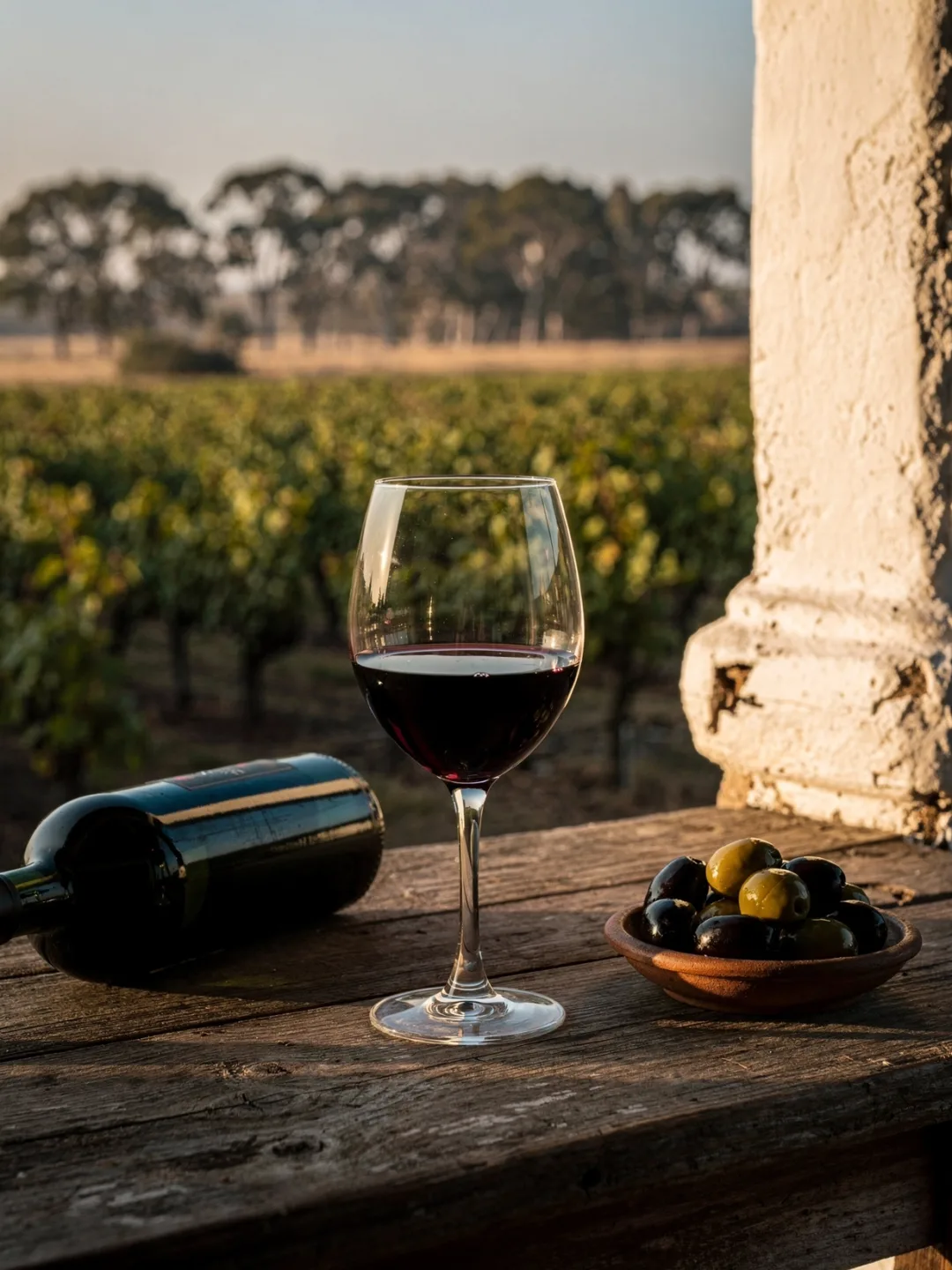
A wide Bordeaux glass with a tall bowl creates the space needed for this. The large surface area lets air reach the wine and noticeably softens the harshness of the tannins. The tapering rim still keeps the aroma together instead of letting it simply drift away. A narrow, straight-sided glass feels almost like a punishment with Tannat.
Even more important is what happens before the glass: decanting. A young Canelones Tannat can easily handle one to two hours of air contact, while a wine aged ten years might need only thirty minutes, or it risks losing its fruit. If you don't own a decanter, vigorous swirling helps — ten swirls usually aren't enough; aim for closer to thirty.
The ideal drinking temperature is sixteen to eighteen degrees Celsius, noticeably cooler than what many people consider room temperature. At twenty degrees and above, the alcohol pushes to the forefront, and the tannins come across as rougher rather than ripe.
A special case is the rediscovered Folle Noire. It's pale, delicate, almost like a Pinot Noir from Burgundy — the wide Tannat glass doesn't suit it at all. A narrower Burgundy glass with a smaller opening at the top works better, as it channels the delicate fruit aromas closer to the nose instead of losing them in a large bowl. Two red wines from the same stretch of land, two completely different glasses.