The short answer
Viognier is a white grape variety. Its wines are highly fragrant and fill the mouth well. Many carry notes of blossom and ripe fruit. The acidity feels mild. That doesn't mean there's little alcohol in the glass, though.
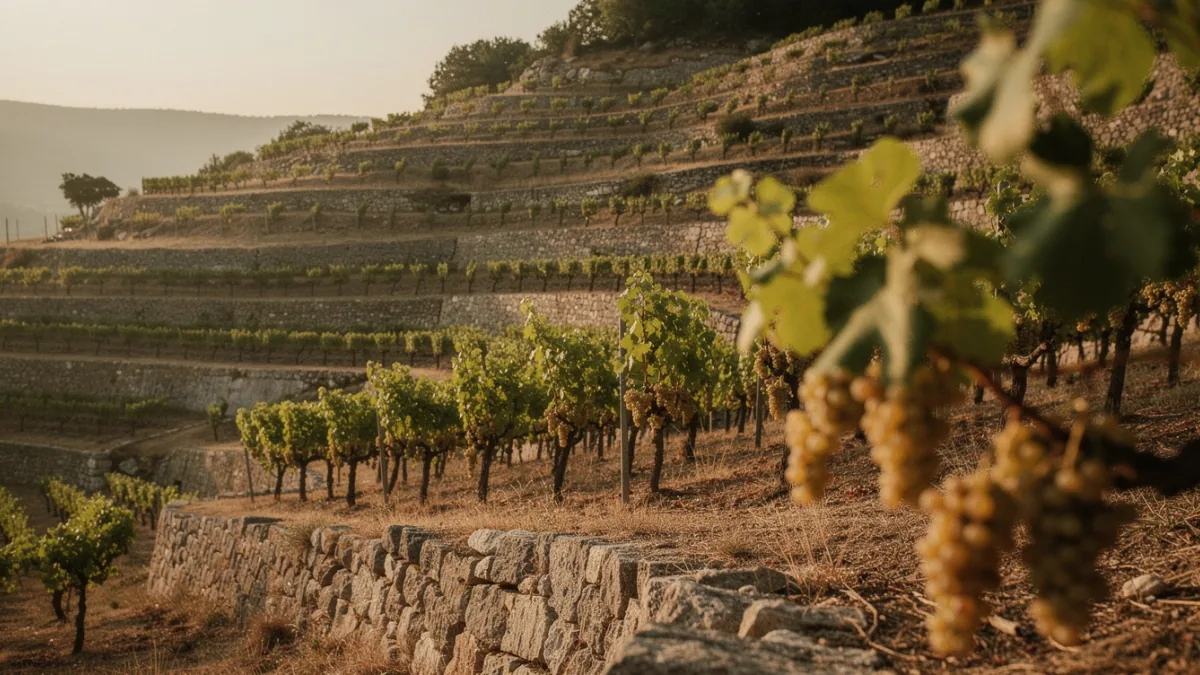
Viognier is fuller-bodied than most white wines
Viognier is mainly associated with the Rhône. Many of these wines have a full body and little noticeable acidity. The exact style still varies from bottle to bottle.
If you equate mild with light, you should ask more precisely. A wine can feel soft and still be quite powerful. This distinction will get you further at the shop than a long list of aroma descriptors.
Acidity and weight are two different things. In conversation, they often get lumped together. Acidity determines how fresh and how lively a wine comes across. Weight depends more on alcohol and the dissolved substances in the wine. With Viognier, the two often diverge: little tang, plenty of substance. That's exactly why the variety surprises anyone who assumes mild wines are harmless.
The aroma can mislead you further. Floral and fruity notes seem inviting and light. They say nothing about the weight in the mouth. So take that first impression in the nose for what it is, and wait to see what happens after the sip. If warmth lingers in your throat and a broad feeling spreads across your tongue, you're dealing with a powerful wine.
Choosing body on purpose
If you're after a fragrant wine to go with a creamy dish, Viognier is a good direction. With spicy food, think first about alcohol and seasoning. Don't be led by the intense aroma alone in that case.
Try it sometime alongside a Pinot Blanc or a crisp Riesling. Don't ask yourself which fruit is right, ask about the difference in the mouth: broader, lighter, fresher, warmer? Words like these get you to your own decision quickly. If you like the direction, look specifically for a similar body next time.
With food, you're not looking for a match, you're looking for support. A creamy dish already brings plenty of body itself. A full-bodied wine sits alongside and carries it. With spice, it's different. Alcohol's warmth and chili's heat reinforce each other, and the lovely aroma won't help you much there. If in doubt, try the wine on its own briefly before the food arrives.
Comparing two other white wines works best once all the glasses are on the table at the same time. Drunk one after another, the palate compensates too much. Small amounts are plenty. Note down in two or three words what strikes you. Look at that note again on your next shopping trip. After a few rounds, you'll know which kind of body suits you.
How to find a Viognier you'll enjoy
The following four steps stop you from deciding by the label alone.
If there's no one to ask in the shop, you're left with the back label and the alcohol percentage. Both tell you more about the wine's weight than any list of aromas. And if a bottle turns out too powerful for you, try the same variety from a different producer next time. The stylistic difference between two wines of the same grape variety is often bigger than most people expect.
| Step | Specific question or action |
|---|---|
| In conversation | How full-bodied is the wine, and how does the acidity come across? |
| On the label | A mild acid impression tells you nothing certain about alcohol content. |
| While tasting | Do I find the body pleasant, or too much? |
| Your comparison | Read the alcohol percentage and test a small sample for the occasion. |
Lots of aroma doesn't mean lots of residual sugar
Low acidity is often mistaken for sweetness. A wine can be made dry and still taste soft, simply because it lacks the pull of acidity. Conversely, a wine with some residual sugar can taste fresh once enough acidity pushes back against it. Whoever keeps these two things apart describes wine more accurately. They'll also grab the wrong bottle off the shelf less often.
The second misunderstanding concerns aroma. An intensely fragrant wine quickly gets labeled as especially good. Whether it's balanced in the mouth and how long the flavor lingers, the nose doesn't reveal that. Some wines smell impressive and fall flat in the mouth. So keep the sniffing brief on purpose while tasting. Pay more attention to what remains after you swallow.
Pouring it right at home
Body reacts sensitively to temperature. Too cold straight from the fridge, and the aroma shuts down. What's left is mainly the weight. If the wine gets too warm in the glass, the alcohol pushes forward and the soft character tips into heaviness. It's best to pour it chilled and let the glass sit for a few minutes. The wine changes noticeably on its own, with no effort from you.
Glass size helps too. A slightly rounder glass gives the aroma room. The body feels less overwhelming in it. Don't pour too high. If you drink the bottle over two evenings, pay close attention to aroma and weight on the second evening. Observations like these get you further than any aroma list on the label.