Wind off the Atlantic
Climate
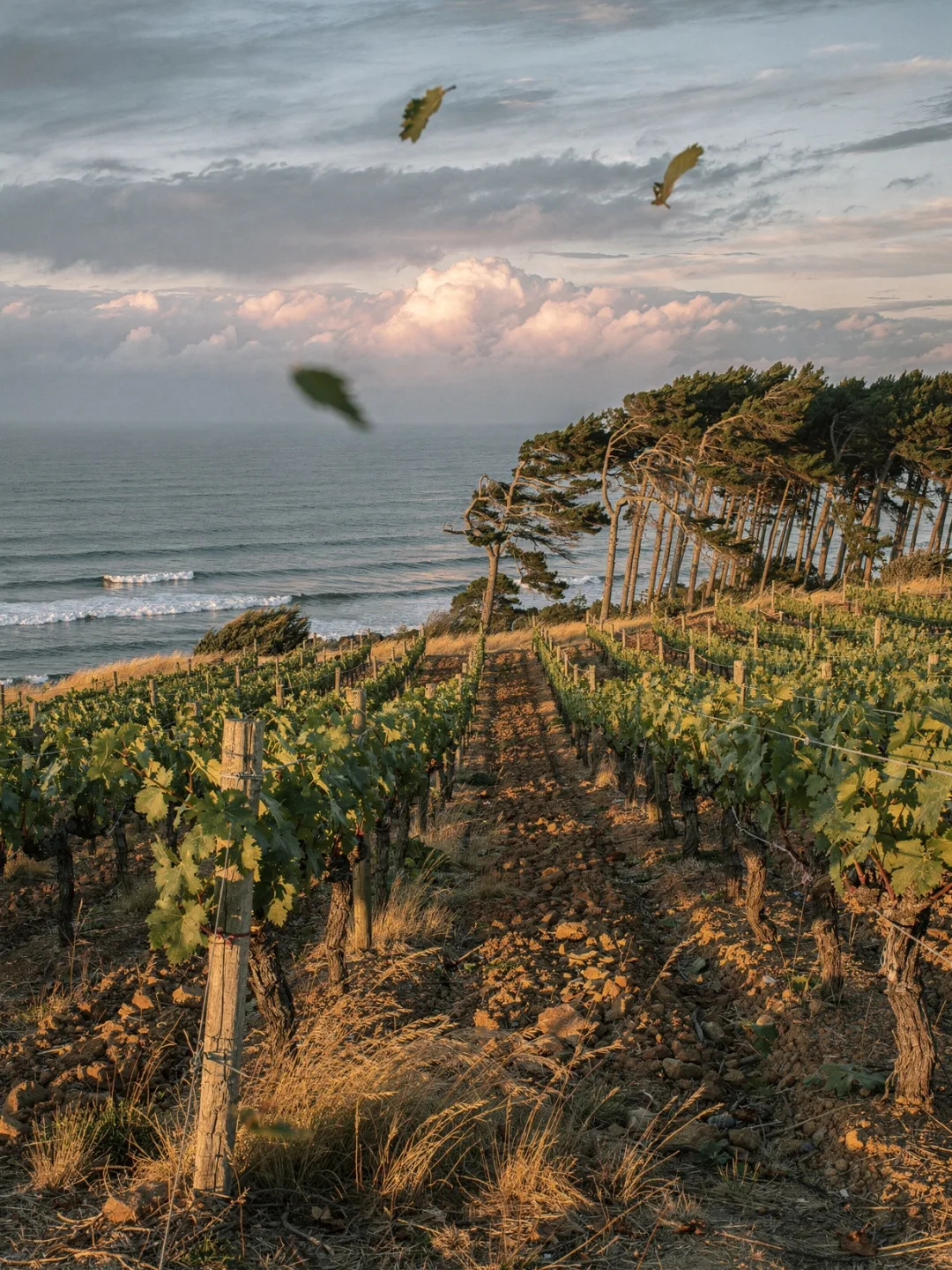
No vineyard in Maldonado really sits far from the sea. Garzón is about 18 kilometers from the coast, while Alto de la Ballena on the Sierra de la Ballena is just fifteen. That's close enough for the Atlantic to shape the climate every day, and far enough to create a few degrees of difference between hillside and beach.
Under the Köppen classification, the coast around Maldonado has a humid subtropical climate. Temperatures throughout the year typically range between seven and twenty-seven degrees Celsius and rarely dip below two or climb above thirty-two. The sea tempers swings in both directions.
Wind here is no minor detail, it's the actual tool at work. It breaks up sultry heat spells whenever it turns from the south, and it keeps the grapes dry between showers. Less moisture on the berry means less fungal pressure, and less fungal pressure means fewer sprays in the vineyard.
Uruguay's wine authority, INAVI, groups Maldonado together with the neighboring department of Rocha as the so-called Región Oceánica. There, grapes ripen more slowly and steadily than in the warmer interior, because proximity to the sea caps the heat spikes. That preserves the acidity. It's exactly why Albariño and Sauvignon Blanc stay so fresh here, even though Uruguay overall isn't considered a cool-climate wine country.
Even within the region, though, there are differences. Piriápolis and José Ignacio sit almost right on the water and suit crisp white wines particularly well. Garzón and the Sierra de la Ballena lie a bit higher and further inland, where Tannat also ripens reliably without losing all of its acidity. One and the same department, yet two noticeably different climate zones.