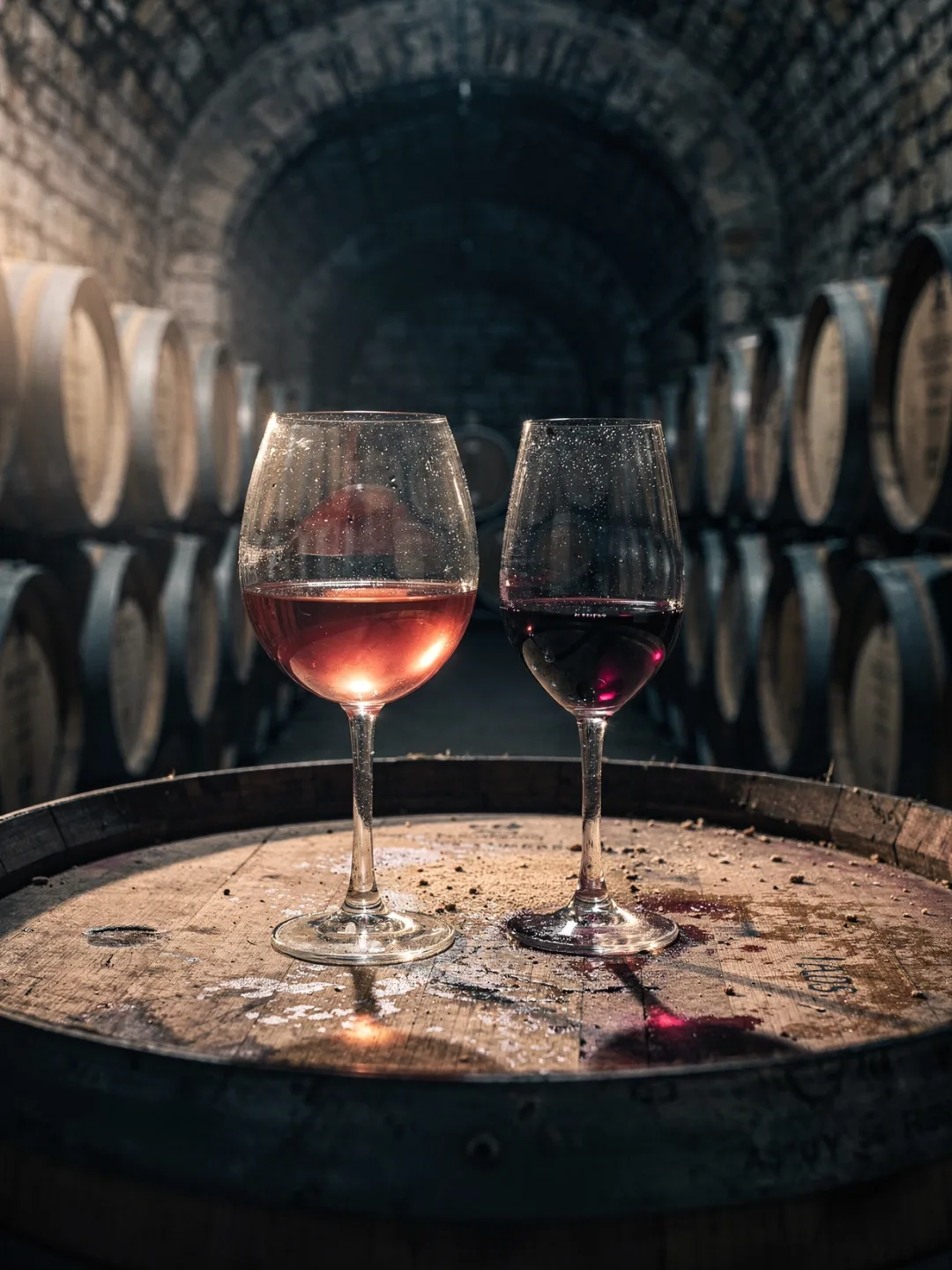
Burgundy & Bordeaux
Glassware
A glass decides how much of a wine actually comes through. In Central Coast, two quite different wine worlds sit just an hour's drive apart. A cool-grown Pinot Noir from the Santa Lucia Highlands needs a different vessel than a sun-ripened Zinfandel from Paso Robles.
For Pinot Noir, a large, bowl-shaped glass with a wide opening suits best, the kind Burgundy drinkers have used for ages. This grape's thin skin yields little color and tannin, but plenty of delicate aromatics, and the wide surface area in the glass lets in enough air for these subtle notes to unfold at all. A narrow glass would trap the aroma right in.
With Zinfandel and the bold GSM blends of Paso Robles, the problem flips. These wines often carry fourteen to over fifteen percent alcohol, along with plenty of tannin and dense fruit. A glass with a narrower, inward-curving rim, like a Bordeaux glass, steers the alcohol vapor away from the nose's entrance. That way, blackberry and spice come through first, before the warmth of the alcohol follows.
Temperature matters more here than elsewhere. A Santa Lucia Pinot barely tolerates fridge temperature — at twelve or thirteen degrees Celsius it turns mute and sour, only opening up at sixteen to eighteen degrees. A Paso Zinfandel, on the other hand, quickly tips into boozy territory at room temperature; it tastes rounder chilled for twenty minutes before it hits the glass.
Both extremes show the same principle from two sides. Anyone looking for a single glass for all of California will be disappointed. Central Coast spans too wide a range, from foggy benches to scorching limestone slopes, and every wine from it demands its own vessel.