Pinot & Zinfandel
Grape Varieties
Few grape varieties have reshaped the Central Coast's reputation as much as Pinot Noir. It needs cool nights and long, mild days, and that's exactly what the benches of the Santa Lucia Highlands above the Salinas Valley and the wind-swept hills of the Sta. Rita Hills further south provide. Its skin is thin: little pigment, little tannin — that rough, drying grip you feel on your gums after a sip. What remains is an aroma that makes every fog bank feel present in the glass.
In 2004 a film came along and accelerated what had already begun. In "Sideways," filmed in the neighboring Santa Ynez Valley, a character raves about Pinot Noir while trashing Merlot. Within a few months, Merlot sales in the western US dropped by roughly two percent, while Pinot Noir rose by about sixteen percent. Central Coast winegrowers ripped out Merlot blocks and replanted.
The second major family works entirely differently: the Rhône varieties. Grenache, Syrah, Mourvèdre, and the white Roussanne only arrived in meaningful quantities in the nineties. Many cuttings came from Tablas Creek winery, which imported its vines directly from Château de Beaucastel in southern France. Grenache, Syrah, and Mourvèdre come together to form the so-called GSM blend, named after the initials of the three varieties. It tastes bold and spicy, built for warm, stony slopes.
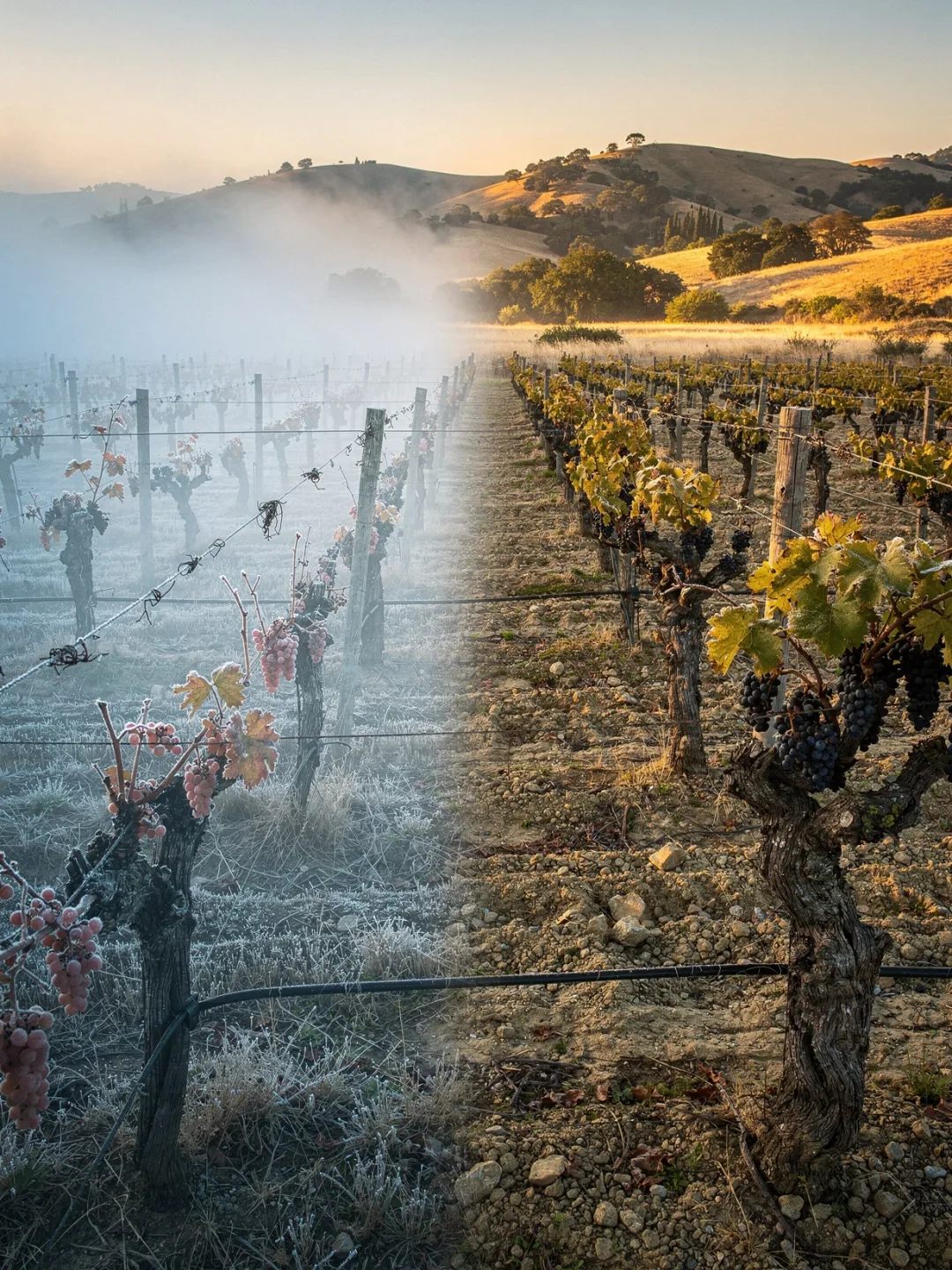
Oldest of all is Zinfandel. On York Mountain, vines still stand that are said to trace back to Andrew York's 1882 planting. They grow without irrigation — what's called dry-farmed, relying on nothing but rainfall and soil moisture for the roots. Such old, water-starved vines yield little but concentrated fruit: the wine tastes of blackberry and stewed plum and often carries more alcohol than a Chardonnay from the very same road.
In the warmer east of Paso Robles, in the flatter districts toward Estrella, Cabernet Sauvignon dominates instead. Here, starting in 1981, Justin Baldwin blended Cabernet Sauvignon with small amounts of Cabernet Franc and Merlot to create his Isosceles, named after the equilateral triangle formed by the three varieties. In 1997, a vintage of it won an award in London for the world's best blended red wine. Proof that Bordeaux varieties can find a voice of their own on Californian limestone.