Slim for Acidity
Glassware
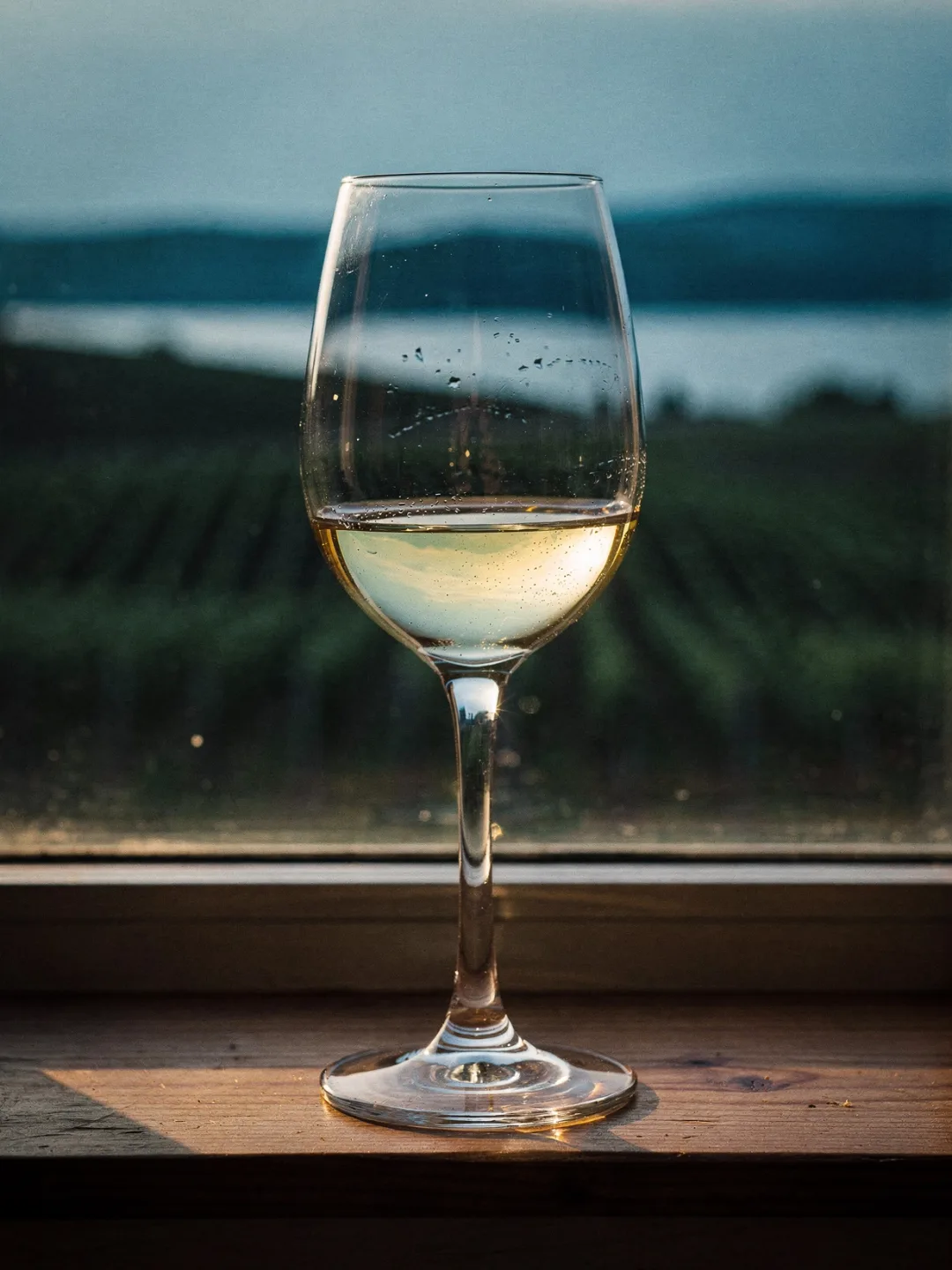
Few pieces of wine gear are as underrated as the glass. Pour a Finger Lakes Riesling into a standard all-purpose glass, and half the aroma stays trapped inside instead of reaching your nose. That might not matter for a simple everyday wine. For a wine whose entire tension rests on acidity and delicate aroma, it matters a great deal.
A narrow, tall glass with a slightly tapered rim concentrates exactly the aromas that cool nights over Seneca Lake bring to the grape: green apple, lime zest, sometimes a hint of flint. A wide glass, the kind used for full-bodied reds, would simply let these quiet notes drift away before the nose can catch them. That's why Finger Lakes winemakers almost always reach for the slender white wine glass at tastings, never the round-bellied balloon.
With ice wine, the rule nearly flips. An ice wine made from Vidal Blanc carries so much concentrated sugar that a standard wine glass would overwhelm it. A small, tulip-shaped dessert wine glass holding just five or six centiliters is plenty—any more would be too sweet to get through an entire evening.
For Cabernet Franc from the slopes of Keuka Lake, a slightly rounder glass than for Riesling will do, though nothing close to a full Bordeaux glass. The grapes here deliver less power and more herbal, bell pepper, red cherry character—too large a glass lets these notes fade away. Never pre-chill the glass in the freezer. Do that and all you'll taste in the end is cold, not wine. The wine itself is served cooler than a Napa Cabernet regardless, somewhere between fourteen and sixteen degrees Celsius.