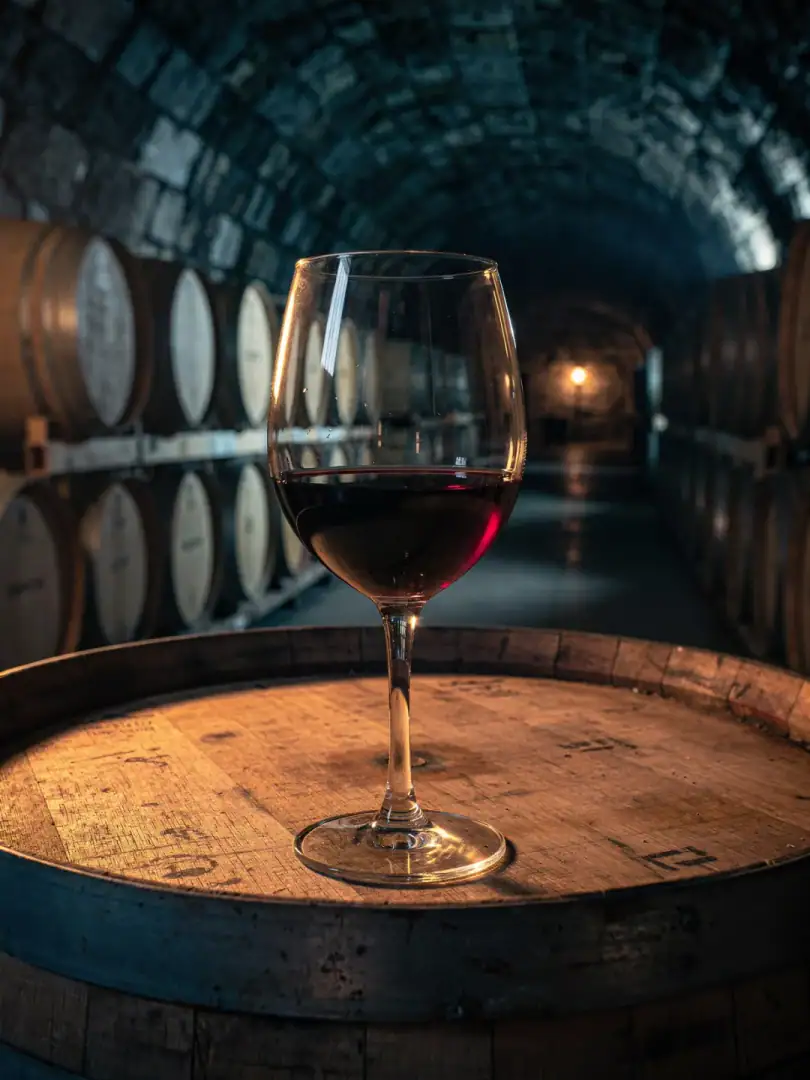
Wide Glass, Cabernet
Glassware
A young Cabernet from Napa Valley often comes out of the bottle closed off. The tannins are still tight. The fruit hides behind toasty oak notes, and that's exactly why this wine needs more room in the glass than almost any other: a large, bowl-shaped glass, so as much surface area as possible meets the air. That's what loosens the wine's grip in the mouth.
The shape follows the wine. The bowl is wide at the bottom so the wine spreads across a large surface when swirled, then narrows toward the top so cassis, cedar, and vanilla concentrate at the rim before rising to the nose, rather than escaping immediately. Alcohol content often exceeds fourteen percent. Without the wide bowl, too much ethanol evaporates first. Then the wine smells sharp and hot, barely revealing its actual fruit.
Not everyone has time to decant. Swirling a young wine from Stags Leap or Rutherford Dust in a large glass for fifteen to twenty minutes brings it noticeably closer to the point where fruit and tannin align than it would be straight after uncorking, a difference you can taste from the very first sip. Small, narrow glasses can't achieve that. Shapes like that are mostly reserved for sparkling wine.
That's why nearly the entire valley pours from the same large glass. It holds true in tasting rooms just as much as in a recreation of the Judgment of Paris or a simple tasting at a small winery's counter. That's no coincidence. Of all regions, the one that owes its reputation to a blind comparison places particular value on using the right vessel.