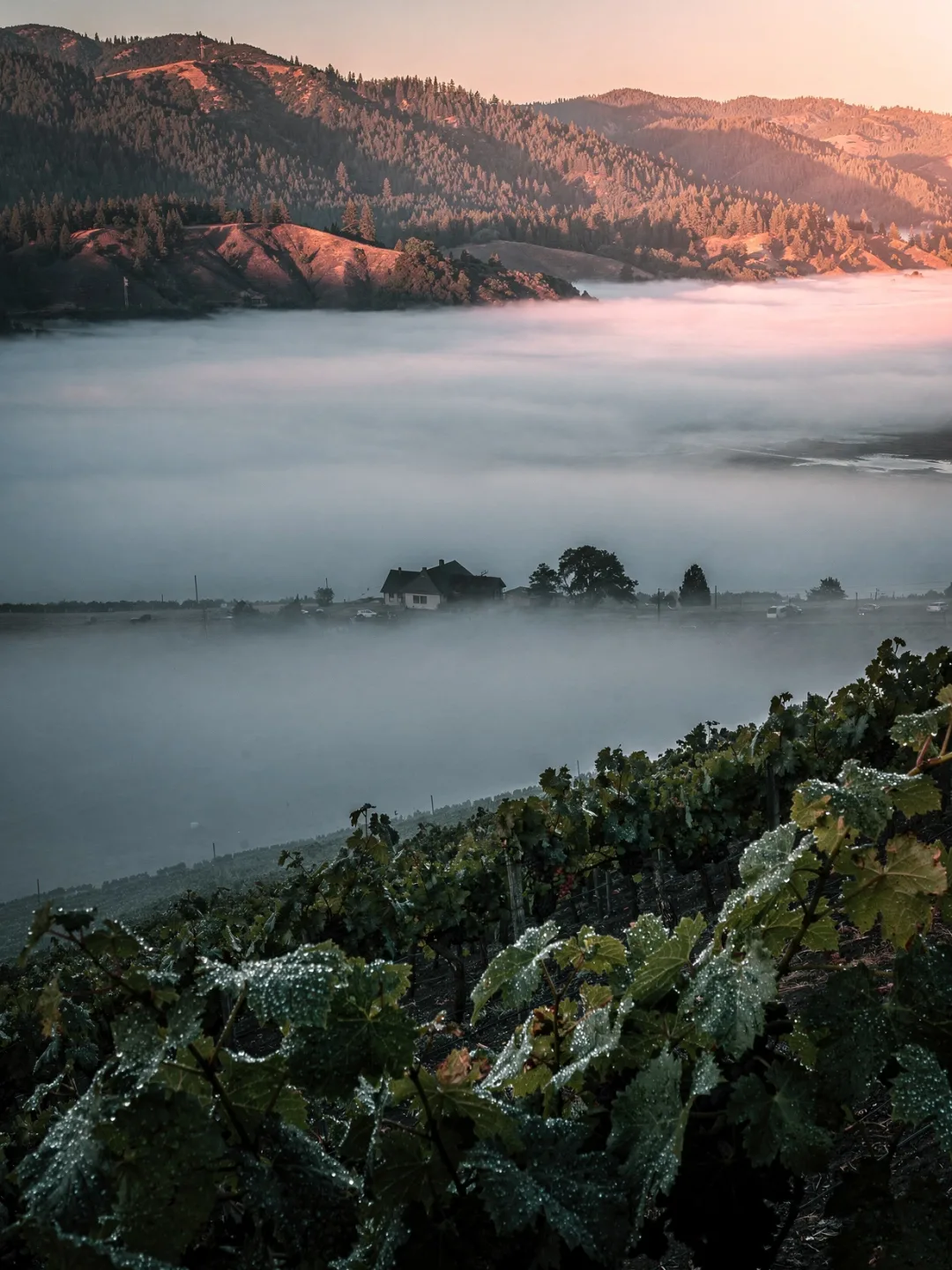
Fog and Nights
Climate
Fog is part of daily life in summer. Drive through Carneros at six in the morning in August and you can barely see thirty meters ahead, because gray fog rolls up from San Pablo Bay overnight and slides like a cool tongue between the hills. By noon it's gone.
This very fog decides the flavor. It keeps nights cool while days stay hot and dry, and this gap between day and night temperatures, what experts call the diurnal temperature range, reaches twenty to over thirty degrees Fahrenheit in the southern part of the valley. Acidity breaks down quickly in heat. Cool nights slow exactly that process and preserve the grape's freshness.
Not every part of the valley gets the same amount of fog. Carneros, at the far south, sits in the coolest climate tier of the Winkler system, which California viticultural research uses to rank growing regions into five tiers based on summer heat accumulation. Further north, toward Calistoga, the bay's influence fades. There, the day-to-night temperature swing narrows to nineteen to twenty-five degrees, and daytime temperatures climb noticeably higher.
Two mountain ranges frame the valley like a trough. The Mayacamas to the west and the Vaca Mountains to the east channel the fog and cast shadows at different times of day, so that one slope stays cool in the morning while the opposite one already bakes in full sun. Some sites rise above the fog entirely. They ripen more evenly than the valley floor below, since the cool, damp night air never reaches them.
Fifty kilometers separate cold climate from warm. Within that short stretch lie a cool climate suited to Pinot Noir and a warm growing region for dense Cabernet, side by side. No other detail explains that better.