Crab, salmon, mushroom
Wine & Food
A plate from Oregon often starts in the forest, not the field. From August to December, people gather Pacific golden chanterelles in the damp conifer forests of the Coast Range, officially Oregon's state mushroom since 1999. Over two hundred thousand kilograms come out of these woods every year. Their flavor is earthy and lightly fruity, and it pairs remarkably well with wines from the same area.
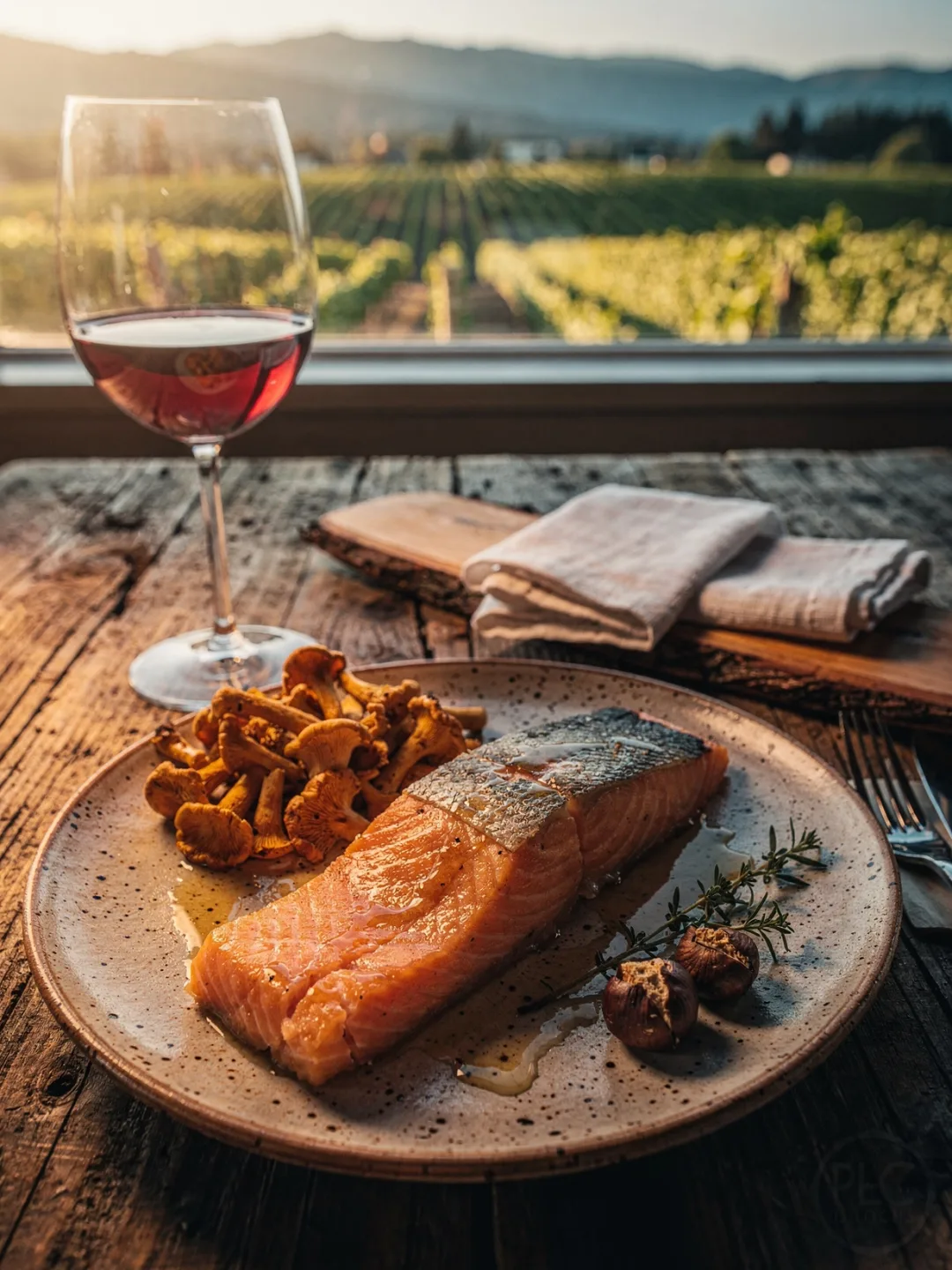
A sautéed chanterelle in brown butter, with a touch of thyme and a splash of cream over pasta or alongside seared duck breast, tastes earthy and warm. It matches the earthy, leafy notes of a Willamette Valley Pinot Noir almost perfectly. Both essentially come from the same damp forest floor. One just grows in it, the other above it.
By the nearest river or right along the coast, the second star takes its place at the table: Dungeness crab. Named after a harbor town in neighboring Washington State, it's equally at home along the Oregon coast. Its meat is sweet, lightly salty, and tender — exactly what calls for a cool, dry Pinot Gris, whose acidity cuts through the richness of crab butter without overpowering the delicate flavor.
Wild king salmon from the rivers flowing out of the Cascade Mountains, on the other hand, calls for red wine. Grilled on cedar planks over an open flame, it develops a smoky sweetness. This pairs with the fine acidity and light tannin of a Pinot Noir to create a combination that grows almost nowhere else so close together — river and vineyard are often just a half-hour drive apart.
Dessert almost always brings the hazelnut, known here as the filbert. More than ninety-nine percent of the American harvest grows in Oregon alone, much of it in the same valleys where Pinot Noir thrives. That's no coincidence. Toasted over a chocolate cake or as a crisp crust on pan-seared fish, the nut brings exactly the slightly bitter, toasty note that makes a mature Pinot Noir taste even rounder at the table.