Cherry, earth, salt
Tasting
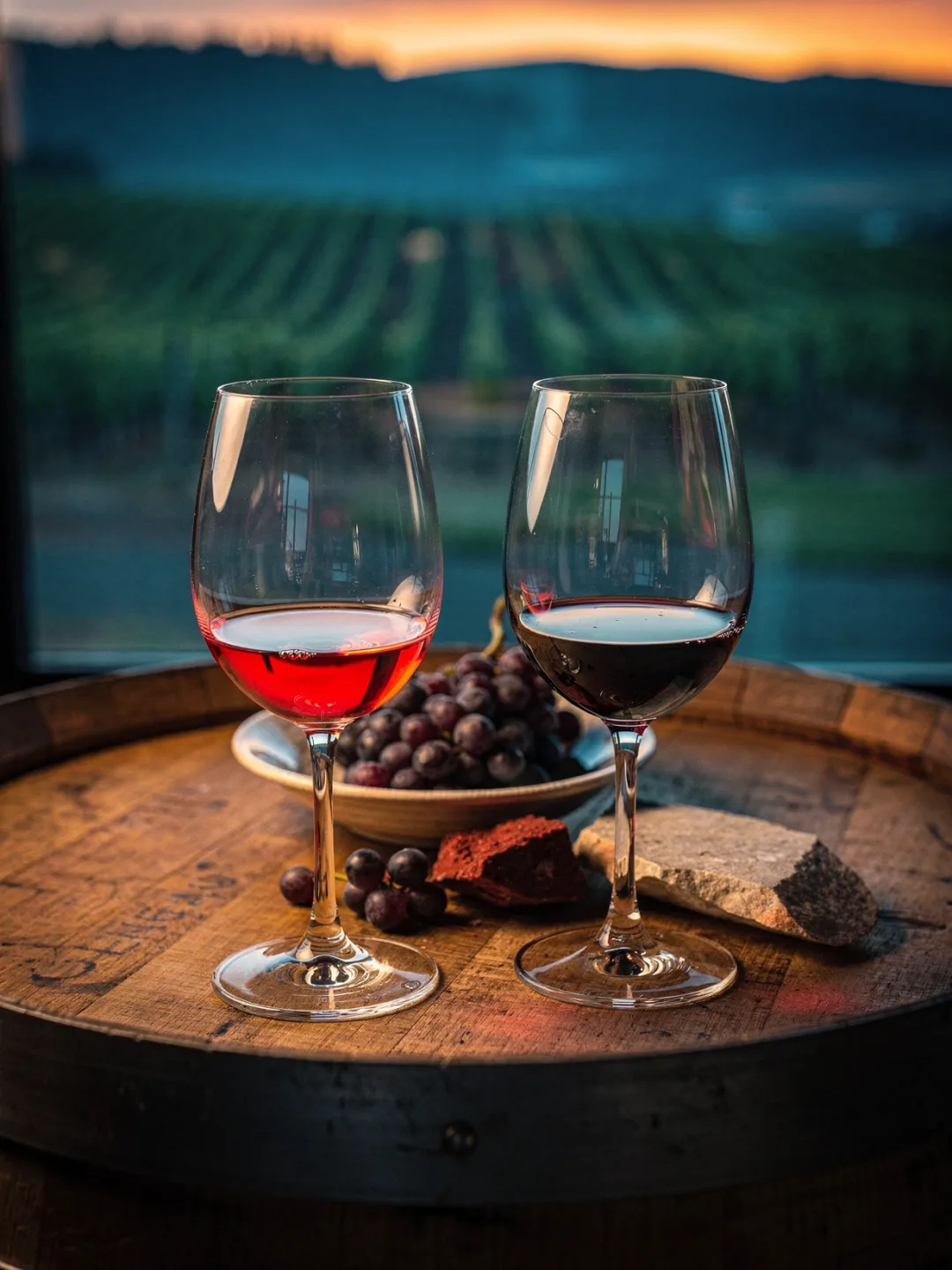
The color surprises almost everyone at first glass. Pale, almost like a deep rosé, with a translucent rim. This belies the intensity that hits the nose right away. Sour cherry follows, sometimes cranberry, along with a damp, earthy note reminiscent of freshly turned leaves.
On the palate, the acidity stands out first. It feels lively, almost saline, and keeps the wine from seeming thin despite its lightness. The tannin, that drying, slightly furry grip on tongue and gums, stays fine and rounds off quickly, unlike the tannins in fuller-bodied reds from warmer countries. Alcohol usually sits between 12.5 and 13.5 percent. That's noticeably lower than most California Pinots.
Tasting two bottles side by side, one from Jory soil and one from Willakenzie, reveals the difference faster than you'd think. One tastes rounder, of cherry and red currant. The other feels tighter and darker. It carries a fine saline edge. Comparisons like these have led many Willamette Valley wineries to bottle their best single vineyards separately rather than blending them into one wine – a practice Eyrie Vineyards began back in the seventies.
A Tempranillo from the Umpqua Valley or a Syrah from the Rogue Valley tastes entirely different: darker fruit, more warmth, firmer tannin, often with a spicy note reminiscent of black pepper. Between these two tastings lies almost the entire spectrum a single US state has to offer in wine. And less than two hundred kilometers separate them as the crow flies.