Pinot to Tempranillo
Grape Varieties
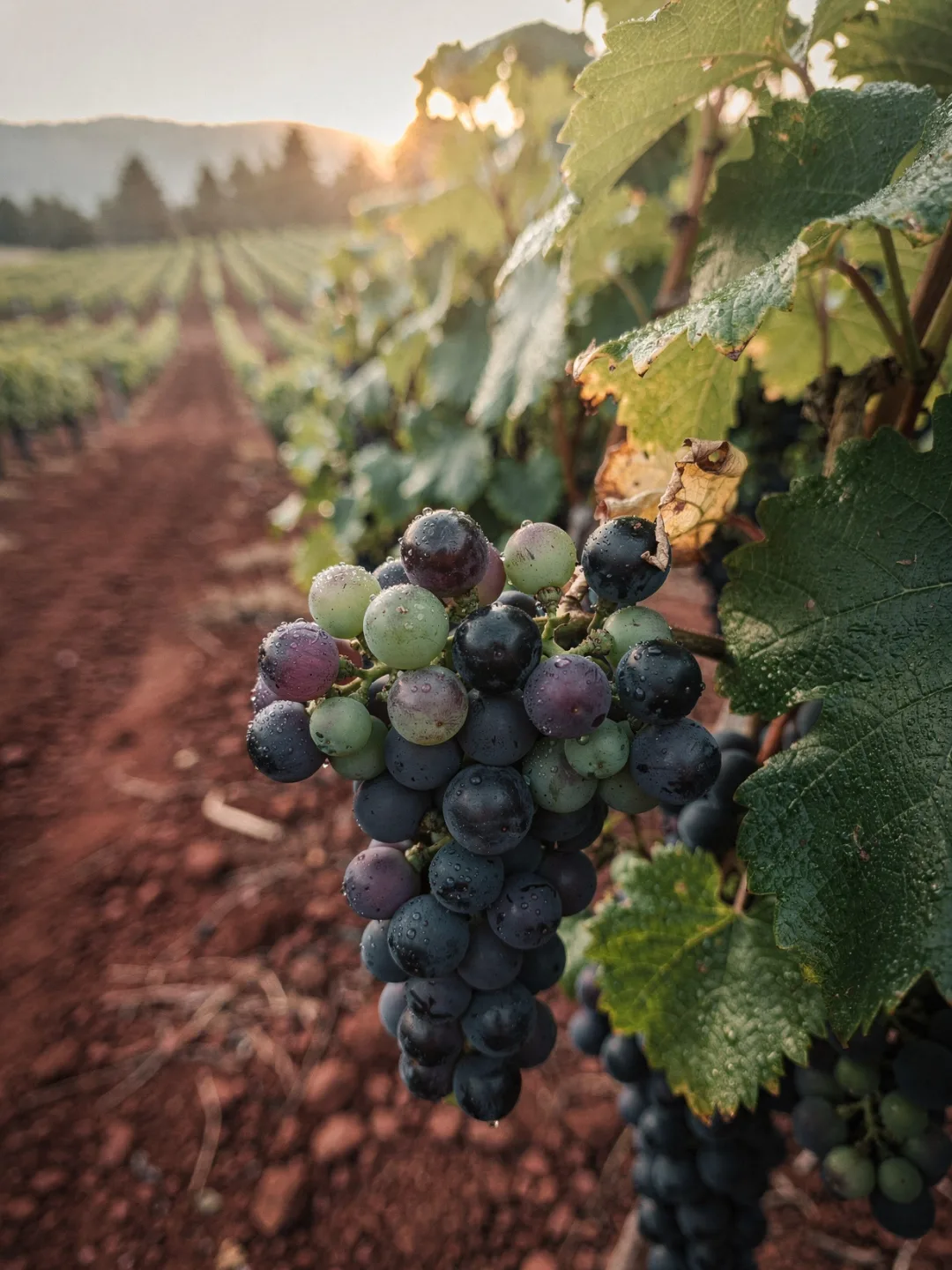
One grape variety defines the state like no other. Pinot Noir covers far more acreage in Oregon than any other variety, especially in the Willamette Valley, where the cool, temperamental climate demands more of it than in almost any other New World region. Other varieties trail far behind. It ripens late. In a wet autumn, an entire harvest can turn within just a few days.
Almost as important is its white cousin. Pinot Gris arrived via the same pioneers and grew into Oregon's most widely planted white variety, made dry, with an acidity that recalls a ripe pear with lemon zest more than the sweeter Italian mass-market wines of the same name. Smaller amounts of Chardonnay and Riesling round things out. Both have improved noticeably over the past twenty years, since growers moved them to cooler hillside sites.
Oregon regulates its labels more strictly than the federal government does. This protects origin. Federal rules require only 75 percent of the named grape variety for a varietal wine, but Oregon requires at least 90 percent for Pinot Noir, Pinot Gris, Chardonnay, and around fifty other varieties. Only eighteen heat-loving varieties are exempt. These may be blended with up to a quarter of other varieties, as elsewhere in the US, including Cabernet Sauvignon, Merlot, Syrah, and Zinfandel, varieties that tend to grow in the state's warmer south anyway.
Right there, in the Umpqua Valley, two scientists with no cellar experience whatsoever proved in 1995 that Oregon could do more than Pinot. No one had tried it before. Earl and Hilda Jones moved here from the East Coast and became the first in the US to plant Tempranillo on a larger scale, that Spanish red grape otherwise known mainly from Rioja. Their winery, Abacela, showed that a drier, warmer valley just a few hundred kilometers south of the Willamette Valley follows entirely its own rules.
In the even hotter Rogue Valley, further south still, Syrah and Tempranillo continue to thrive today. The climate allows for it. Sometimes even Rhône Valley varieties like Viognier grow there. Between the coolest corner near Portland and the warmest near the California border lie more climatic differences than the state's size would suggest.