Why Wind Matters
Climate
The Willamette Valley sits near the 45th parallel. That's the line halfway between the equator and the North Pole, and in France it runs closer to Bordeaux's latitude than Burgundy's, as a quick look at the map shows. Yet the climate here feels just as cool as Burgundy's. The reason isn't the latitude, but the water: the cold Pacific Ocean right off the coast.
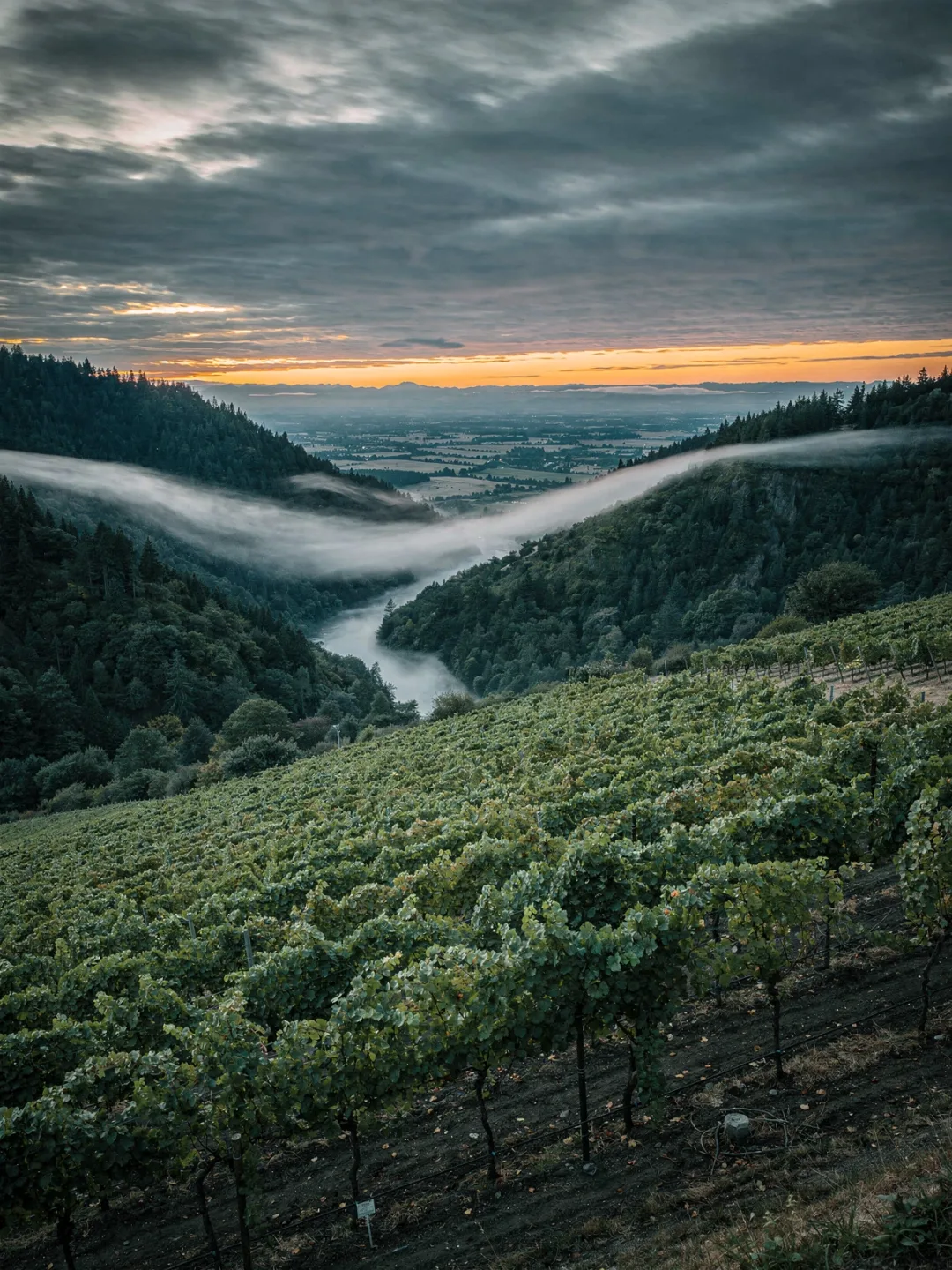
Between the ocean and the valley stands the Coast Range, a low mountain chain that blocks most of the moisture and cold. In one spot, though, it dips down. At the Van Duzer Corridor the range drops to just a few hundred meters, letting cool afternoon air funnel into the valley, so that vineyards in this gap get noticeably more wind than anywhere else in the Willamette Valley. The authorities made it its own small wine region in 2018.
Just as important is the difference between day and night. Warm afternoons ripen the berries, while cool nights preserve the acidity, that fresh, slightly tart impression on the palate that separates a lively Pinot Noir from a tired one. Without this nighttime drop, the grapes would taste sweeter, but flatter too.
Further south the picture changes. Behind a second mountain range, the Rogue Valley and Umpqua Valley sit in the rain shadow of the coastal mountains and get barely any cooling from the Pacific. Summers there turn hotter and drier, nights stay milder. That's exactly what allows late-ripening varieties like Tempranillo or Syrah, which would stand little chance in the Willamette Valley.
Rain follows a similar pattern across the whole state. Wet from November to April, dry the rest of the year. Anyone still harvesting in October is hoping above all for one thing: that the first autumn storms off the Pacific hold off for just a few more days.