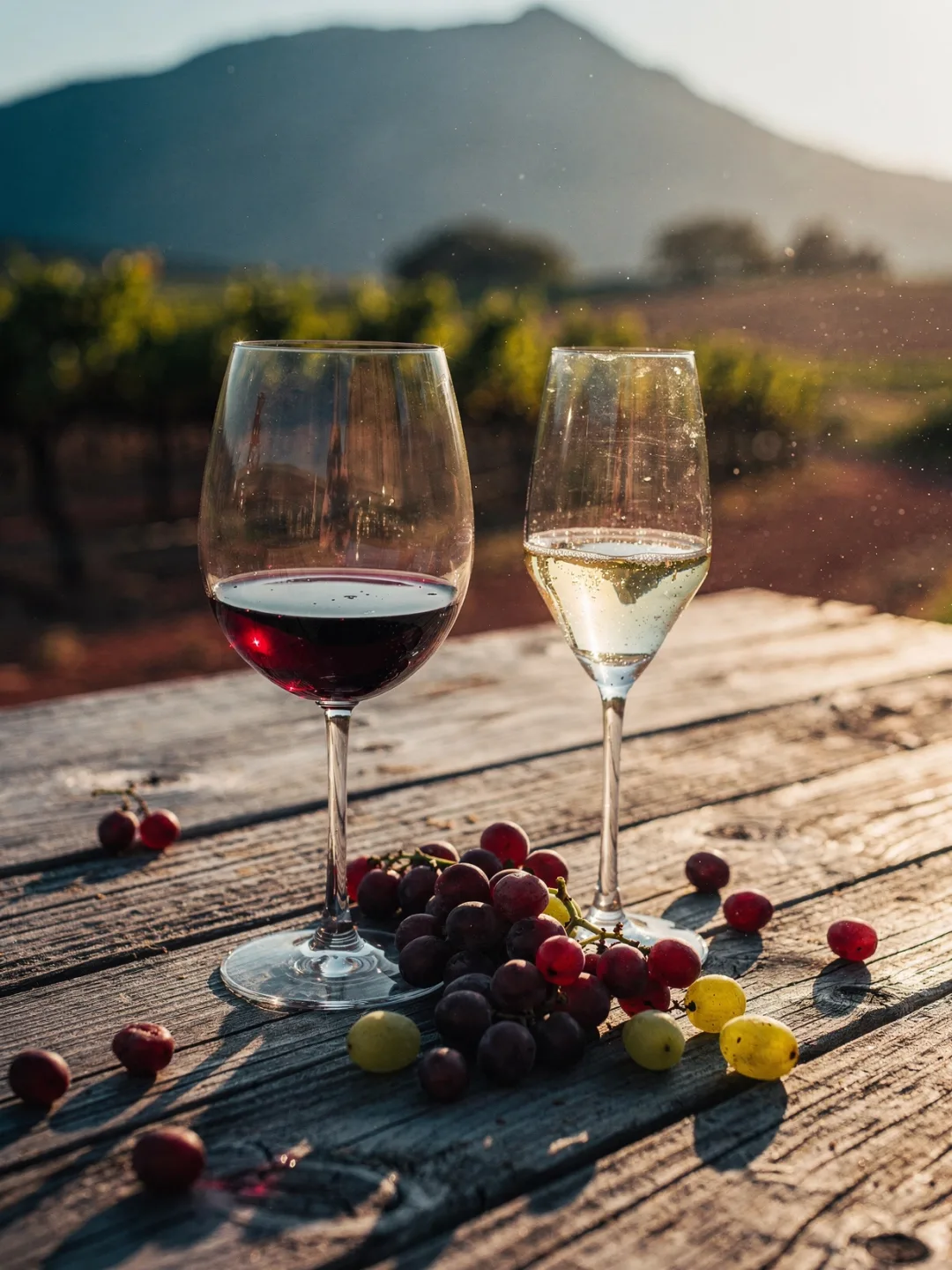
Bordeaux Glass for Cabernet
Glassware
Before you even taste a wine, the glass has already had its say. This shows especially clearly with Washington's signature variety, Cabernet Sauvignon from Red Mountain or the Walla Walla Valley. These wines carry plenty of tannin and bold fruit, ripened on hot, stony slopes. Too narrow a glass squeezes both together tightly, and the wine ends up tasting hard.
A large, bowl-shaped Bordeaux glass solves this. The wide opening opens up the wine, bringing plenty of it into contact with air, which noticeably rounds out the tannin within minutes of pouring, while the tall, tapering bowl channels the aroma of black currant and cedar straight to the nose instead of losing it in the glass. With a young, still somewhat edgy Cabernet from Red Mountain, this difference can make the wine taste years more mature.
Rieslings from the Columbia Valley need the exact opposite. Tannin is almost entirely absent here. Instead, the wines live on acidity and delicate aromas of green apple and lime, so too large a glass dilutes this impression, since too much air reaches the surface. A narrow, tall white wine glass keeps the wine cool and the aromas concentrated, aimed squarely at the middle of the tongue, where the acidity does its work.
Syrah calls for yet a third glass. For the desert heat of Walla Walla, many sommeliers recommend a medium-sized shape, narrower than the Bordeaux glass but wider than the Riesling glass, because it preserves the variety's characteristic peppery note, which escapes quickly in too wide a bowl. No single glass suits all of these wines equally well here. Tasting your way through Washington means switching glasses almost as often as you switch varieties.