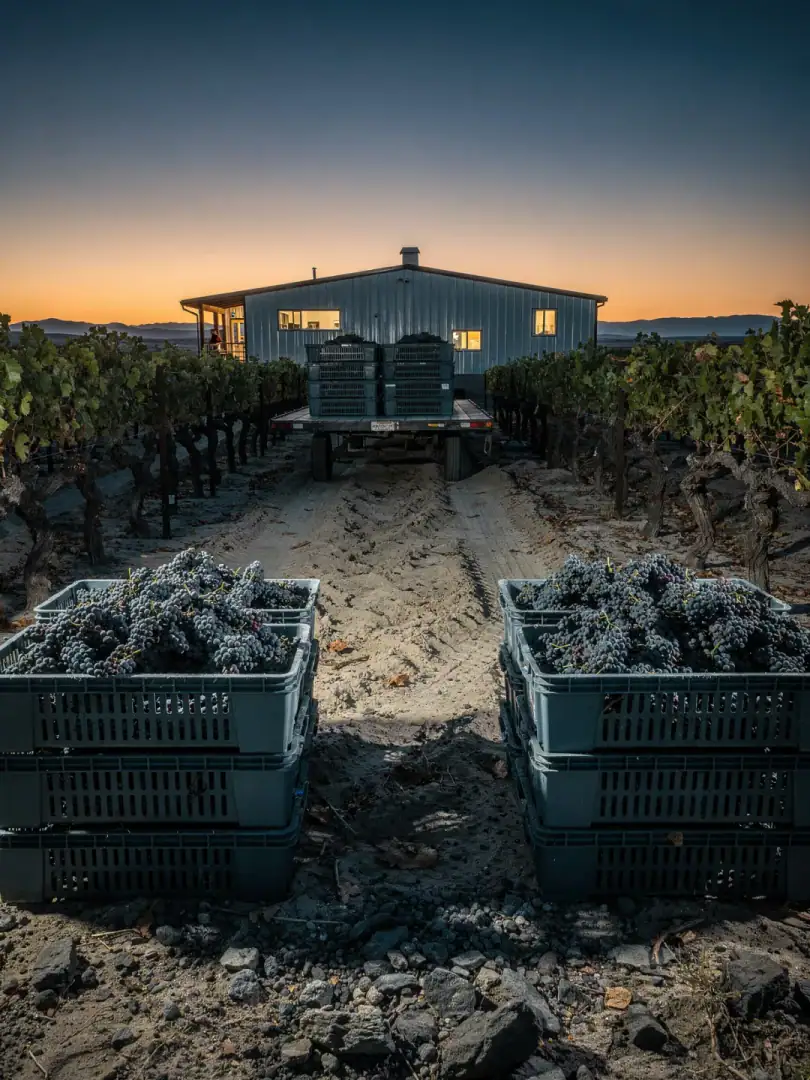
Ungrafted Vines Despite Sandy Soil
Winemaking
Nearly all vines in Washington grow on their own roots, not grafted onto resistant American rootstock as is standard almost everywhere else in the world. According to the Washington State Wine Commission, this applies to roughly ninety-nine percent of the state's vineyard area. The reason lies in the soil itself: the sandy layers left behind by the Missoula Floods give phylloxera nothing to dig into. This tiny pest defoliated nearly all of Europe's vineyards in the nineteenth century.
This is a rare luxury. Elsewhere, virtually every European vine must be grafted onto resistant American rootstock to survive, and winemakers in Washington take justified pride in showing off their ungrafted, own-rooted vines. Still, the situation isn't entirely secure anymore: in 2019, experts found an established phylloxera population for the first time in a vineyard near Walla Walla. Of all places, the soil there is less sandy and more clay-rich than in the rest of the Columbia Valley.
In the cellar, the real work often begins at night. Because midsummer days not infrequently top forty degrees Celsius, many wineries have their harvest crews work through the cool early morning hours instead. That way the grapes don't arrive at the press already warm. Fruit picked cool retains more acidity and fruit aroma. No cellar trick can make up for that afterward.
When it comes to aging, many wineries rely on both American and French oak, often blended within the same barrel program. A powerful Cabernet Sauvignon from Red Mountain can handle noticeably more new oak than a Riesling from cooler sites, whose freshness a barrel would smother rather than support. In the end, it shows: Washington's winemakers rely less on cellar tricks than on what the sun, sand, and cold nights have already accomplished out in the vineyard.