Rain Shadow and Latitude
Climate
Anyone who checks a map will find the vineyards of the Columbia Valley at roughly the forty-sixth parallel north, almost exactly the latitude of Bordeaux. And yet the wines taste hardly comparable. The reason lies less than two hundred kilometers to the west: the Cascade Range. It intercepts every storm blowing in from the Pacific before it can ever reach the eastern half of the state.
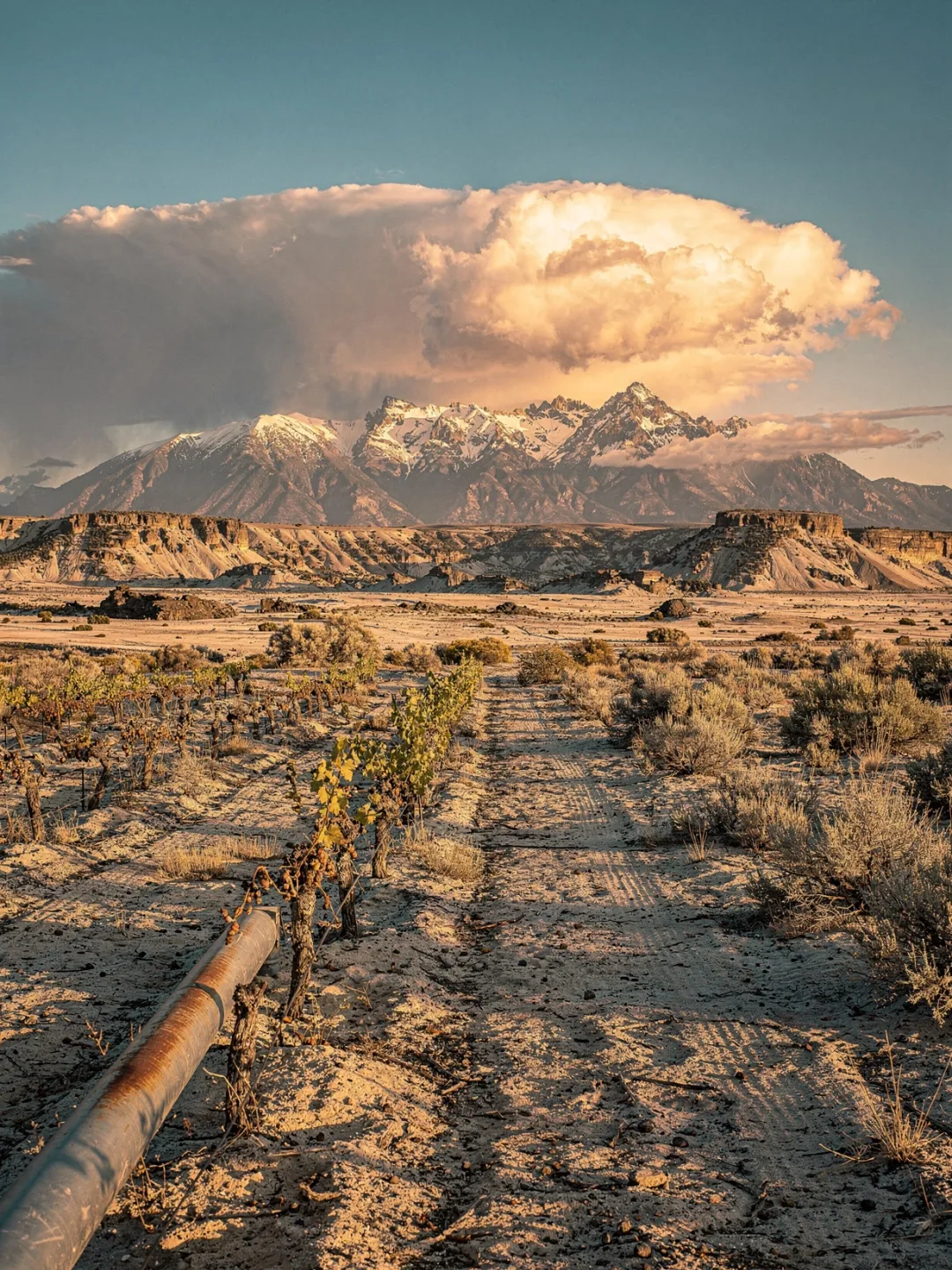
On the western side of the mountains, around Seattle, annual rainfall runs between nine hundred and a thousand millimeters. On the eastern side, where nearly all of Washington's vineyards lie, it's often only between one hundred fifty and three hundred millimeters a year. That's desert climate. Without artificial irrigation from the Columbia River, not a single vine would survive here. This very control over water gives winemakers a freedom that regions with heavy rainfall never have.
The second advantage lies in the sky itself. Because Washington sits so far north, daylight in midsummer stretches to as much as seventeen hours, a good two hours more than in California's Napa Valley. The grapes get noticeably more time to ripen without daytime highs needing to be any more extreme. More light at moderate heat: that's the real trick.
At night, the dry desert air cools quickly, often by twenty degrees Fahrenheit or more compared with the day's high. This swing locks the acidity into the berries while the fruit keeps ripening during the day, and it's exactly this back-and-forth that gives Cabernet Sauvignon and Riesling from the Columbia Valley their striking freshness. Still, the climate isn't without risk. A hard winter frost can set entire vineyards back to the trunk and cost an entire vintage's harvest.