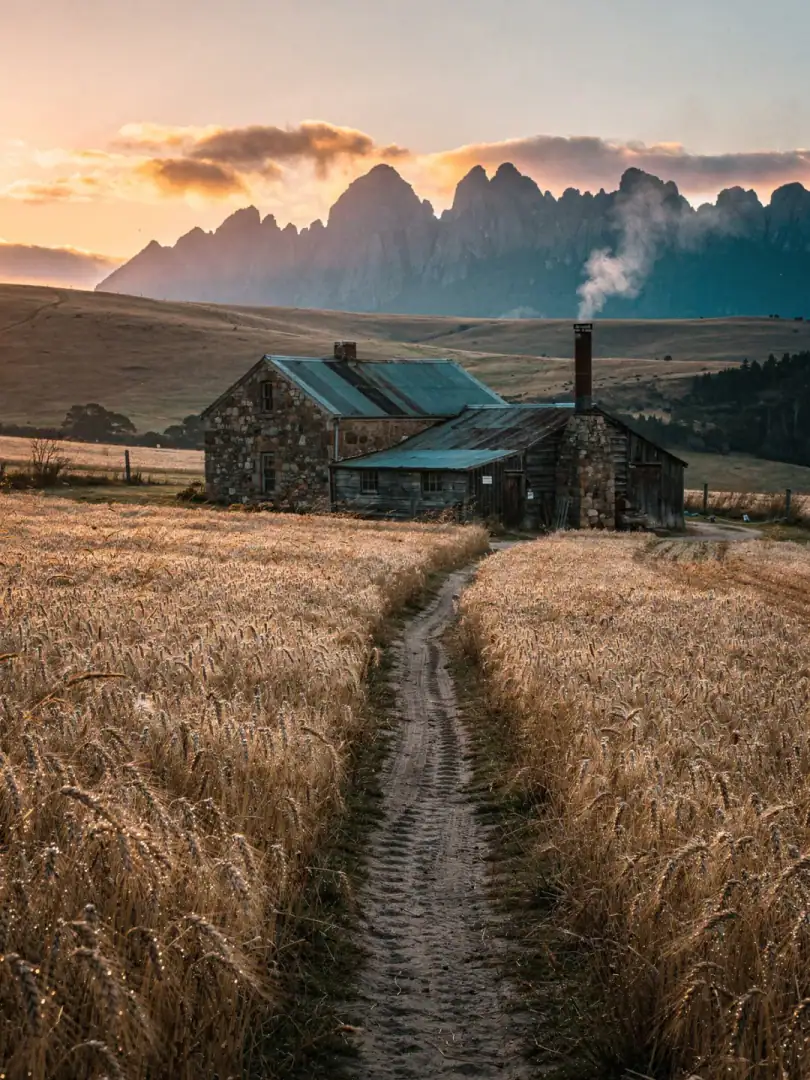
Barley and Rye
Grain
On a four-hundred-acre farm in the Tasmanian highlands grows the barley that later ends up in its own still. Lawrenny Estate grows its own grain, malts it, and distills it on the same property. This kind of end-to-end process is hard to find anywhere else on the island with the same consistency.
An even more striking exception is Belgrove, a small farm distillery on the island. Here, it's not barley but rye that gets processed, entirely home-grown. The operation malts, mashes, distills, and matures everything on the same farm. That makes Belgrove one of the few distilleries in the world that handles the entire journey from seed to bottle itself.
The first sip of rye whisky makes the difference from barley immediately obvious: spicier, drier, with a peppery bite reminiscent of bread crust. For Tasmania, this is a second voice, standing alongside the broad chorus of single malts that otherwise define the island.
Most of the larger houses, like Lark or Sullivans Cove, buy their barley from Tasmanian farmers rather than growing it themselves. The island's cool climate lets the grain ripen more slowly than on the Australian mainland, which results in more even starch and sugar levels in the mash from which the alcohol is later made.
The barley is usually malted in small malthouses on the island itself before heading to the distillery. For an island with fewer than half a million inhabitants, that's a remarkably short journey from field to cask.