Highland Lakes and Rain
Water & Climate
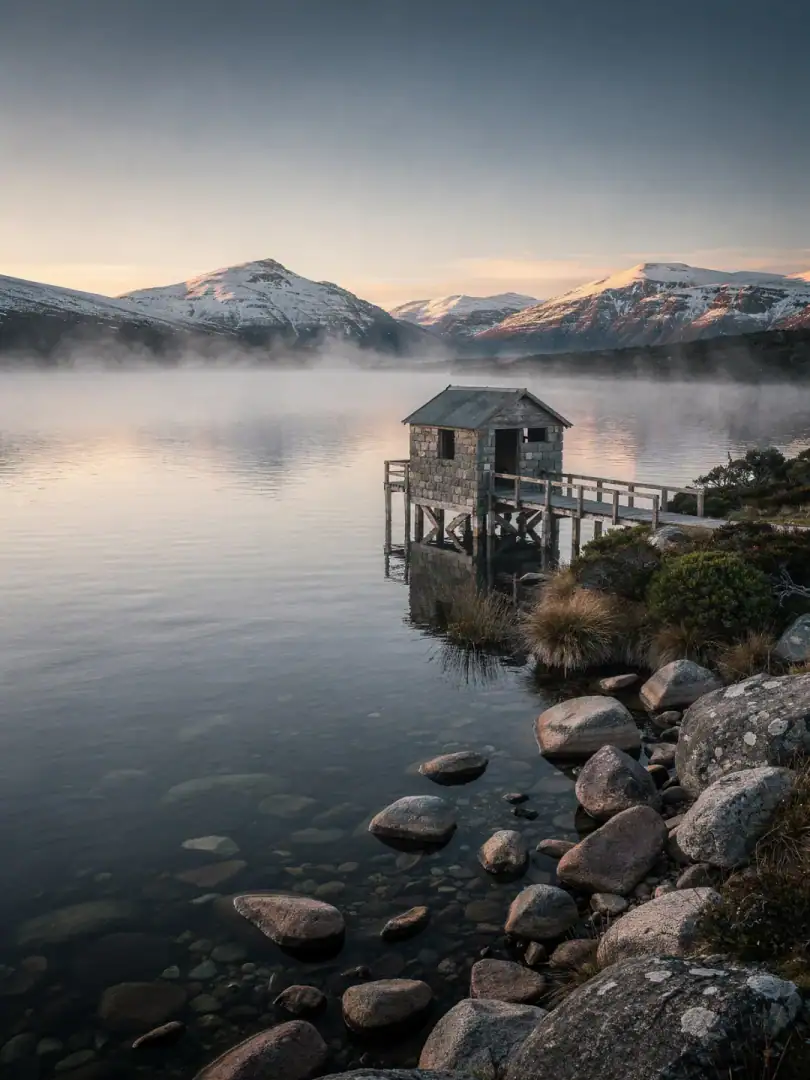
Anyone looking for whisky water in Tasmania doesn't have to go far. The highlands at the center of the island hold more than three thousand lakes, surrounded by snow-capped mountains and open pastureland—a remarkable number for an island this size.
The most important river for this is the Derwent River. It rises at Lake St Clair, Australia's deepest freshwater lake, and gathers minerals from the rock as it flows through the Derwent Valley before finally reaching the sea at Hobart. Distilleries like Lawrenny Estate draw their water directly from this system.
The island's climate is maritime temperate: long, mild summers with plenty of sun, short, cool winters, and low humidity overall. This exact combination caught Bill Lark's attention in 1989 while he was out fishing in the highlands. He later called it one of the reasons whisky simply had to be made here.
For cask maturation, this cool climate means something specific: the whisky matures more slowly than in warmer regions, but more evenly. The big temperature swings between day and night that make a cask breathe remain moderate in Tasmania.
The water itself is considered exceptionally soft and clear among distillers. It comes from rain filtered through rainforest and highland bog before it even reaches a river. Some distilleries swear by their own private source for this very reason, deliberately avoiding any mains water from Hobart's supply.