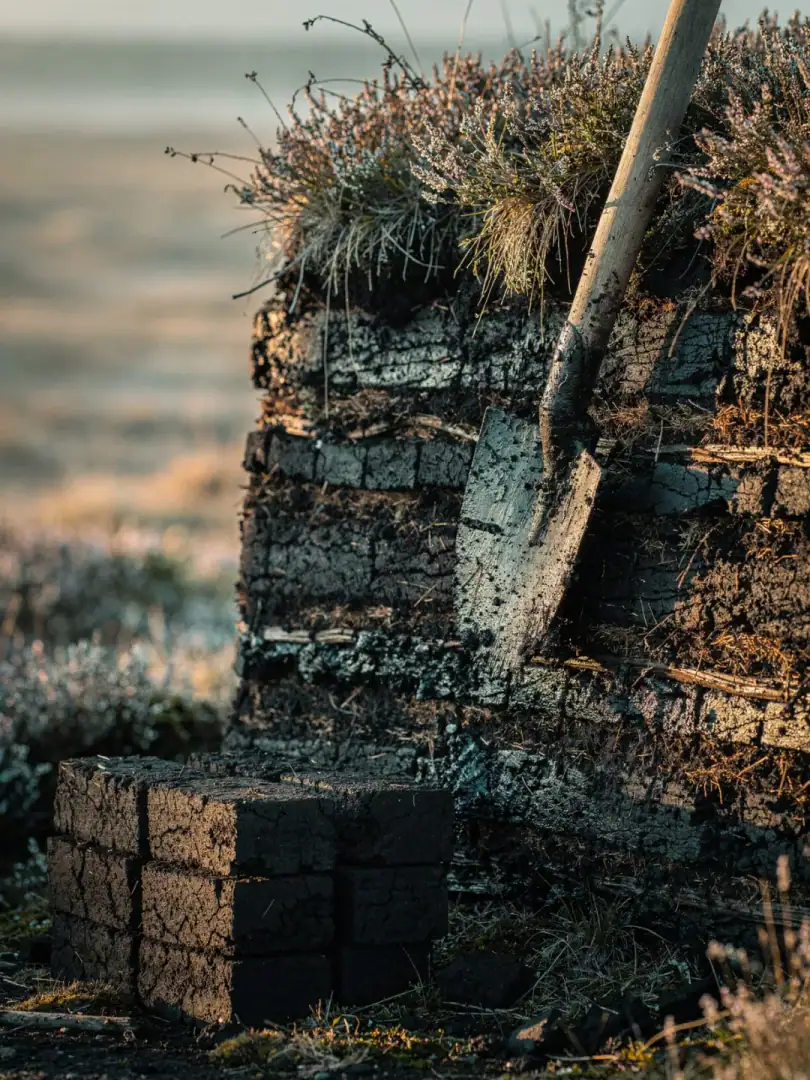
Malting Floor and Peat Bog
Malt & Peat
At Stauning, malting is still done by hand. The dampened grain rests for about a week on the distillery's own malting floor, turned by machines a local blacksmith built to the founders' specifications. Hardly any distillery this size still bothers with this level of effort; most buy finished malt from industrial maltings.
For the peated portion of the malt, peat comes from the Klosterlund bog and the area around Bølling Sø, a lake whose shores have been settled since the Stone Age. About a quarter of the grain processed is kilned over an open fire of peat and heather. The rest stays unpeated, going into the distillery's milder bottlings.
Smoke from Danish bogs tastes different from Islay's: sweeter, more floral, less medicinal. That's because the peat here is made of different plant material and lies less deep in salty coastal soil. The distillery doesn't regularly publish exact ppm figures, but the difference shows up in the glass from the very first sip: more hay and resin than iodine and bandages.
Fary Lochan near Give takes its own path, smoking its malt with dried nettles the family gathers each summer in the surrounding forest. The idea came from founder Jens-Erik Jørgensen, who as a child watched rygeost, Danish smoked cheese, being made the same way. He later applied the technique to whisky.
Beneath the turf of the bogs around Stauning lie several layers stacked on top of one another, each with its own smell once you cut through it. Open the ground there with a peat spade, and you'll see at a glance why this region's smoking material tastes so different from Scottish Islay peat.
A thin root mat of heather and grasses that caps the bog at the surface.
The root: Its fine fibers give young smoke a grassy, slightly resinous tone.