Fjord, Bog, Westerly Wind
Water & Climate
Ringkøbing Fjord lies less than two kilometers from the distillery. Only a narrow sandbar, the Holmsland Klit, separates it from the open North Sea. Yet the water used for mashing and dilution doesn't come from the fjord, but from the distillery's own well, which draws mineral-poor groundwater filtered through West Jutland's sandy soil.
This sandy subsoil is a legacy of the last Ice Age. West Jutland was one of the few areas in Denmark that stayed clear of the ice sheet, remaining instead as a so-called hedeslette, a wide heath plain of glacial meltwater sand. Lime and rock, which elsewhere make water hard, are almost entirely absent here. That's why the brewing water tastes soft and neutral.
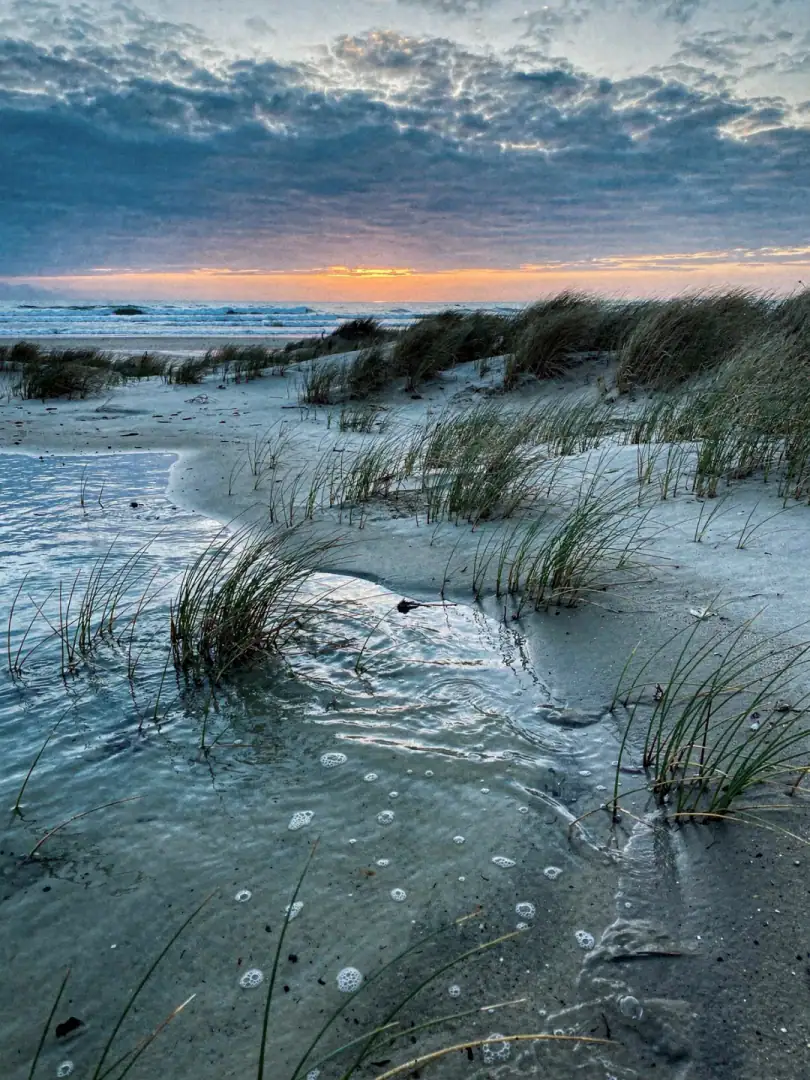
Wind blows in almost constantly from the North Sea along Jutland's west coast, raw and changeable, carrying moisture with it. Temperatures shift between summer and winter but stay moderate compared to continental Europe. For cask maturation, that means steadier temperatures than in dry continental climates, but also more evaporation thanks to the damp sea air.
Drive through the countryside around Stauning and you'll see little woodland and lots of open land. Heath, bog, and flat fields stretch to the horizon. These very bogs supplied peat long before the distillery existed, used by locals for heating for centuries. Today they supply the raw material for the region's smoky whisky.
Fary Lochan, tucked in the woods near Give in East Jutland, and Braunstein in the harbor at Køge on Zealand, both sit in similarly damp, sea-adjacent spots. No place in Denmark is far from water. This maritime climate is likely one reason why Danish whisky, on the whole, matures more evenly and mildly than whisky from drier regions.