Copper, twice distilled
Distillation
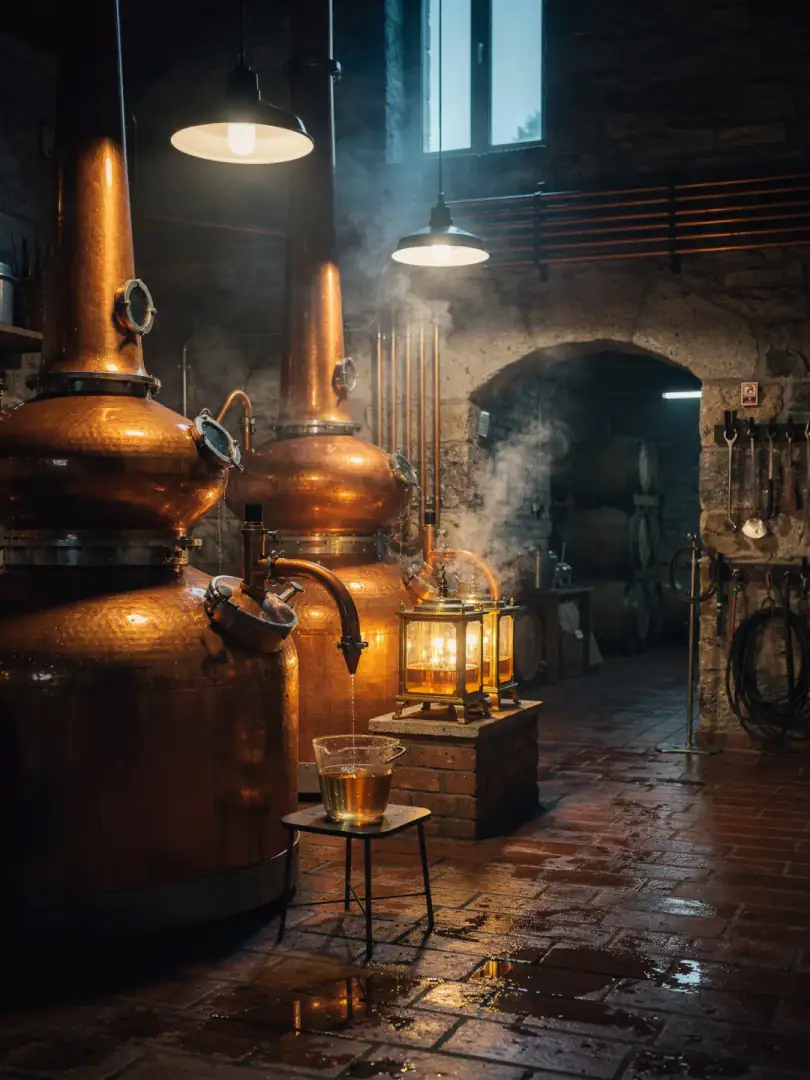
Copper pot stills, bulbous with a long neck, stand in Neuhaus am Schliersee just as they do in almost every Bavarian malt distillery. Some setups are tiny and run at a small scale, others have long since become industrially paced, but the principle has stayed the same for decades: copper binds unwanted sulfur compounds from the mash, making the result rounder and cleaner.
Like most malt distilleries, Slyrs distills twice: the first still roughly separates alcohol from the fermented mash and yields what's called the low wine, while the second still extracts the actual drinking spirit from it. Throughout, the distiller decides, by nose and by instrument, when to capture the middle cut, the heart of the run. The heads and tails go back into the next charge.
St. Kilian in Rüdenau, housed in the halls of a former textile dye works, follows the same basic principle with newer equipment. Since 2016, modern distilling technology there has run on the same pot-still logic as in the time-honored houses by the Schliersee.
At Fleischmann's Blaue Maus, everything started smaller and simpler, at a single kettle, the one Robert Fleischmann used in 1983 to malt and distill his first mash. Column stills, the kind big grain distilleries use for high volumes, are practically nonexistent in Bavaria. The region's character comes from the small copper kettle, not the assembly line.
How tightly the cut is set, meaning how much of the heads and tails are allowed into the whisky, differs from distillery to distillery and is often the best-kept secret in the whole operation.