Copper, Direct-Fired
Distillation
Walking through St George's Distillery in Roudham, you won't find much grandeur at first. Two copper pot stills stand there, each with a capacity of 1,800 liters, quietly at work since 2006. Small compared to some large Scottish distilleries, but large enough to have been distilling English malt for nearly twenty years.
At Cotswolds, there are four stills, two of them dedicated to whisky. They come from Forsyth & Son of Rothes in Scotland, the most storied coppersmith in the industry. The two whisky stills are named Mary and Janis. The fact that an English distillery orders its stills from Scotland shows just how closely the two whisky worlds remain intertwined technically. Flavor-wise, though, they go their own separate ways.
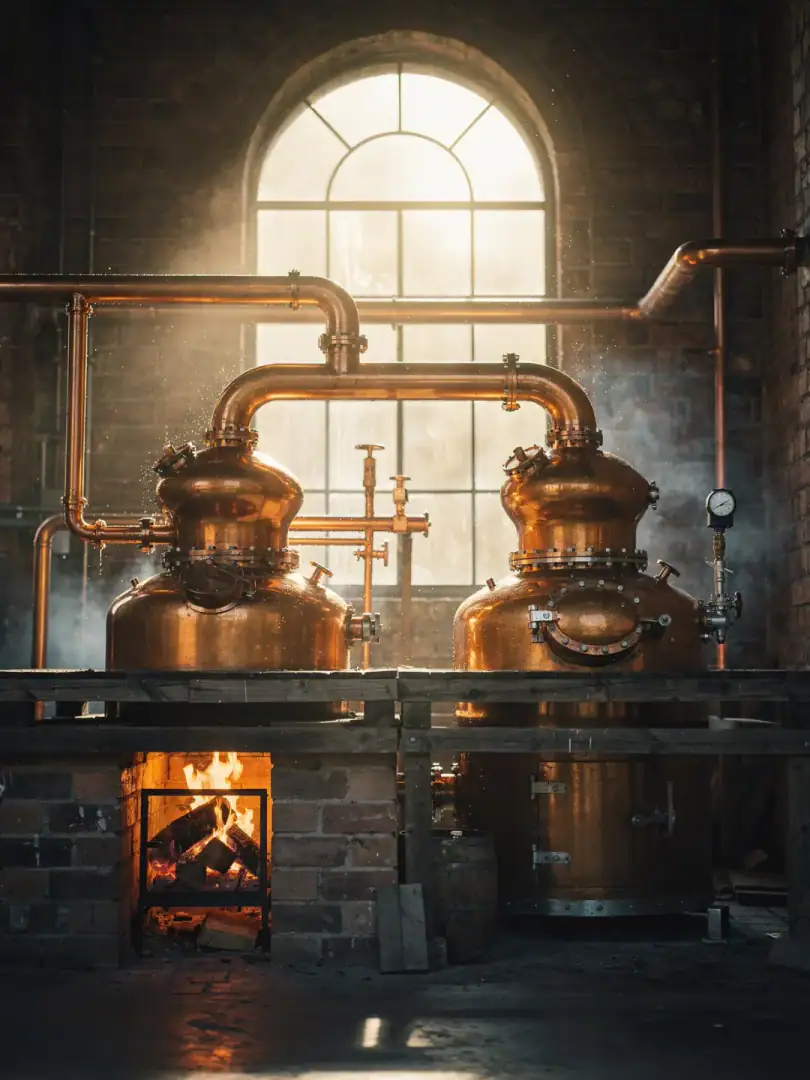
At Bimber in London, it works the other way around: small, direct-fired stills instead of steam coils. The wash still is named Doris and holds 1,000 liters; the spirit still, Astraeus, holds 600 liters. Open flame under the still has become rare, since it's harder to control. But it delivers more caramel and toasted notes in the new make, because the alcohol comes into especially close contact with the copper.
The Lakes Distillery in Cumbria also distills using copper pot stills. The setup sits in a converted barn on a farm dating back to the 1850s, near Bassenthwaite Lake. As with most young English distilleries, distillation happens twice. A wash still separates alcohol from the fermented beer, and a spirit still refines it further before the distiller separates the heart of the run from the heads and tails.