Bourbon, Sherry, STR
Cask & Maturation
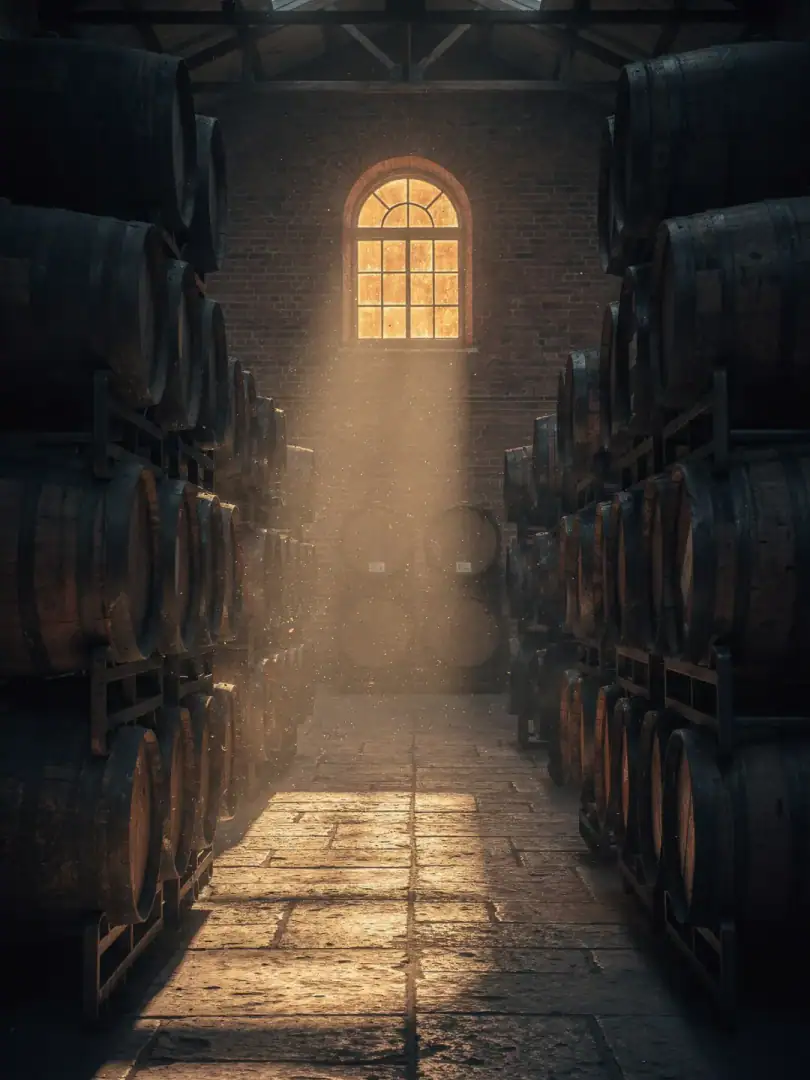
In England, casks matter almost more than the still itself. The distilleries are still young, so character comes strongly from the wood. Cotswolds Distillery relies on a varied cellar mix: ex-Bourbon and sherry casks form the base. Added to that are STR casks, a process in which used wine casks are shaved inside, re-toasted, and re-charred. This gives the whisky color and spice quickly.
Occasionally, rum, port, and Madeira casks also come into play, usually for limited releases. The principle originated with cask expert Jim Swan. He helped several young European distilleries achieve depth even within a short maturation period, rather than simply masking sweet, immature cask flavor.
Bimber in London takes its own approach. The distillery runs its own cooperage on-site, checks every cask by hand, and re-chars them as needed. The first casks were laid down on May 26, 2016. They were mostly ex-Bourbon, sherry, and fresh virgin oak casks made from new oak, which impart plenty of vanilla and spice.
How quickly a cask works depends on the warehouse. In London, right in the middle of the city, temperatures swing widely between summer and winter. At cool Bassenthwaite Lake in Cumbria, where The Lakes Distillery matures its whisky, temperatures stay more stable. Warmer swings push the whisky deeper into the wood. Cooler, steadier storage lets it mature more slowly, but more consistently.
Legally, England, like the rest of the UK, requires a minimum of three years of maturation in wooden casks before new make can be called whisky. For most English distilleries, that's not the finish line but the starting point. The first official releases from almost every distillery only reached the market after four, five, or more years.