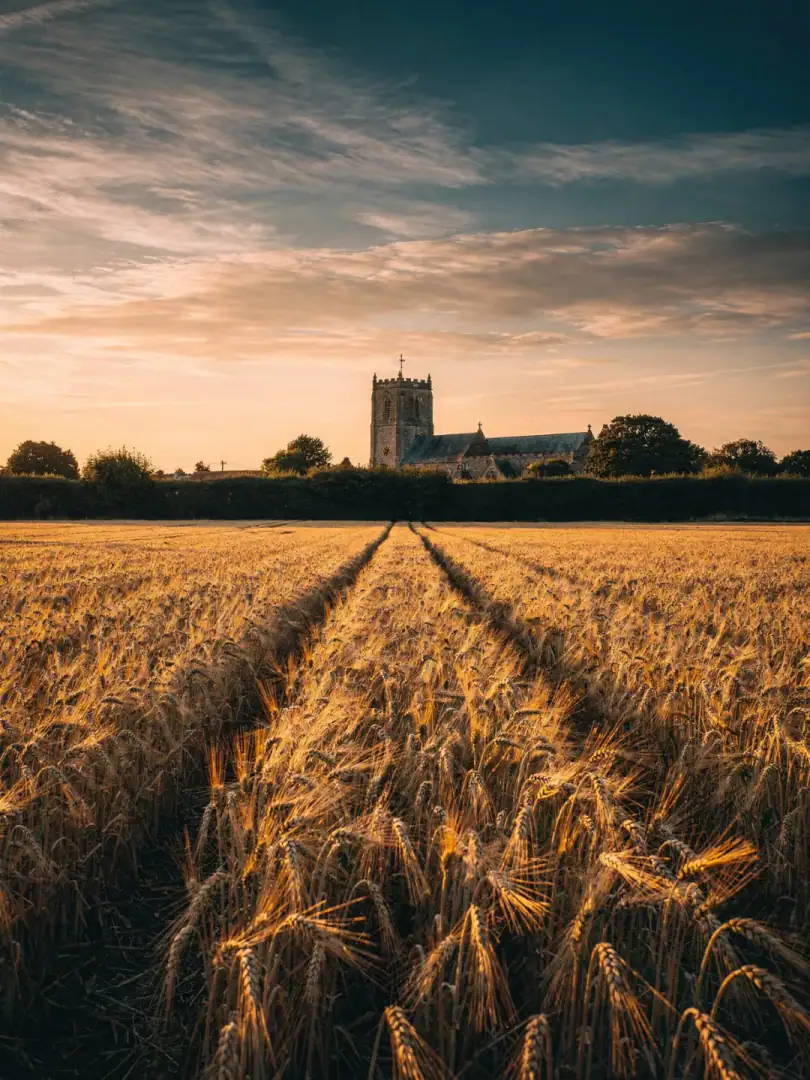
Barley Instead of Corn
Grain
In most English stills, it's pure barley, malted and nothing else. Single malt is the big trend among the young English scene, while grain whisky from corn or rye remains the exception. That sets England apart from its big cousin across the Atlantic, where Bourbon is made from corn and rye whiskey from rye: here, malting barley dominates, just as it has grown in the fields of eastern England for centuries.
The connection to Norfolk is especially close. It was there, in the 1960s at the Plant Breeding Institute in Cambridge, that the Maris Otter variety was developed, a cross of the older Proctor and Pioneer strains. Norfolk's mild, maritime climate and light, well-drained soils suited it perfectly right from the start. Even the first commercial harvest in 1965 favored this region.
In the early 1990s, the variety nearly disappeared, as modern high-yield barleys promised more grain mass per hectare. Only when farmers and maltsters joined forces and secured the naming rights did Maris Otter make its comeback. Since 2002, H. Banham of Norfolk and Robin Appel of Wiltshire have held the rights, and part of the malt is still floor-malted the traditional way rather than in a drum.
For distilleries like St George's in Roudham, local grain is more than marketing. The distillery sources its barley from the immediate surroundings, as well as its water from the aquifer directly beneath the building. Cotswolds Distillery goes even further, printing the name of the farm the barley came from on every bottle.
Legally, England has it easier than Scotland: there's no dedicated English Whisky Act, just the general British definition of whisky. Three years in wood, a minimum of forty percent alcohol, distilled from grain—that's all the law requires. Everything else is up to the distillery, from the barley variety to the cask.