Lakes, Chalk, Rain
Water & Climate
England is small, but its weather isn't uniform. Between flat, dry Norfolk in the east and the rain-soaked mountains of Cumbria in the northwest lie two entirely different worlds, and that's exactly what's reflected in the whisky. Anyone who travels through both regions tastes two completely different English landscapes.
In Roudham, where St George's Distillery stands, the water doesn't come from a river but from below: an aquifer runs directly beneath the building through the chalk layers of Norfolk's Breckland. Chalk filters the water so it's mineral-rich yet soft, without the hard, limey taste known from some Scottish distilleries.
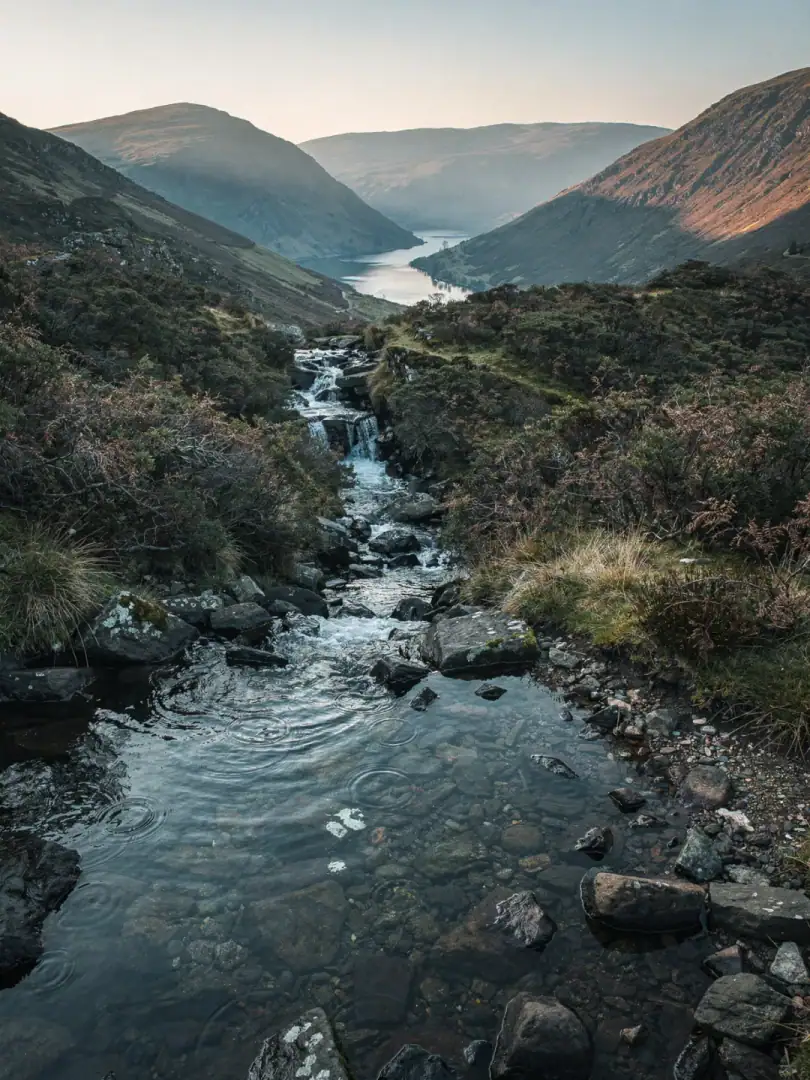
The Lakes Distillery draws its water from a very different landscape. It comes from Sprinkling Tarn, a small mountain lake that flows via the River Derwent into Bassenthwaite Lake, right in the heart of the Lake District, a UNESCO World Heritage Site. Here, the water travels long distances over rock and moorland before it ever reaches the still.
The climate keeps working its influence even where not a drop of water is involved anymore: in the warehouse. Cumbria is damp and cool, so casks mature slowly and lose little alcohol to the air. Norfolk is drier and warmer in summer, so casks there pull flavors from the wood faster, but also lose alcohol more quickly.
London, meanwhile, sits in a city of concrete and brick, far from any mountain spring or chalk seam. Distilleries like Bimber draw their water from the public supply and treat it themselves before it goes into the still. Three regions, three completely different paths water takes on its way to a glass of whisky.