Young, Fruity, New
Tasting
English whisky tastes young, and that's no flaw. Because hardly any distillery is older than twenty years, cask and fresh grain dominate the flavor, not the patina of long aging. If you're expecting earthiness and peat smoke, you're often in for a surprise: the style tends to run lighter, fruitier, sometimes almost like grape must.
Bimber's first official release, simply called "The First," showed exactly this style in 2019: dense, oily, with ripe fruit from the ex-Bourbon and sherry casks. The 1,000 numbered bottles sold out within three hours, a sign of just how much curiosity was waiting for English whisky.
The Cotswolds Single Malt Whisky leans more heavily on STR casks: cherry, caramel, and a hint of spice from the freshly toasted oak, with the sweetness of Cotswolds barley lingering in the background. St George's Distillery shows the other side with its cask strength release: undiluted, powerful, with a distinct grain core from Norfolk.
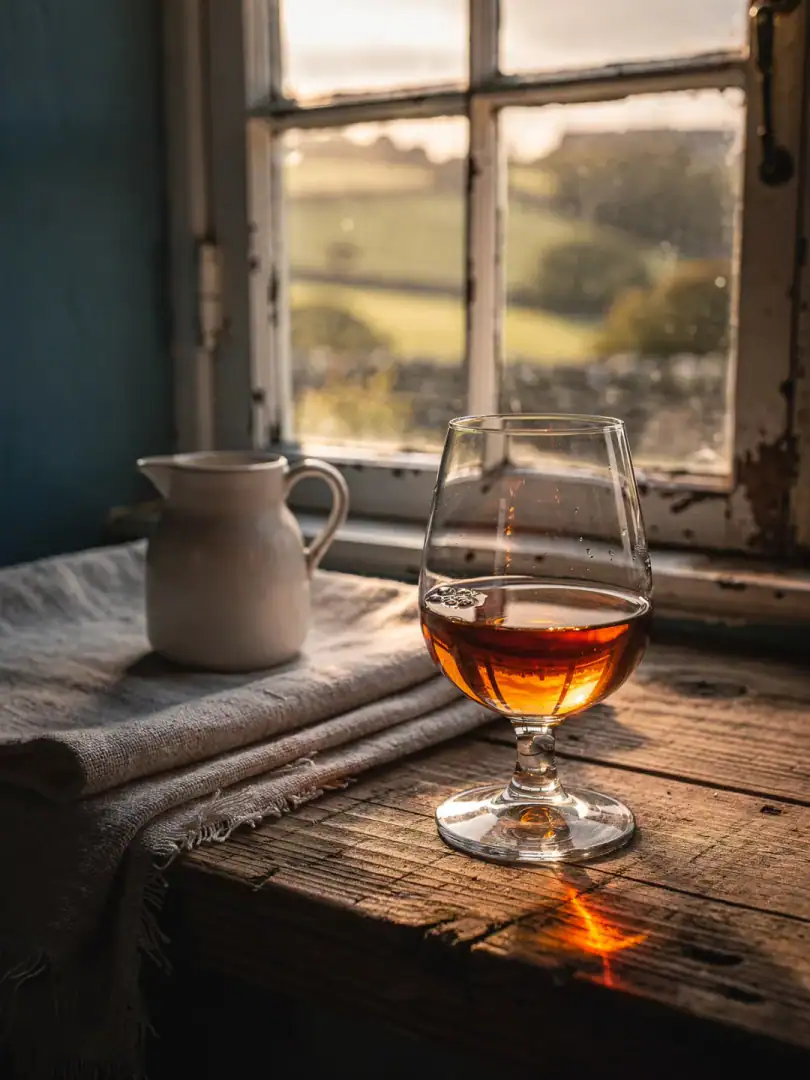
The best way to try English whisky is neat, or with a few drops of still water, which opens up the finer fruit notes. A nosing glass with a narrow bowl helps, since it concentrates the alcohol before you swirl it out and take your time smelling. It's worth being patient: after a few minutes in the glass, the aroma often changes noticeably.
Comparing is more rewarding than judging on its own. Set two glasses side by side, a young malt from Norfolk and one from the Cotswolds, and nose them alternately. The contrast between chalk-filtered water and STR cask character becomes far clearer than when you consider just one glass on its own.