At Least Three Years
Cask & Maturation
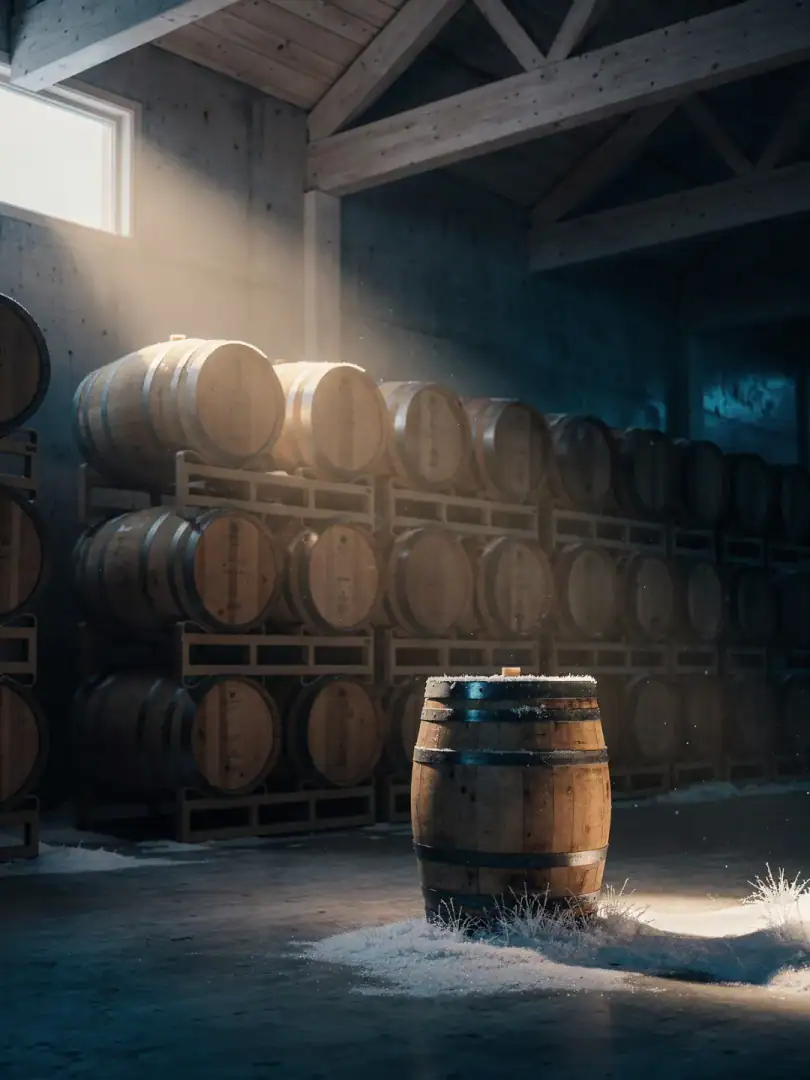
When Kyrö puts a whisky into cask, it goes into new American white oak – never used before, never previously filled with bourbon or sherry. The cask must then rest for at least three years before its contents can even be called whisky. The warehouses in Isokyrö are built of wood and concrete and fitted with a system that controls temperature and humidity throughout the year.
This isn't luxury, it's a response to the climate. Between the 22 degrees Celsius of a Finnish summer day and the minus 11 of a winter day in Isokyrö lies a range that would age a cask unevenly without climate control. With the technology in place, every cask matures more consistently, year after year – unusual for an industry that traditionally relies on open warehouses.
In Finland too, a portion of the whisky evaporates from the cask each year, the so-called angel's share. Exactly how much depends on the climate. The strong temperature swings between summer and winter make the wood work harder than in more temperate locations, letting more liquid escape through the cask wall than in many a Scottish warehouse.
In Lahti, Teerenpeli shows just how long Finnish whisky can mature. The first fully Finnish whisky, which hit Alko's shelves in 2008, already carried five years of cask aging in its name: Teerenpeli Single Malt 5 yo. Ever since, the distillery has been known for its aged bottlings, even if details about individual cask types aren't always publicly disclosed.
In the end, every Finnish whisky follows the same basic rule as everywhere else. Without a wooden cask, without the minimum three years, there is no whisky – only rye or barley spirit. What the country adds is above all the climate, which works every cask hard.