Copper & Rye
Distilling
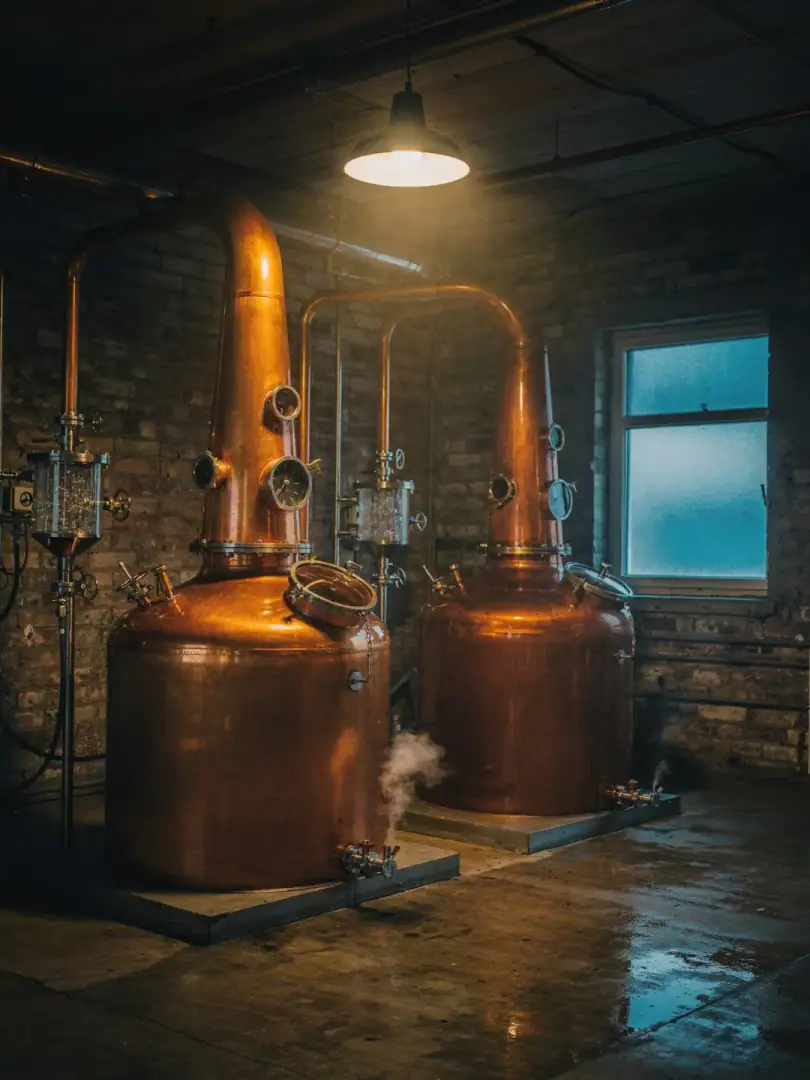
At Kyrö in Isokyrö, two copper stills stand side by side. One holds 9,000 liters and handles the first distillation of the mash, while a smaller one, at 7,000 liters, takes on the second run. So double distillation happens here just as it's customary in Scotland, except the kettles hold pure rye, including all the solid matter that other distilleries would filter out beforehand.
The distillers like to describe their own process as a blend of two traditions. The American idea of working with the whole grain meets the Scottish copper pot still, rather than the column stills common in the US. This combination is meant to preserve as much of the bold rye flavor as possible through both distillation runs.
During the second distillation, the distillers split the run into three parts: heads, heart, and tails. Only the heart, the middle cut, later goes into the cask; the heads and tails go back into the next run. With rye, this cut is tricky, since the solid matter in the still can scorch more easily than with a clear barley mash.
Teerenpeli in Lahti started smaller. From 2002 to 2015, the family distillery distilled inside the restaurant Taivaanranta, with a 1,500-liter and a 900-liter still set up right in the dining room. Only in 2015 did production move to a purpose-built distillery, which today produces more than 50,000 liters of new-make spirit a year – one of the larger operations by Finnish standards.
So the country's two oldest names differ mainly in their starting material. Teerenpeli distills in the classic malt whisky style, Kyrö follows its own rye recipe. Both, however, rely on the same basic form – the copper pot still, which the Finns adopted from the Scots.