Rye Instead of Peat
Malt & Peat
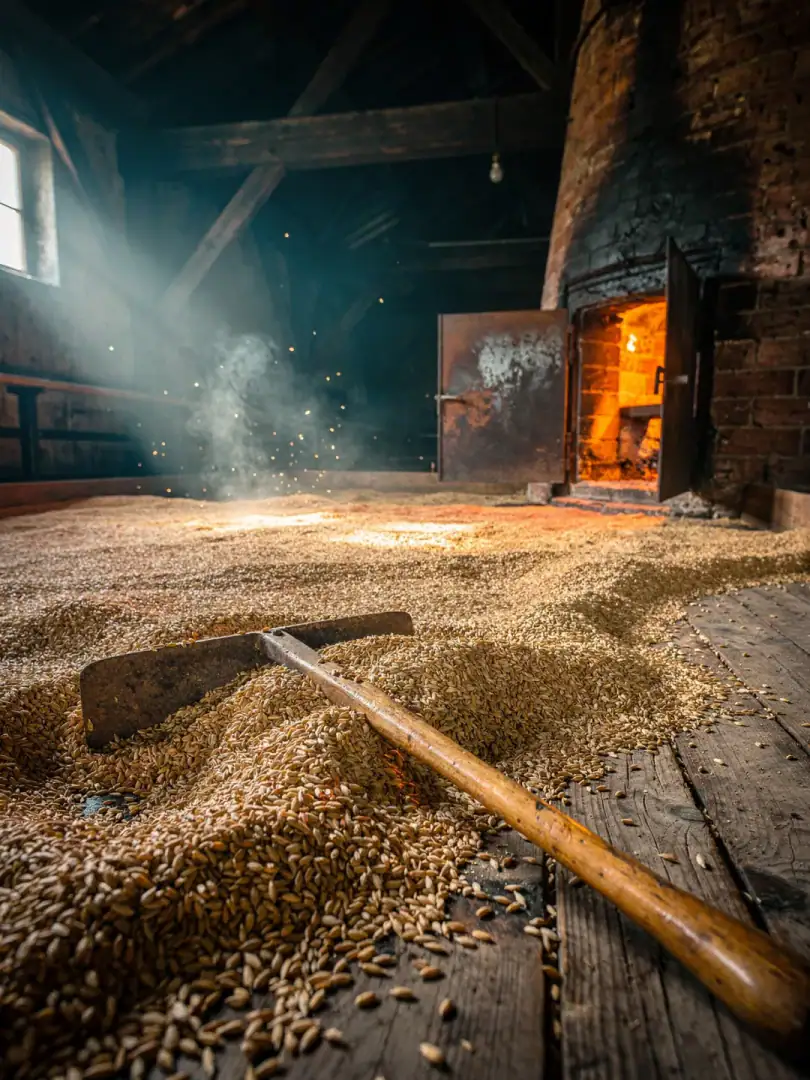
Peat smoke, as found in Scottish Islay whiskies, is something you'll mostly search for in vain in Finnish whisky. Kyrö malts its rye without smoking it. The grain is kilned, meaning dried with hot air rather than infused with smoke. Anyone opening a bottle from Isokyrö therefore won't smell campfire, but rather the spicy, slightly peppery note that pure rye brings with it.
Still, it's unusual who does the malting here at all. At Kyrö, the distillers handle this step themselves rather than buying malt from an outside maltster. Many larger distilleries shy away from this effort, since rye is stickier and more temperamental to malt than barley. Nothing is filtered out after malting: the entire mash, husks and all, runs through fermentation and the still together.
Beneath Finland's rye fields and moors often lies the same story. The country ranks among the most peat-rich in the world, with nearly a third of its land covered in bog. If a distillery wanted to use peat for smoking, it wouldn't need to import it like some Scottish houses do – it could simply cut it right outside the door.
There is, however, one exception to the smoke-free rule. At Valamo Monastery in Heinävesi, where distilling has taken place since July 2014, both peat-smoked and unsmoked whiskies are produced side by side. This deliberate dual strategy is meant to cover as broad a flavor spectrum as possible before the casks mature in old church-wine or ex-bourbon barrels.
So in Finland, flavor remains above all a question of the grain, not of smoke. In Scotland, peat is often the first thing a whisky reveals. Here, it's the rye itself – sharp, spicy, sometimes almost like fresh rye bread.
Living peat moss, as it covers Finnish bogs almost everywhere.
The root: Grows into new peat and holds water like a sponge.