Granite instead of bog
Malt & Peat
Peat, the bog built up over millennia that gives Islay its smoky reputation, is rare in Brittany. The peninsula consists largely of hard granite and slate, and its soils are thin and dry. Extensive bogs like those found in the Scottish Highlands are almost entirely absent.
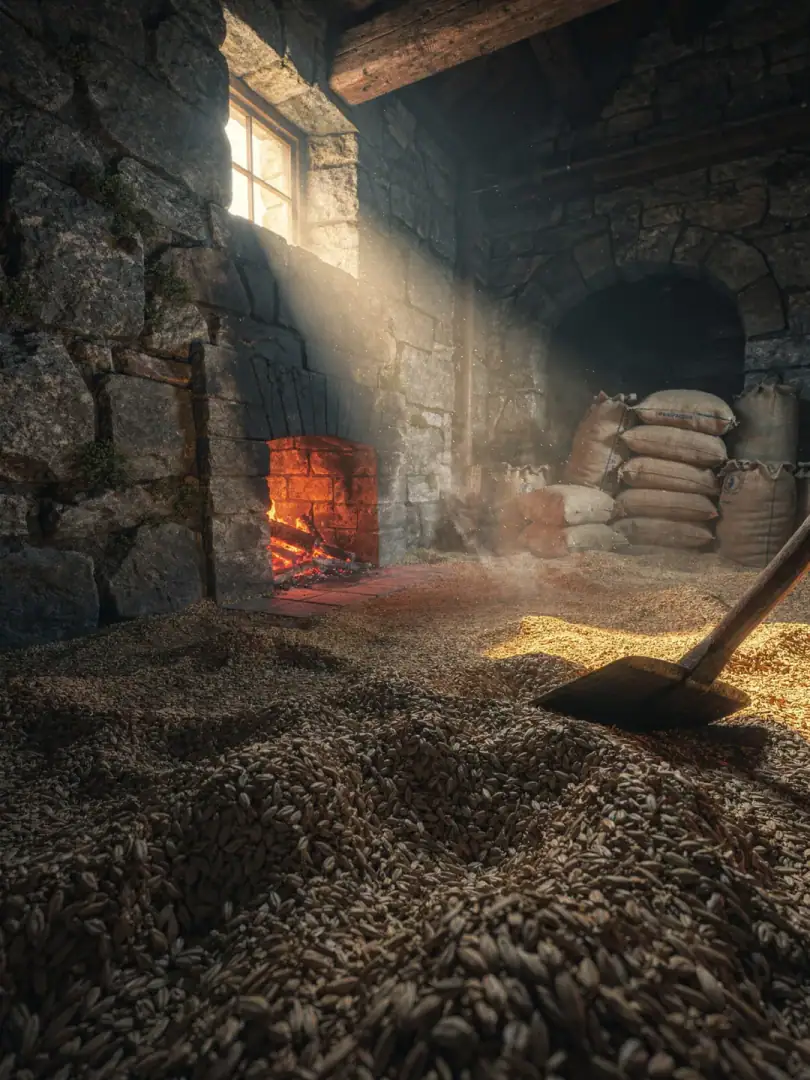
Accordingly, most Breton whisky is distilled unpeated. Armorik from Warenghem, Eddu from the Distillerie des Menhirs, and the core range from Glann ar Mor all come without any smoky note. Their malt is dried using warm air rather than peat fires, simply to halt germination.
The exception is Kornog, the peated line from Glann ar Mor in Pleubian. With a phenol content of around 30 to 35 ppm in the malt, a measure of smoke intensity, it sits high, roughly on a par with a strongly peated Islay whisky. The first cask went on sale in November 2009, a good year after the distillery's unpeated debut.
Even so, beneath the barley itself lies a story rooted in the ground, just not one of peat. Where topsoil, weathered granite, and bedrock meet, it's decided how much water the soil retains. The same meeting point also determines how mineral-poor the groundwater remains that later ends up in the mash.
For travellers who expect smoke because they know Scotch from Islay, this comes as something of a surprise. Breton whisky tastes predominantly soft and unpeated, shaped more by the grain and the damp climate than by the fire of the kiln. Only those who specifically reach for Kornog will find the familiar smoky aroma.
Loamy topsoil in which Breton malting barley takes root.
The root: Thin and low in nutrients, which is why the barley here grows more slowly and compactly than in the rich farmland of eastern Scotland.