Malt without smoke
Malt & Peat
On Islay, or in parts of Speyside, peat fuels the kilns; in North India you'll search the fields for it in vain. Beneath the barley in Haryana and Rajasthan lies no bog, but dry, often sandy farmland that would long since have turned to desert without irrigation. There's simply no smoke to be had from the ground here.
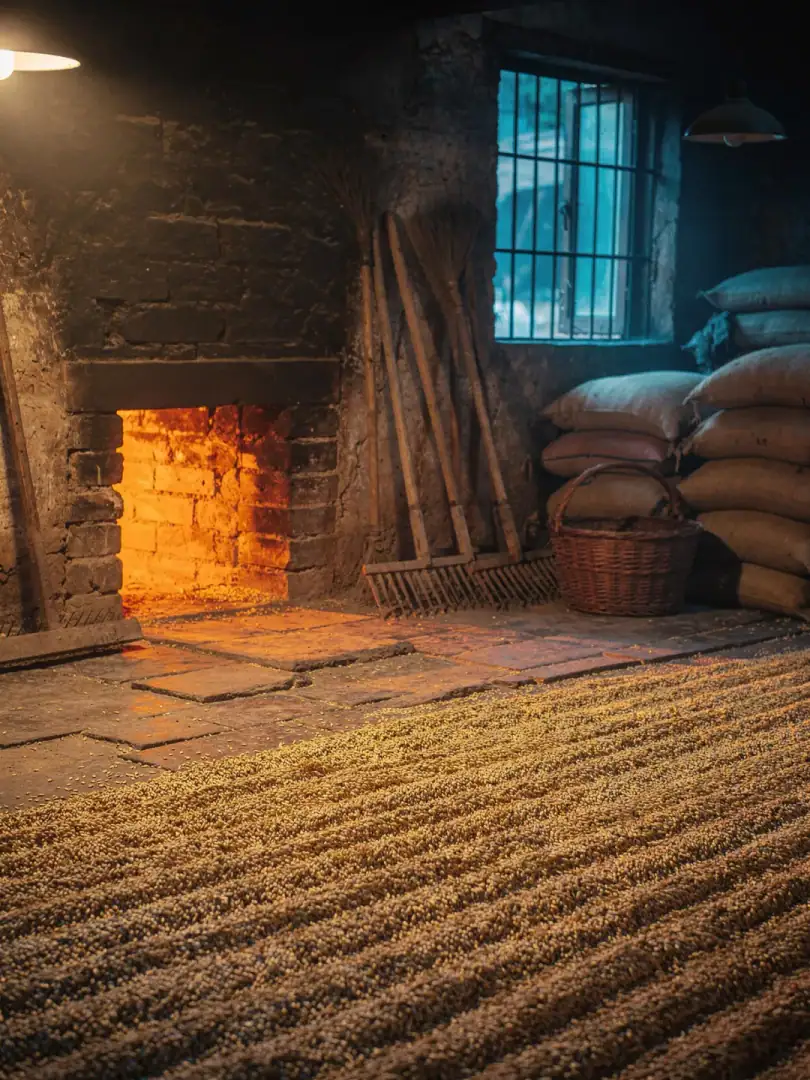
So the barley is malted almost always without peat. After steeping, it germinates in the malting house and is then dried in the kiln with hot air instead of smoke. That way it keeps the mild, grainy base note that Rampur and Godawan are known for. Taste a whisky here and you'll pick up mostly malt, fruit and cask, but almost never smoke.
Piccadily, with its Indri distillery, is the striking exception in the country. Alongside its unpeated core range, the distillery produces Indri Agneya, a smoky expression for which peated malt is specially imported. That's a special case in a region that otherwise skips smoke entirely. The whisky has already won a gold medal at international competitions, showing green apple and sultana alongside a restrained smoky note.
What matters instead is the soil itself. Beneath the topsoil where the barley roots lies sandy subsoil that holds almost no water. Below that sits the water table, tapped by wells and canals. Without this water from deep underground, there would be no malt to distil at all in the desert around Alwar.
Fertile clay soil, irrigated with canal and well water, in which the six-row barley takes root.
The root: Here the barley draws the nutrients that later bring protein and roasted notes to the malt.