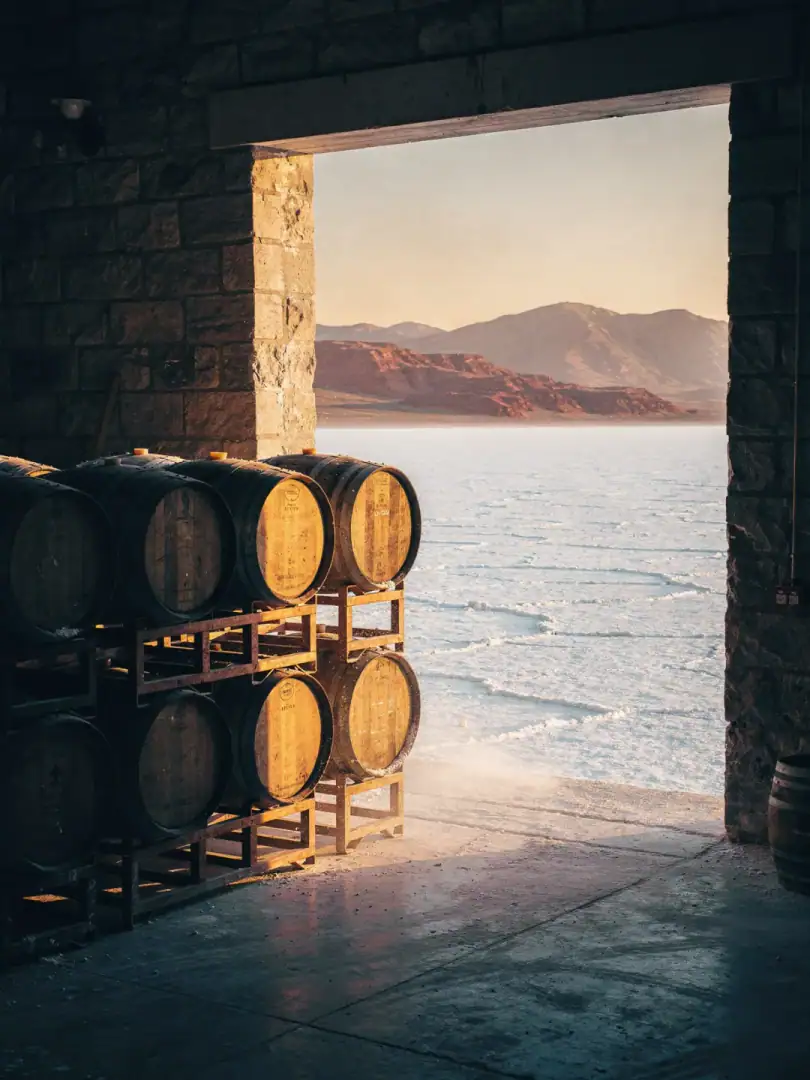
Maturing across five climate zones
Cask & Maturation
Roughly seventy percent of a whisky's flavor comes from the cask, as they say at M&H. With that figure in mind, the distillery works with an unusually wide range of cask types. New American oak and used bourbon and rye casks from the US form the foundation. Then there are so-called STR casks, an innovation from consultant Jim Swan: shaved, heavily toasted, and re-charred so they release color and flavor faster in the heat.
Kosher sherry casks from Jerez also mature in the warehouses, alongside rum casks from Jamaica and French Limousin oak that previously held kosher cognac. Kosher here means more than a label on the bottle. A mashgiach, a rabbinical supervisor, oversees the cask selection process from the very first fill in the country of origin right through to arrival in Tel Aviv.
A separate group consists of casks from Israeli wineries, previously filled with red wine, white wine, or port-style sweet wine. As a special touch, there are also casks that previously held pomegranate wine, a drink with a long tradition in the country. These casks give the whisky a fruity, sometimes slightly tart note rarely found in Scotland, where local wine casks simply aren't available.
Where a cask matures matters almost as much as what's inside it. By the Sea of Galilee, humid air keeps the casks calm; in the hills around Jerusalem, the whisky matures slowly and coolly. At the Dead Sea, by contrast, the heat practically forces color and aroma out of the wood. It's there, at the Dead Sea, that the "Apex Terroir Dead Sea" series matures, named after the lowest place on Earth.