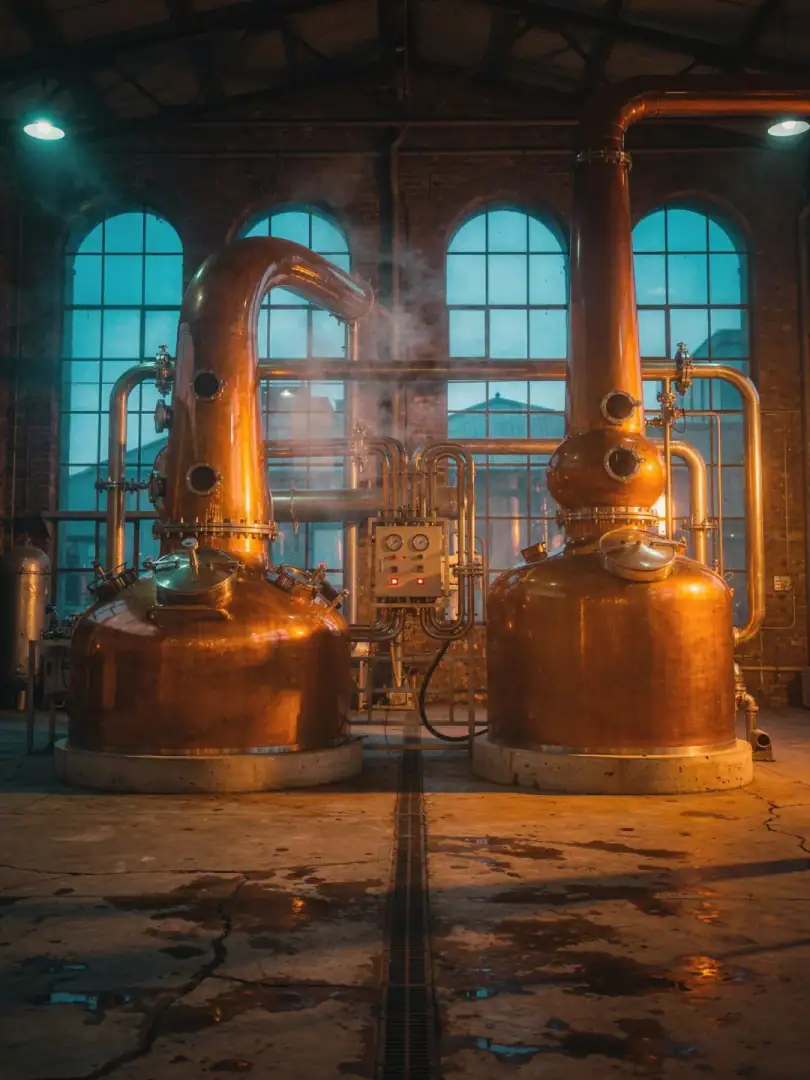
Romania meets Germany
Distillation
Two copper stills sit at the heart of M&H, and neither came from Scotland. The 9,000-litre wash still came from Romania, bought secondhand and fully refurbished. The smaller 3,500-litre spirit still was supplied by the German company CARL. Both stills are made of pure copper, which binds sulphur compounds in the vapor, making the spirit smoother and cleaner than a still made of any other metal could achieve. When asked why they didn't use Forsyths, the traditional Scottish coppersmith, the distillery once replied dryly that they would have had to wait ten years for delivery.
Distillation happens twice, as is customary in Scotland, rather than in the column setup that defines many American whiskeys. The heart cut, the crucial middle portion of the second distillation, begins at eighty percent alcohol and ends at seventy. Everything before and after is separated out and redistilled later. What finally flows from the still is a sweet, grassy new-make spirit at around seventy-five percent alcohol, medium-bodied and still far from finished whisky.
M&H can produce around 230,000 litres of pure alcohol a year, a large amount by Israeli standards but modest compared to big Scottish distilleries. In Katzrin on the Golan Heights, David Zibell has been distilling on a much smaller scale since 2014, with just two stills of his own at the Golan Heights Distillery. Both operations had to assemble their equipment from scratch. Israel simply had no whisky-distilling tradition and no established suppliers. For a country with no distilling culture at all, it's a remarkable pace at which both houses grew, within just a few years, from their first mash to established names on the Israeli spirits scene.