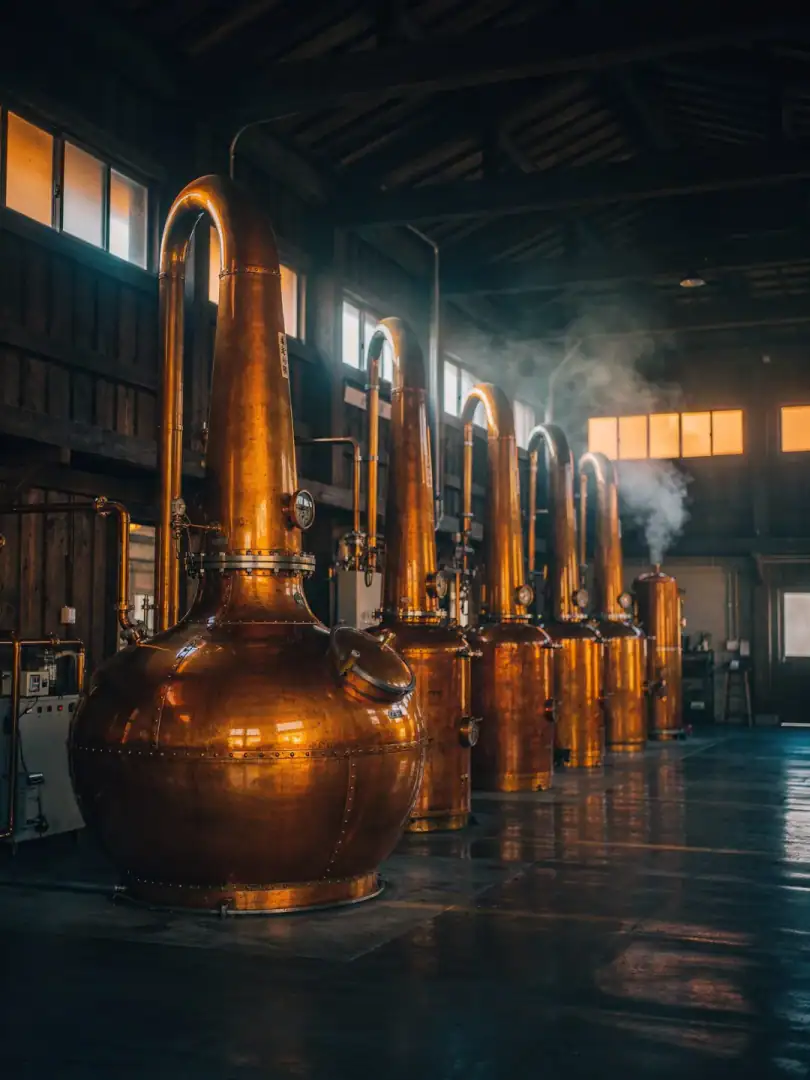
Sixteen different shapes
Distillation
In Yamazaki's still house at the foot of Mount Tennozan stand sixteen copper stills, and hardly two look alike. Some are squat and bulbous, others tall and slender, while others still carry a bulge between belly and neck like an onion.
This variety of shapes is deliberate, not accidental. A low, bulbous still lets more heavy oils rise during boiling, producing a fuller character. A tall, slender still cools the vapor sooner, so only the light, floral compounds make it to the condenser.
Some of the stills are fired directly with an open flame, while others are heated indirectly with steam coils. Direct fire lightly caramelizes residue at the bottom of the still, lending a hint of roasted character to the raw spirit, while steam works more evenly and gently.
Distillation happens twice, as is standard in Scotland. The first still turns the weak, beer-like wash into a raw, low-strength spirit, the second separates the heads and tails and raises the strength for cask maturation. Exactly where the stillman makes this cut determines sweetness or sharpness in the finished malt.
The result of this combination of shape and fire is a wide range of base whiskies for Suntory's blenders to work with, long before a single drop enters a cask.
Even Taketsuru wanted a single distillery to cover as many characters as possible, since Japan had no second malt facility yet to blend with. The many still shapes remain the answer to that early challenge to this day.