Imported Barley
Grain
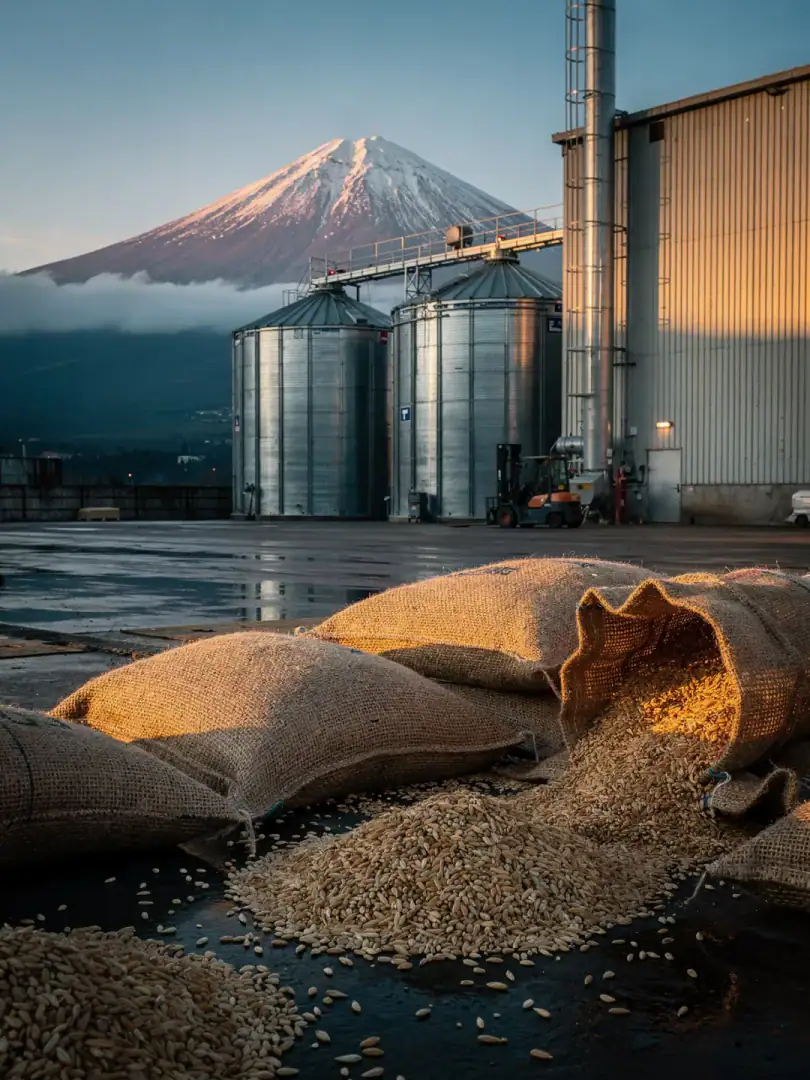
Whisky begins with grain, and in Japan most of it is bought in, not grown at home. The islands have little land suited to malting barley, so it comes from overseas, often from Europe or Australia, already malted and dried long before it reaches Central Japan. This holds true for all four distilleries in the region alike.
This is exactly where the JSLMA rule, in effect since 2021, comes in: only spirit made from malted grain may be called Japanese whisky, regardless of where the grain came from. The water and production must be Japanese; the malt need not be. Central Japan sticks to this strictly, even though no law forces it to.
Fuji Gotemba goes well beyond the other three. Alongside barley malt whisky, the distillery at the foot of Mount Fuji produces three distinct types of grain whisky, each on its own equipment: a column still, a beer-still system with a doubler in the style of bourbon mashing, and a kettle-and-column combination. Running an operation like that requires grain in large volumes, corn included.
In Chichibu, the mash gets going differently. Ichiro Akuto's team ferments it in vessels made of Mizunara, a native oak better known as cask wood, which lends the mash a resinous, sweet edge. As a fermentation vessel, the wood is temperamental: it moves, cracks easily and needs constant attention, but the small distillery accepts the extra work.
Peat plays almost no role in this region's grain, unlike in Scotland. Most bottlings from Hakushu, Chichibu, Mars Shinshu and Fuji Gotemba use unpeated malt, since these distilleries build their character through water, cask and location instead. Anyone after smoke has to go looking for it specifically in this region.