Sand Instead of Moorland
Malt & Peat
The name Millstone is a tribute, not a production step used today. It recalls the mills that ground malt for genever and beer across the Netherlands for centuries, before engines replaced the stones – a piece of national history pressed into a brand name.
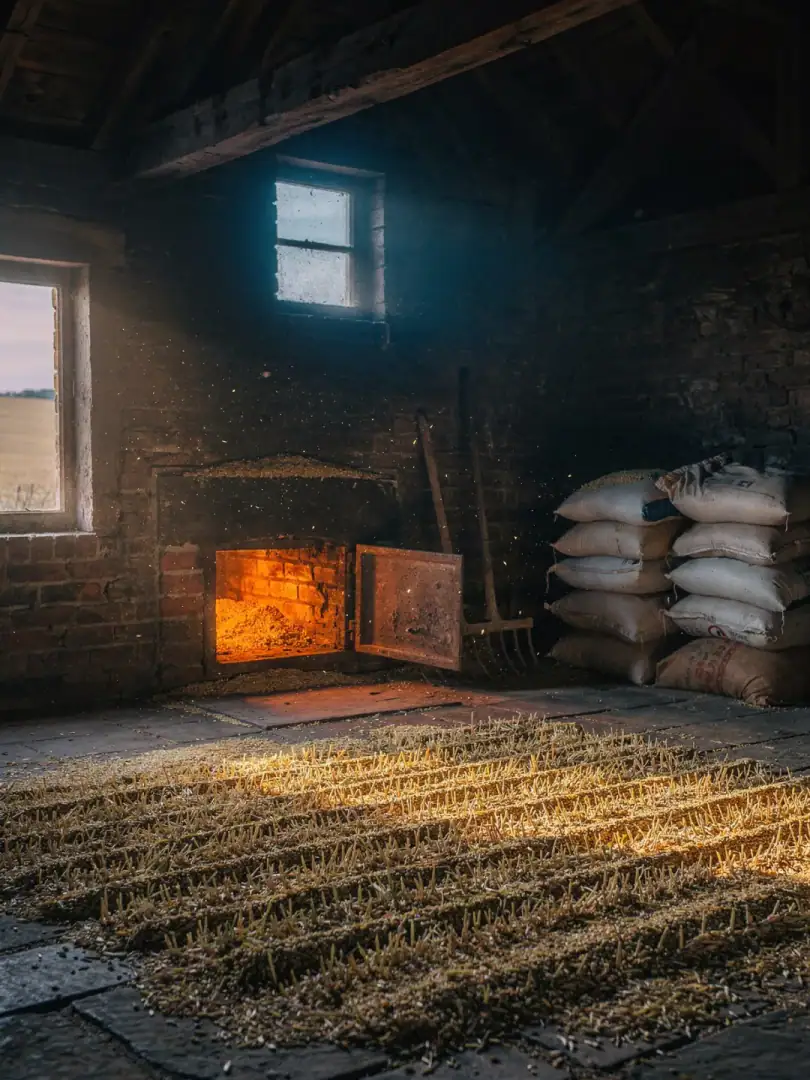
Unlike Islay, there are no peat bogs around Baarle-Nassau to cut fuel for the kiln. Anyone in the Netherlands who needs peat has to bring it in, or the malt arrives already smoked from a maltings. Alongside its unpeated bottlings, Millstone also offers peated ones, with a noticeably smokier profile than the rest of the range.
The soil where the grain for Millstone grows tells a different story than peat does. Beneath the topsoil across much of Noord-Brabant lies pale drift sand, blown in and settled during the last ice age – experts call it dekzand. It drains water quickly, so the barley rarely sits in waterlogged ground.
Deeper below this sand begins the groundwater that distilleries in the region draw from. No bog, no peat, but a soil that shapes what ends up in the glass all the same, just more quietly than on Islay.
Set an unpeated Millstone next to a peated one, and you'll taste the difference within seconds: one stays close to the grain, the other tips toward the campfire. Both come from the same house – only the malt traveled from different distances.
Humus-rich sandy soil where barley and rye take root.
The root: This is where the grain draws its nutrients, shaping body and sweetness in the malt.