Twice through copper
Distilling
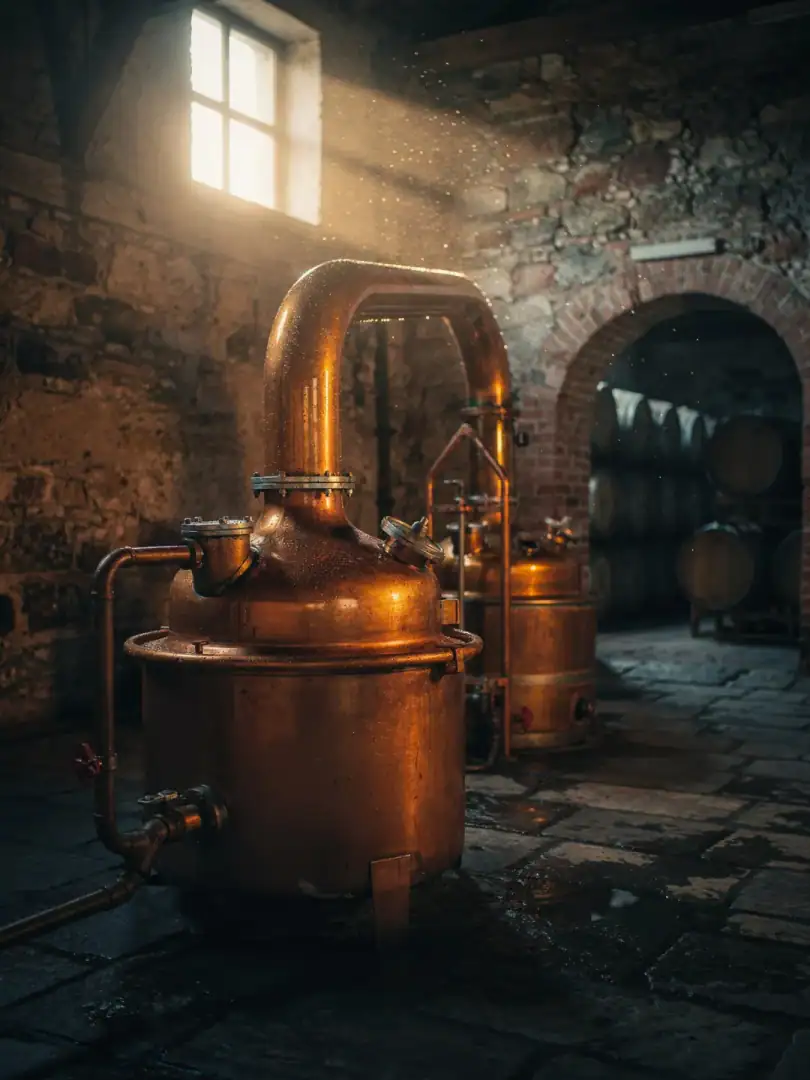
Copper pot stills in Roggenreith serve whisky, but not exclusively. The Waldviertler Roggenhof also produces apricot brandy, gin, and vodka, and the equipment has to be reconfigured for each. All spirits run through the same copper pot stills. Depending on the batch, fruit, grain mash, or juniper goes in. Pure whisky distilleries don't know this kind of switch: their equipment stays with the same raw material forever.
Copper is no accident here. As the mash heats up, unwanted sulfur compounds bind to the metal. They stay behind rather than passing into the spirit. Without this effect, the rye mash would yield a distinctly rougher, more unpleasant spirit, since it already tends to become sticky.
Distillation happens twice, as is the case with most whisky distilleries outside Scotland. The first run roughly separates alcohol from water and yields what's known as the low wines. The second run refines it further. Here the distiller makes what's called the cut, separating the usable heart of the run from the heads and tails, both of which would be too harsh or too oily for the whisky.
For the 60 percent rye mash bill of the Original Rye Whisky J.H., this means especially careful observation of the heart of the run. Rye brings different, spicier aromas than barley. Cut too early or too late, and you lose exactly the peppery note that sets this whisky apart from pure barley whiskies.
At the end of distillation stands a clear, high-proof new-make spirit. It still has none of the color you'll later see in the glass. That comes only in the cask, once the wood begins its work.