Conifer wood instead of heather moor
Malt & Peat
Peat isn't a given in the Waldviertel the way it is on Islay. There, it has lain beneath every other tuft of grass for centuries. In the granite and gneiss highlands of the Bohemian Massif, by contrast, there are only scattered patches of moorland. They form where the impermeable granite holds back rainwater until, over thousands of years, a damp, acidic layer of peat develops.
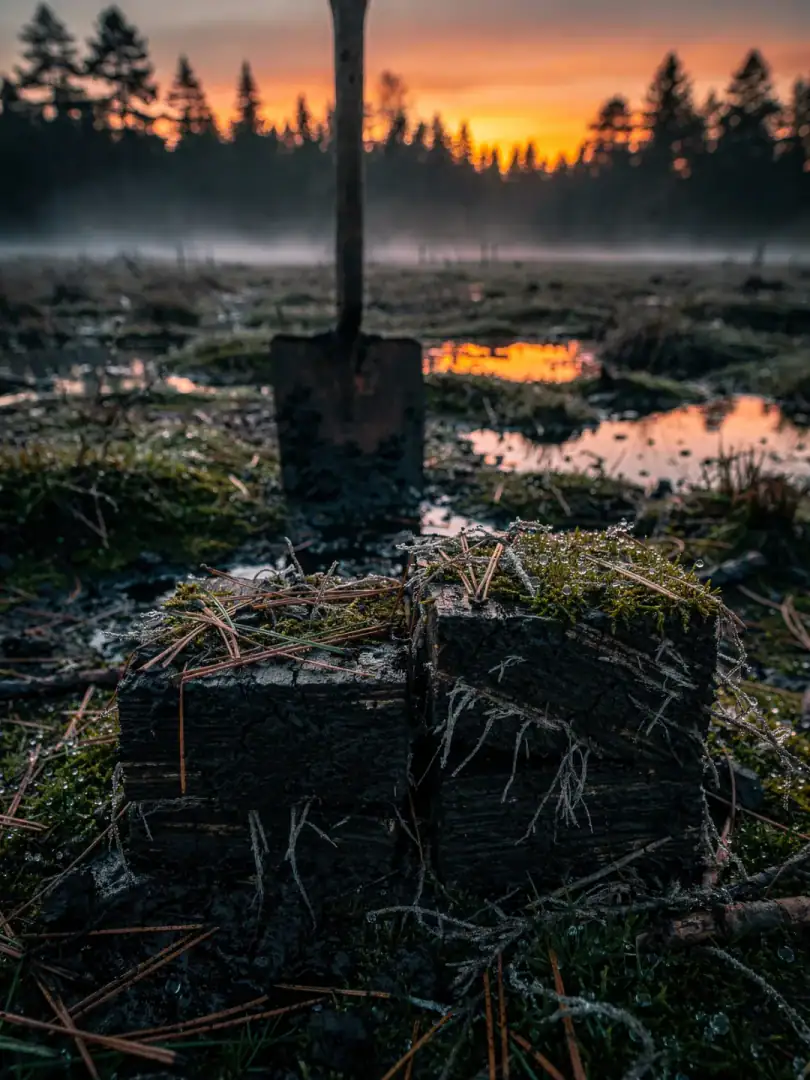
Unlike the heather moor on the Scottish west coast, Waldviertel peat is fed mainly by conifer wood. Spruce and pine remains decompose only slowly in the oxygen-poor moor water. When this peat is burned, the smoke smells less medicinal and iodine-like than its Scottish counterpart, but more resinous and earthy instead. You can clearly taste this difference in the smoked whiskies from Roggenreith.
Malting comes before smoking. The grain is soaked in water until it begins to germinate. In the process, it develops enzymes that later convert starch into fermentable sugar. Germination is stopped by drying on the kiln. For unpeated varieties, this happens with warm air; for peated varieties, peat smoke is added as well, seeping into the grains.
The darkest variant from Roggenreith is called Dark Rye Malt Peated. It's made from 100 percent dark-roasted rye malt, additionally smoked with local peat. It's bottled at 46 percent alcohol. Roggenreith doesn't publish exact ppm values for phenol content, as Scottish distilleries do for theirs. Even so, the difference from the unpeated whiskies is immediately noticeable.
Because peat is rare in the Waldviertel and the area is small, smoking remains the exception here, not the rule. Most whiskies from Roggenreith mature unpeated, with the pure grain character of rye and barley. Peat is one tool among several, not a trademark, as it is on the Scottish west coast.
Half-decomposed spruce and pine needles over damp moss, loose and light brown.
The root: Needles instead of heather later give the smoke a resinous, woodland tone instead of sea iodine.