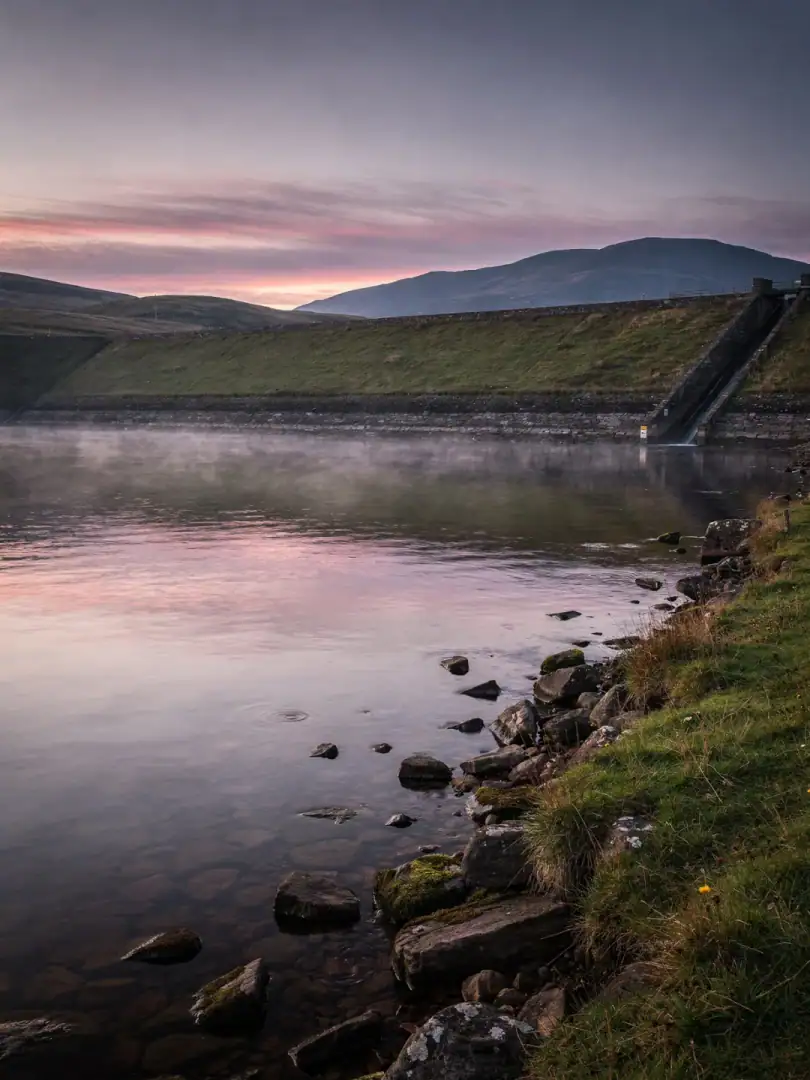
Crosshill Loch
Water & Climate
About a kilometre south of town lies Crosshill Loch, a reservoir held back by an earth dam. The dam was built before 1868 and rises a good 14 metres high. All three of Campbeltown's distilleries draw their water from this loch: Springbank, Glen Scotia and Glengyle.
The water runs over the peninsula's moorland and rock before reaching the loch. Along the way it picks up few minerals, but a little colour from the peaty ground. What matters most for the mash is that enough water flows all year round, even when Kintyre turns drier in summer than the rest of western Scotland.
Kintyre lies so far west that wind and rain sweep in almost unchecked from the Atlantic. The peninsula is narrow, in places only a few kilometres wide, so sea air reaches the town from both sides. The climate stays mild, frost is rare, but it's damp and windy almost all year round. The Gulf Stream keeps temperatures even; cold winters like those in the Highlands are practically unheard of here.
It's exactly this salty, damp air that seeps into the warehouses and works on the casks for decades. Springbank ages its entire stock right on site in Campbeltown, not in the drier central warehouses many other distilleries use. There are two warehouse types here: traditional dunnage warehouses with earthen floors, and more modern racked warehouses with multiple tiers. Both are exposed to the same damp climate. Anyone drinking a bottle from this town is tasting a part of that climate.
Being so close to the sea also means humidity stays high. That causes more alcohol than water to evaporate, the so-called angel's share. This affects cask strength differently than it does in the drier east of Scotland.