Giants and dwarfs
Distillation
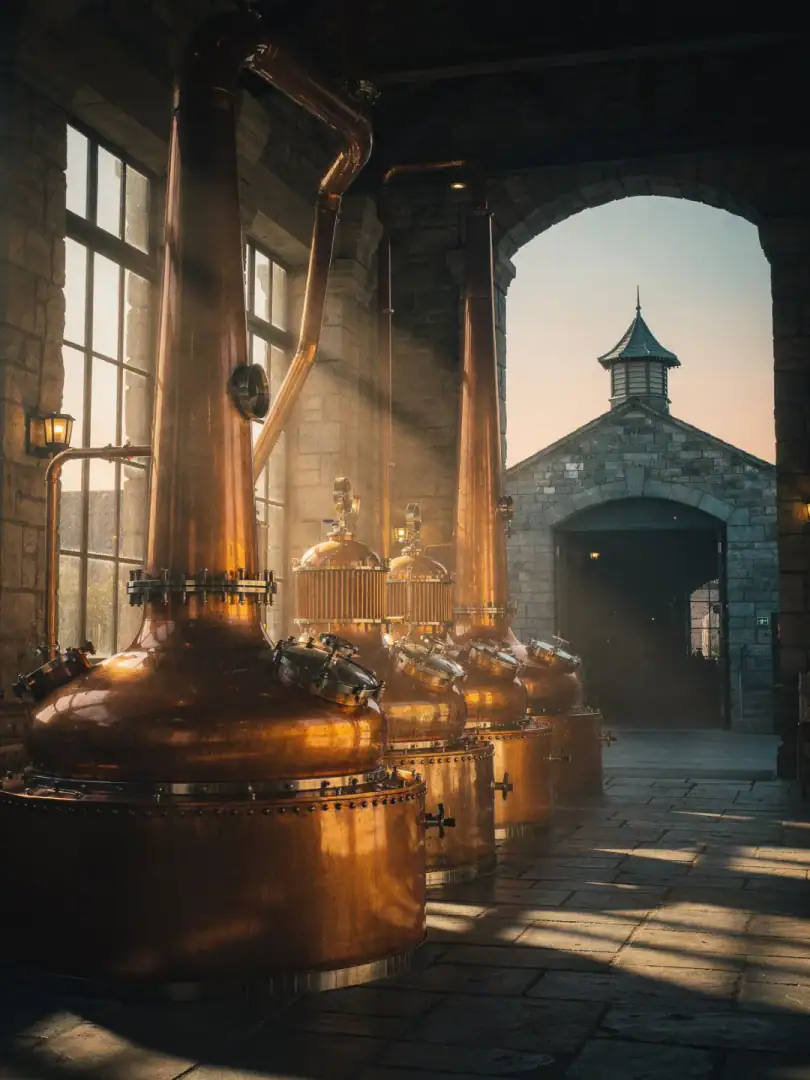
Line up the stills of the Highlands side by side and you'll hardly find a family resemblance. At Glenmorangie, they soar eight metres high, with a slender neck of around five metres. These are the tallest stills in Scotland. The shape dates back to second-hand London gin stills, simply reused when the distillery was built in 1843. Such height lets only the lightest vapours pass through, while the rest falls back to be distilled again.
At Dalmore on the Cromarty Firth, the stills look completely different: short, with flat heads and a copper cooling jacket around the neck, through which cold water flows. The distillery distills in four wash stills and four spirit stills of varying sizes, some of which retain a basic shape dating back to 1874. The cooling jacket brings greater copper contact and a heavier, oilier character than Glenmorangie's slender stills.
At the opposite end of the size scale stands Oban on the west coast: just two stills stand in the cramped distillery, one of the smallest operations in all of Scotland. As in almost every Highland distillery, distillation happens twice, first in the wash still to produce a rough low wine, then in the spirit still, where the distiller manually separates the heart of the run from the unusable heads and tails.
This cut ultimately decides the style and strength of the whole whisky. Cut early, and you draw out lighter, more floral notes; cut late, and you get more weight and oiliness. It's precisely within this cutting window that Highland distilleries often differ from one another more than through water or barley, even though they all technically follow the same process.