Sherry and sea air
Cask & Maturation
Sherry casks shape the Highlands' reputation more than any other type of cask. Dalmore has maintained a close relationship with the Spanish sherry house González Byass for over a hundred years. Some of its whisky matures in casks that previously held thirty-year-old Matusalem Oloroso sherry. The wood imparts dark fruit, spice and deep colour to the whisky, often noticeable after just a few years.
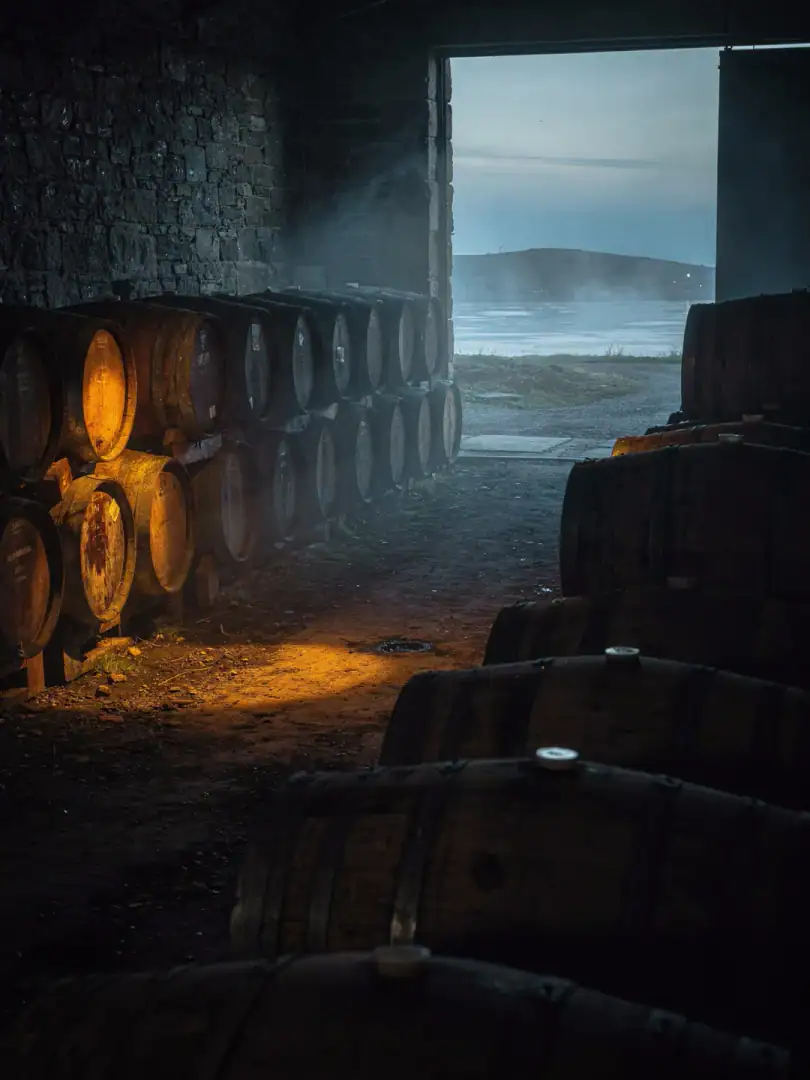
Other Highland warehouses rely less on sherry and more on their location right by the sea. In Wick and at Clynelish, the traditional warehouses sit so close to the North Sea that salty air constantly seeps through the wooden staves. Over the years, the maturing whisky picks up a faintly maritime, iodine-like note, which later shows in the glass as a salty edge.
Every year, part of the whisky evaporates through the cask wall, roughly two percent annually in Scotland. The Scots call this the 'angel's share'. In windy warehouses by the firth, it's mainly alcohol that evaporates, making the whisky milder over the years. In drier warehouses, it's more often water that's lost, raising the strength inside the cask.
These differences between coast and interior make the Highlands a distinctive region. Two casks of the same age from two different warehouses rarely taste alike. A cask maturing in Alness ages differently from one in Wick, even though both whiskies officially carry the same regional name. It's exactly this variation that draws connoisseurs to Highland whisky.