Peat, island-style
Malt & Peat
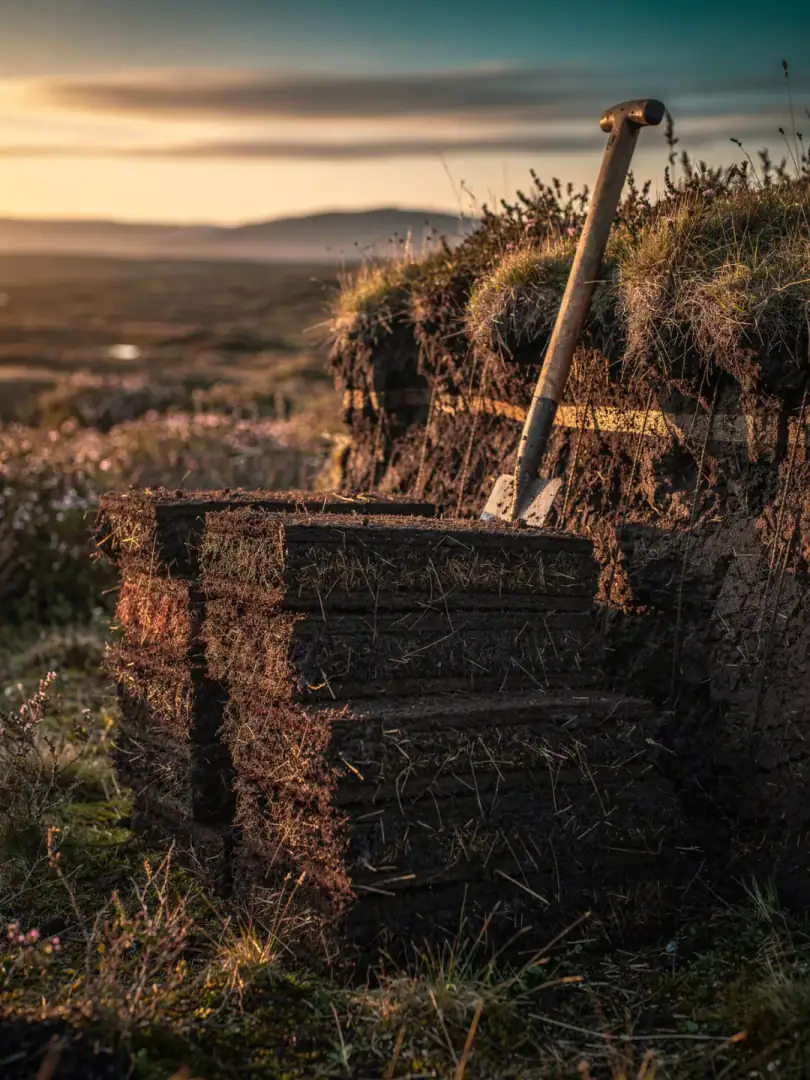
On Hobbister Moor, a stretch of upland moor south of Kirkwall, Highland Park's maltmen still cut peat by hand today. It's one of the last places in Scotland where a distillery still runs its own floor maltings. Barley is spread across the floor and turned by hand, then smoked over this very peat.
Orkney peat differs markedly from that of neighboring Islay. It's made mostly of heather and moss, grown on the open moorland. Islay peat, by contrast, contains plenty of maritime algae and grasses, which give it that salty, medicinal edge. The result on Orkney is smoky, but leans more spicy-floral than iodine-like. Highland Park smokes only around a fifth of its malt itself, to about 20 ppm, then blends it with unpeated malt from the mainland.
The malt is then dried in the kiln, an oven topped with the characteristic pagoda roof. That roof still crowns many distillery buildings across the islands today, even where peat smoke hasn't drifted through the chimney for a long time.
On Mull, it's not the place but the calendar that decides on the smoke. Tobermory and Ledaig run through the same two stills, just in separate campaigns. Unpeated malt yields Tobermory, heavily peated malt yields Ledaig: taste them side by side and you get two nearly opposite island whiskies from one and the same house.
Lagg in southern Arran took the opposite route. Since opening in 2019, the distillery has relied almost entirely on heavily peated malt. So peat isn't a hallmark of the whole region here. It's a choice each distillery makes for itself, sometimes even reconsidering it vintage by vintage.
Living heather and moss cover that renews the moorland every year.
The root: The heather roots give the resulting peat its spicy, floral scent, quite unlike maritime peat.