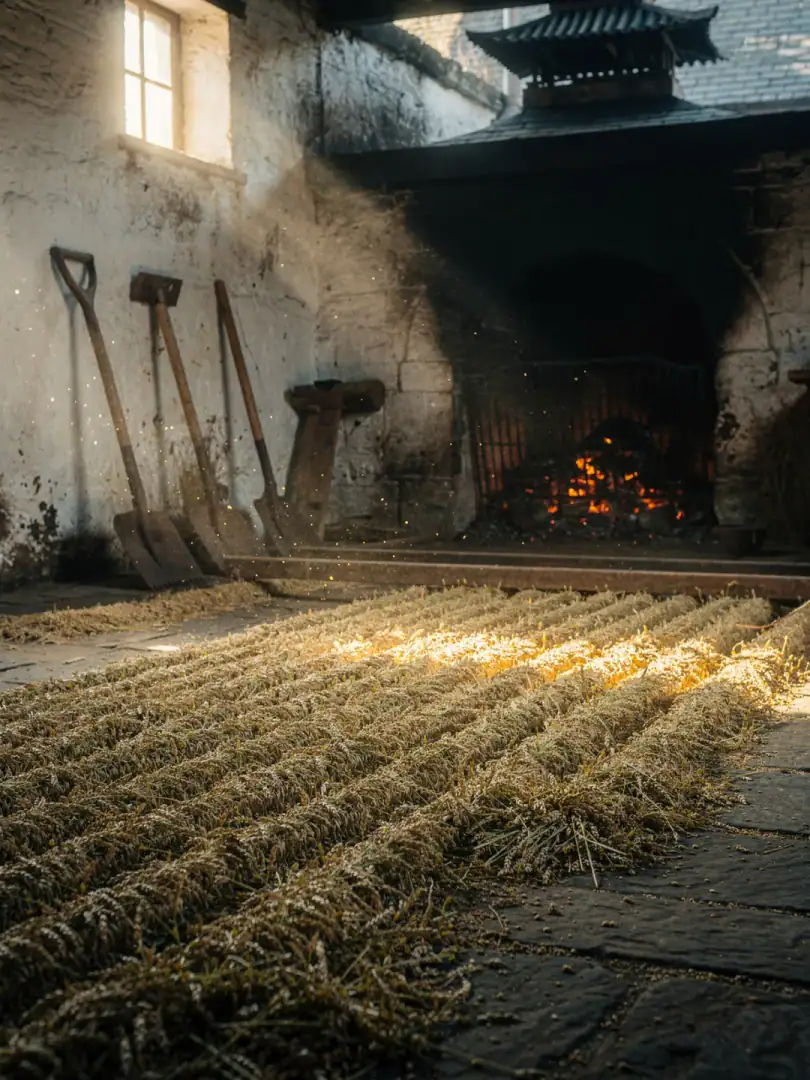
Malt Without Smoke
Malt & Peat
The Lowlands are the counter-example to Islay: here, malting was traditionally almost never done with peat. One possible reason still gets told on distillery tours: East Lothian once had its own coal mines. The kilns were therefore fired with coal rather than cut peat.
The result is malt that carries no smoke flavour into the grain. The whisky tends toward grassy and floral notes rather than smoky ones. The classic Lowland malts, from Auchentoshan to Glenkinchie, have a phenol content near zero. No peat character remains that could ever unfold during cask maturation.
Few Lowland distilleries still run their own maltings today. Most of the malt comes from large maltsters such as Simpsons Malt in the Tweed Valley near Berwick-upon-Tweed. The maltings sit right on the border with England.
Simpsons does produce peated malt too, with phenol levels of 5 to 15 ppm for lightly peated batches and 20 to 40 ppm for medium-peated ones. Since 2024, this has even come from a purpose-built facility at the Tweed Valley Maltings. But this stock goes mainly to distilleries in other regions and to breweries.
Only a handful of new Lowland distilleries reach for peat at all. Ailsa Bay on the Ayrshire coast is one of the few that deliberately uses peated malt, going against the region's old rule.
For most others, the old pattern holds: barley, water, fire without smoke. The malt character in the glass calls to mind freshly mown grass far more than a beach bonfire.
dark, fertile soil in which the Lowlands' barley grows
The root: gives the grain the richness that later shows up as mild sweetness in the malt