Rivers and Hillside Springs
Water & Climate
The Clyde, the Tweed, and the Forth run through the Lowlands. They've long supplied the water for mashing and cooling. Unlike in the narrow glens of the Highlands, here they flow through wide, flat land long before ever reaching a distillery.
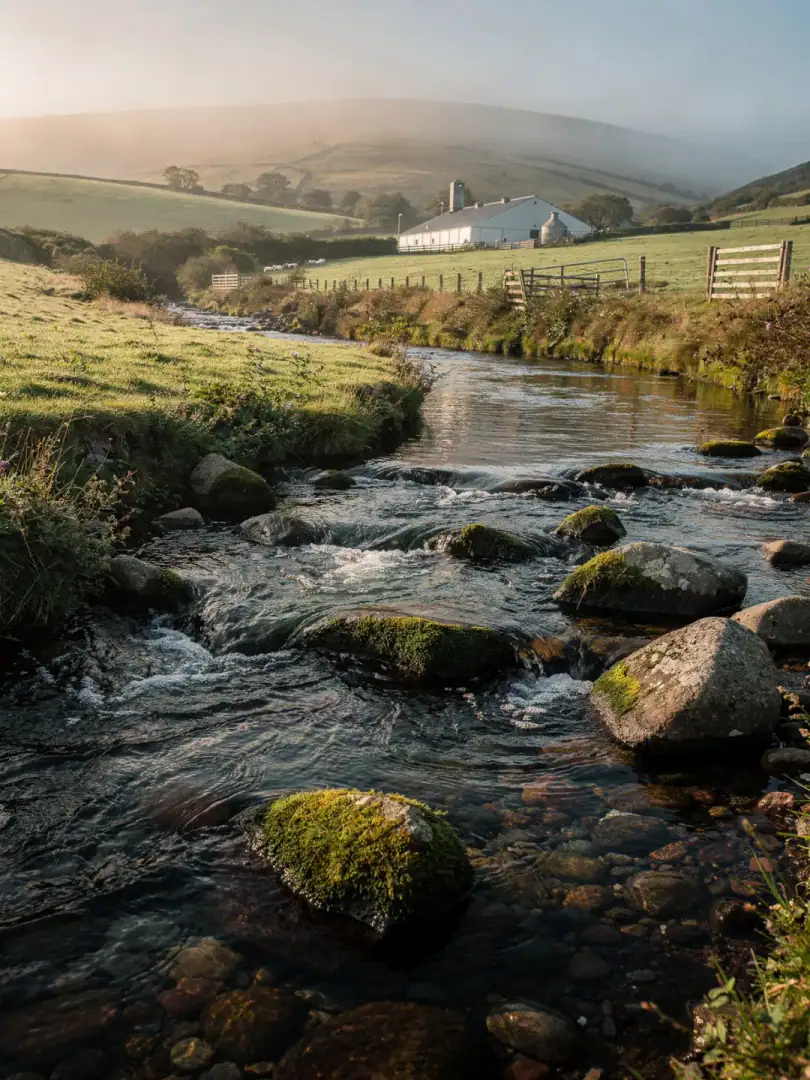
Glenkinchie draws its water from streams in the Lammermuir Hills south of Pencaitland. It's soft and low in minerals, having seeped through peat moor and pastureland rather than hard rock. Auchentoshan, by contrast, uses Loch Katrine for production and Loch Cochno in the Kilpatrick Hills for cooling, two sources for two separate jobs.
Bladnoch sits on the river of the same name near Wigtown in Galloway, right at the southern tip of Scotland, closer to England than to some other Scottish distilleries. The water flows down from the hills of Galloway, through pastures shaped more by cattle than by peat moor.
The Lowlands' climate is milder than that of the north. The North Sea to the east and the influence of the Gulf Stream on the west coast temper both frost and heat alike. Many in the region point to this maritime moderation as the reason for the softness and delicacy that mark so many Lowland whiskies.
Wide, open farmland instead of a rugged coastline also means less wind and less salt in the air to settle in during maturation. Where Islay casks often carry a taste of the sea, in the Lowlands it's more often the freshness of the fields that lingers in the glass.
Even the younger generation of distilleries chooses its water sources close to home. Fife newcomers like Kingsbarns and InchDairnie sit right in the middle of arable land, just a few kilometres from their own barley fields and streams.