Springs & Granite
Water & Climate
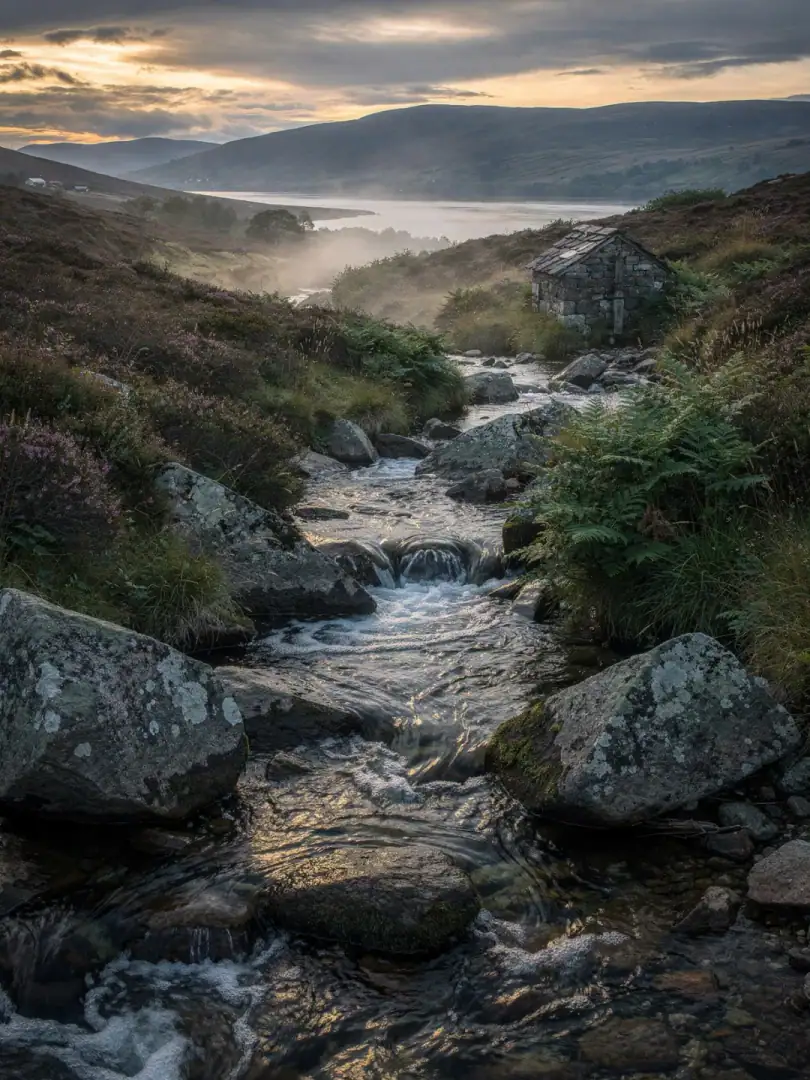
The River Spey gathers its water high up in the Cairngorms and flows from there through a narrow valley of granite northward to the sea. Almost every distillery along the way has its own source. Often it's just a short pipe from a burn on the hillside, and each swears by its own water.
The Glenlivet draws its water from Josie's Well. Glenfiddich has used water exclusively from the Robbie Dhu spring since its founding. Other distilleries such as Aberlour tap streams that flow down from Ben Rinnes, the granite mountain that towers over the whole of mid-Speyside.
The granite filters the rainwater before it emerges again as a spring, releasing hardly any minerals. This soft water lowers the acidity only slightly when diluting the mash. It gives the yeast plenty of time to work. This is exactly what favours the fruity notes in the finished whisky for which the region is known.
The climate in the valley is milder and drier than on the west coast, but noticeably colder than in London or Paris. In some winters, snow lies on the hills around Tomintoul, one of the highest villages in Scotland, well into spring. The cool, steady temperatures in the warehouses let the whisky mature slowly. The cask loses only a small amount of its contents to the air each year.
It is precisely this slow maturation in a cool climate that sets Speyside apart from warmer whisky-producing countries, where the share lost to evaporation rises much faster. A Speyside malt can therefore spend twelve, eighteen or even twenty-five years in the same cask without too little remaining at the end.